


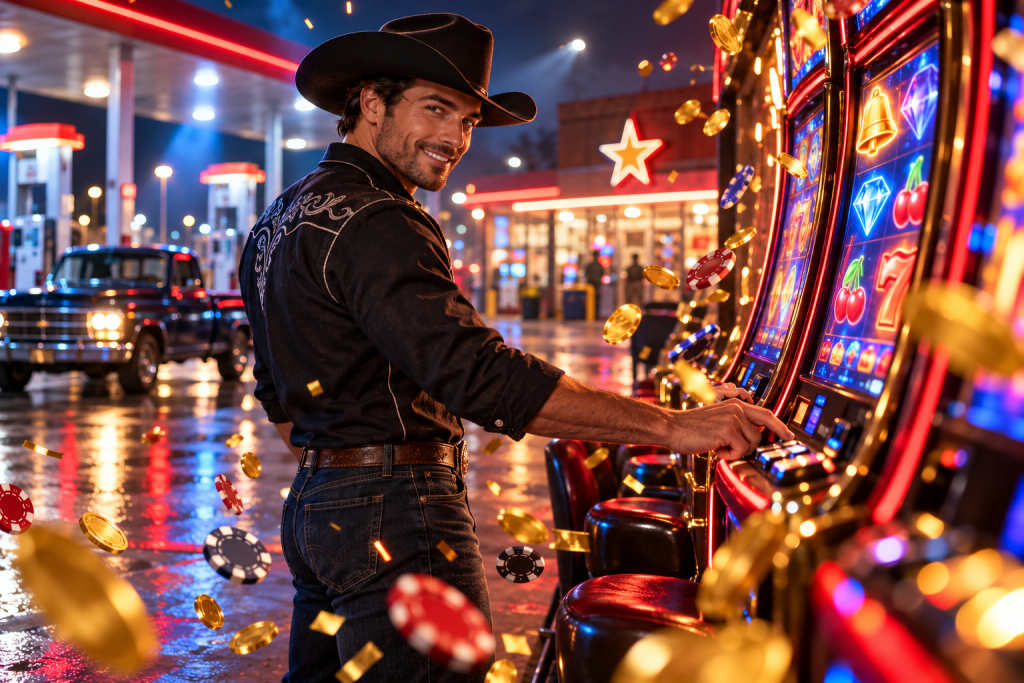
The machine in the corner is usually not what its cabinet suggests
A reader driving through Texas may stop for fuel and see a row of devices near the back wall with spinning reels, flashing lights, and a bill acceptor. The natural question is why a gas station would host what looks like a slot machine. The short answer is that the devices are typically marketed as eight-liners or amusement machines, and their presence in a fuel stop is tied to a specific category of machine rules in the state.
This article explains the structural reason those machines appear in convenience settings, what separates them from casino slots, and which channels hold the current answer for the reader's own location. It does not review any venue and does not state whether a specific machine or location is operating within the rules.
The category that matters is the machine, not the building
Texas is not documented in the supplied reference list as a state with a large commercial casino footprint. The published list documents three venues across three cities, all classified as Native American properties. That list is a snapshot of named venues, not a regulator's licence count, and it does not describe what sits inside gas stations.
What appears in a gas station is generally a different category of device. The relevant distinction is between a casino slot machine, which is tied to a venue operating under a gaming licence, and a standalone amusement or redemption machine, which may be placed in a retail location under a separate set of rules. The cabinet can look nearly identical to a player, but the legal and technical category is different.
Eight-liners and the amusement-machine category
The devices commonly seen in Texas convenience stores and fuel stops are frequently called eight-liners. The name refers to the eight paylines a player can activate on the machine. They run on software that resembles a reel-spinning game, and many accept cash, but their classification in Texas has historically been tied to amusement and prize rules rather than casino gaming rules.
Because the machines sit in a retail environment rather than a licensed casino floor, their operation depends on how the machine is configured, what a win pays out, and how the location handles any prize. Those details are exactly what a reader should confirm before putting money in, because two identical-looking cabinets can sit on opposite sides of a rule line based on those settings.
Why gas stations and convenience stores host them
A fuel stop or convenience store operator may place machines in the building because the machines generate revenue from a small footprint and require no additional staff beyond what the store already has. The store may lease the space to a machine operator, split the income, or own the devices outright. None of those business arrangements are documented in the supplied facts for this article, so this is a structural explanation, not a claim about any specific store.
For the reader, the practical point is that the presence of a machine in a gas station does not by itself signal that the machine is a casino slot or that it falls under casino rules. The machine's category depends on its configuration and on the state's current treatment of that configuration.
What to confirm before you go
Before playing any machine in a Texas gas station, the reader should confirm three things through the channels that hold the current answer. First, check the machine's posted rules and prize structure on the cabinet itself. Second, check the current position of the Texas agency that oversees gaming-related machines, whose published guidance is the authoritative source for machine categories in the state. Third, check whether the specific location has any posted notices about the devices.
The article cannot state whether a given machine is operating within the rules, because that depends on facts that change by location, machine configuration, and time. The reader's own check is the only reliable step.
How this differs from the documented casino venues in Texas
The supplied reference list documents three venues in Texas, all classified as Native American. Those are fixed locations with names: Kickapoo Lucky Eagle Casino in Eagle Pass, Naskila Gaming in Livingston, and Speaking Rock Entertainment Center in El Paso. A gas station eight-liner is not part of that documented list and is not a casino venue in the same sense.
| Characteristic | Documented casino venue | Gas station machine |
|---|---|---|
| Documented in supplied list | Yes, three venues listed | No, not listed |
| Setting | Dedicated venue in a named city | Retail fuel stop or convenience store |
| Machine category | Casino gaming device on a venue floor | Typically an eight-liner or amusement device |
| Regulatory path | Venue-level gaming framework | Machine-level amusement or prize framework |
The table compares the two settings across fields that the supplied facts can support. It does not rank one as better or worse, and it does not claim that every gas station machine is lawful or unlawful. The comparison is structural only.
Why the same question keeps coming up
The confusion is understandable because the visual language of a gas station eight-liner is deliberately close to a casino slot. Reels spin, lights flash, and a win produces a sound. The player's experience feels similar even when the legal category is different. That gap between appearance and classification is the core reason the question persists.
A second reason is that the rules around these machines have shifted over time in Texas, with enforcement actions, court rulings, and administrative changes affecting how machines may be configured. The reader who looks up the topic today may find older articles describing a rule that has since changed. The current state agency guidance is the only source that reflects the present position.
What the article can and cannot tell you
This article can explain the structural distinction between a casino venue and a gas station machine, and it can name the three documented casino venues in Texas from the supplied list. It cannot tell the reader whether a specific gas station machine is operating within the rules, what a specific machine pays, or whether the reader will win. Those facts live in the machine's own posted rules and in the state's current published guidance.
The article also cannot state a count of how many such machines exist in Texas gas stations. No such count appears in the supplied facts, and any number would be invented. The reader should treat any article that gives a precise statewide count without citing the state's own published data as unreliable.
FAQ
Are the machines in Texas gas stations casino slot machines?
They are usually a different category of device, commonly called eight-liners or amusement machines. They may look like casino slots, but their classification depends on configuration and prize structure, not on appearance. The reader should check the machine's posted rules and the state's current published guidance for the authoritative answer.
Why does a gas station have these machines instead of a casino?
A gas station is a retail location, not a documented casino venue. The machines placed there fall under a machine-level framework rather than a venue-level gaming framework. The store may host them for revenue, but the article cannot state the business terms of any specific location.
How can I check if a specific machine is operating within the rules?
Check the machine's own posted rules and prize structure, then consult the current published guidance from the Texas agency that oversees gaming-related machines. The article does not state whether any specific machine or location is operating within the rules, because that depends on facts that change by location and time.
Play responsibly
Gambling should be treated as paid entertainment, never as a way to earn income or recover losses. 1-800-MY-RESET (1-800-697-3738)
18+ or 21+ depending on where you are; follow the minimum age that applies to you.
This article is general information about how these mechanics work. It is not legal advice and not a recommendation to gamble or to use any particular operator. Availability and legality differ by jurisdiction — check the rules that apply where you are.