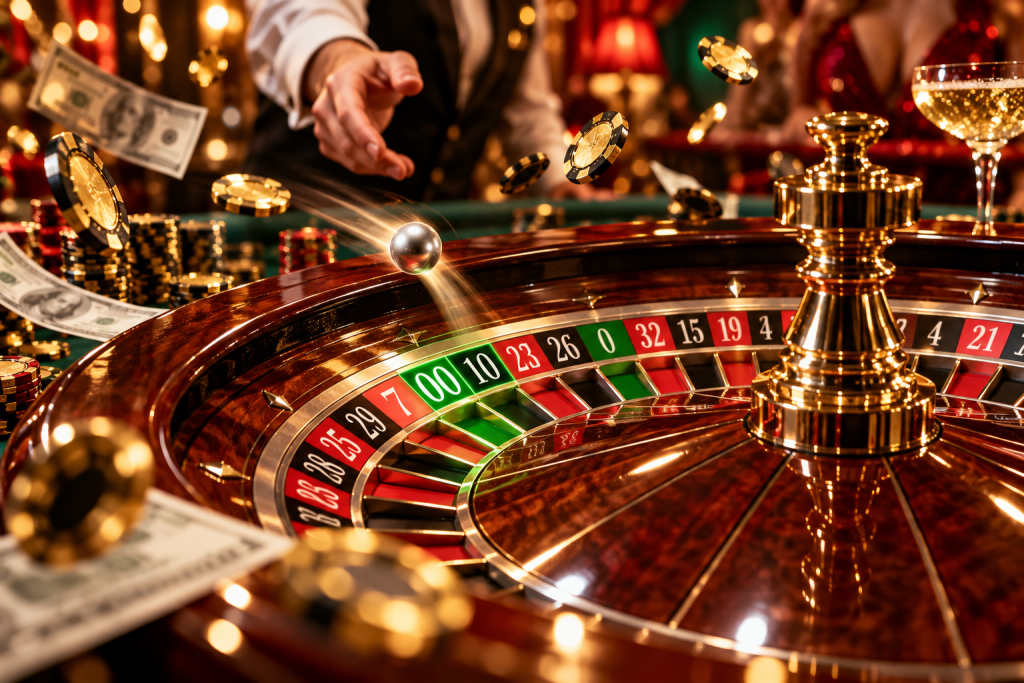
What Studying Roulette Reveals
Roulette has been studied by mathematicians, physicists and gamblers for centuries. What those studies consistently show is that the wheel's built-in edge survives every betting pattern.
1260

Roulette has been studied by mathematicians, physicists and gamblers for centuries. What those studies consistently show is that the wheel's built-in edge survives every betting pattern.
A win rate is a long-run statistical average, not a promise for your session. This explains how the edge is built into each spin and why short-term results look nothing like the published figure.
A 38-slot roulette wheel adds a double zero to the standard European layout, changing the odds on every bet. Here is how the wheel is built, how a round plays out, and where the extra pocket shows up in the house edge.
The answer depends on how you measure winning. This article explains how house edge, RTP, bet selection and game speed determine your probability of finishing ahead in a session.
The best payout depends on the specific bet and rule set, not just the game. Learn how house edge, RTP, and bet selection determine what you can expect to lose over time.
A 37-pocket roulette wheel is the single-zero European layout, and the missing double-zero pocket is the single biggest rule difference you will feel at the table. This explains what that pocket does to the odds and how the rest of the game works.
The worst odds belong to the bets with the largest built-in house edge. Learn how to read that edge and why short sessions rarely match the long-run average.
How roulette strategies work, why the house edge stays fixed no matter what you bet, and what changes your expected loss per hour.