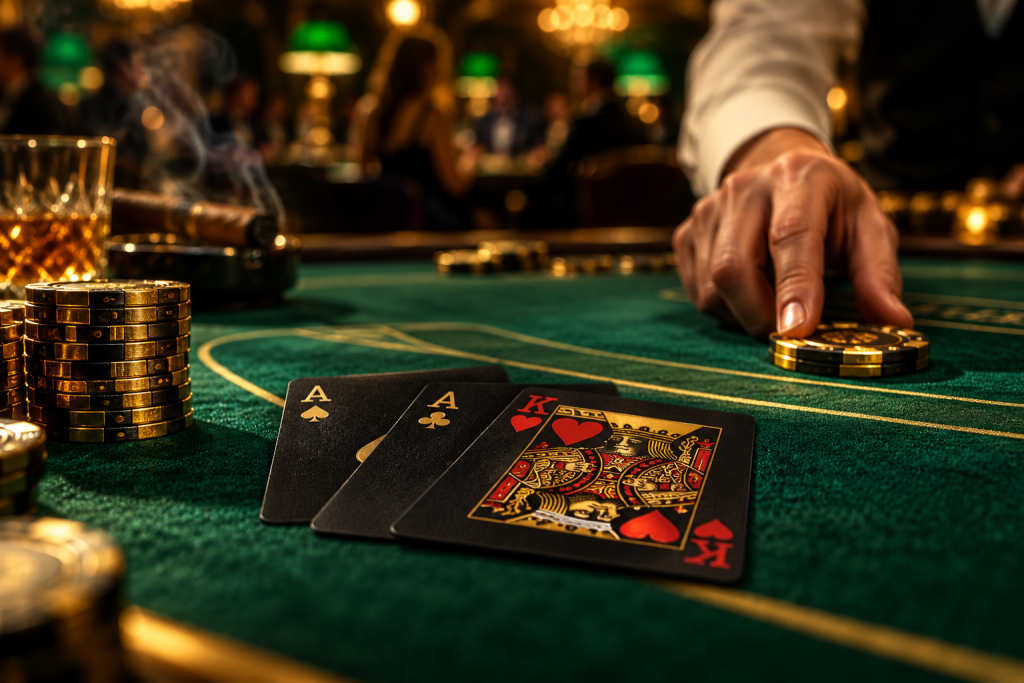
What Blackjack Pays and Costs Per Hand
A plain look at how a blackjack round works, which bets carry the smallest built-in edge, and why no betting pattern changes the long-run arithmetic of the game.
2360

A plain look at how a blackjack round works, which bets carry the smallest built-in edge, and why no betting pattern changes the long-run arithmetic of the game.
You can play roulette alone at a table or on a screen, but the game's mechanics, house edge, and round sequence do not change when you are the only player. Here is what to expect from a solo session and how the main bets differ.
A look at what changes when you play blackjack alone against the dealer versus at a table with other players, covering game speed, decision pressure, and how the house edge behaves.
Learn the structural checks that separate a licensed bingo product from an unverifiable one, and where to find the documents that answer the question for any specific app.
Playing blackjack heads-up against the dealer differs from playing at a full table in pace, decision pressure and how other players' choices can affect your outcome. This article explains the mechanics behind each setup so you can choose the one that fits how you want to play.
Roulette's built-in house edge works on every spin, no matter the betting pattern. Learn how the edge is constructed, why short sessions mislead, and what changes your expected loss.
The house edge on roulette is built into the wheel and the payout table, so no betting pattern can remove it. Learn how the edge works, why short sessions mislead, and what changes your expected loss.
Losing most blackjack hands is normal, because the game is built around a small edge that compounds over many decisions. Here is how that edge works, why short sessions look so brutal, and what changes your long-run loss rate.