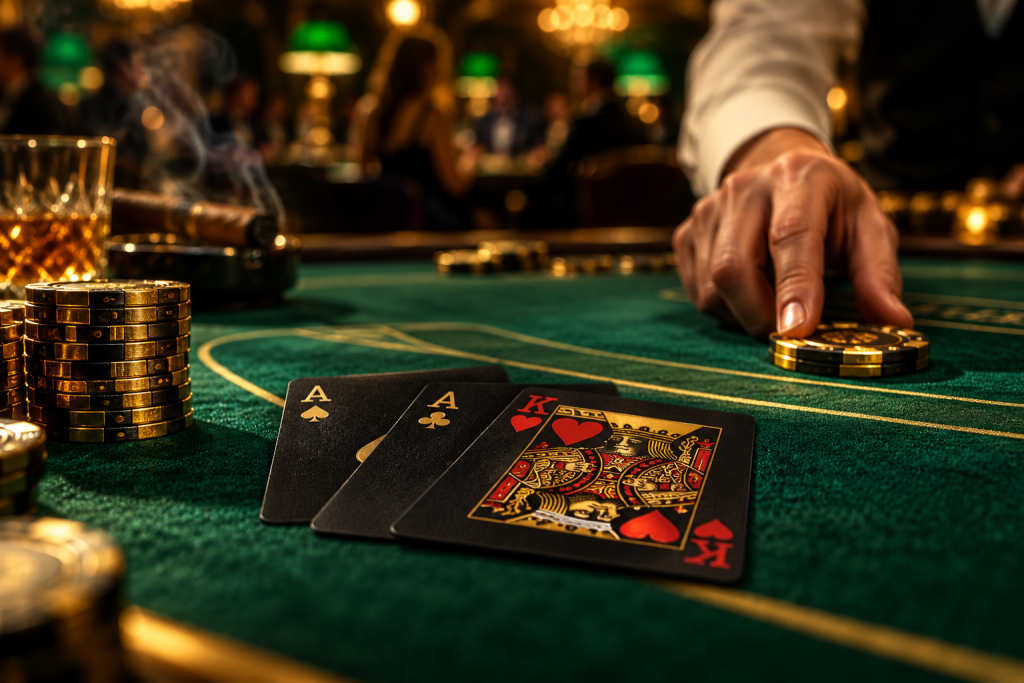
Why Blackjack Dealers Seem to Draw Tens So Often
The dealer's ten isn't rigged or magical. It's a matter of card composition and selective memory, and understanding it changes how you read the table.
1660

The dealer's ten isn't rigged or magical. It's a matter of card composition and selective memory, and understanding it changes how you read the table.
A plain walkthrough of how a blackjack round works, what each decision point means, and why the house edge stays put no matter how you size your bets.
Live dealer blackjack uses physical cards dealt on camera, but the table rules, shoe handling and studio procedures are what a player can verify. This article explains which parts of the game are observable and which parts remain a matter of operator policy and regulatory oversight.
A welcome bonus is a set of conditions, not a gift. Learn how wagering, caps, and expiry decide what a promotional balance is really worth before you opt in.
How to use funds already sitting on a payment card to play slots, and what happens to the money between the card, the casino account, and any withdrawal.
A plain look at how a blackjack round works, which bets carry the smallest built-in edge, and why no betting pattern changes the long-run arithmetic of the game.
You can play roulette alone at a table or on a screen, but the game's mechanics, house edge, and round sequence do not change when you are the only player. Here is what to expect from a solo session and how the main bets differ.
A look at what changes when you play blackjack alone against the dealer versus at a table with other players, covering game speed, decision pressure, and how the house edge behaves.