blackjackHow Deck Count Changes Blackjack OddsFewer decks generally lower the house edge in blackjack, but the rule set matters more than the shoe size. Learn how deck count, payouts and table rules interact before you sit down.30
blackjackReading the Odds in Single-Deck BlackjackThe odds in one-deck blackjack depend on the exact table rules, not just the deck count. This article explains how the house edge is built into each hand, how RTP and edge relate, and why short sessions rarely match the long-run average.40
blackjackProgressive Multi-Deck Blackjack ExplainedHow progressive multi-deck blackjack works, from the side bet that feeds the jackpot to the core hand you still play against the dealer.70
blackjackReading the Dealer's Hand in BlackjackA practical guide to what the dealer's upcard tells you, how a round proceeds, and how to read the table's rules before you play a hand.100
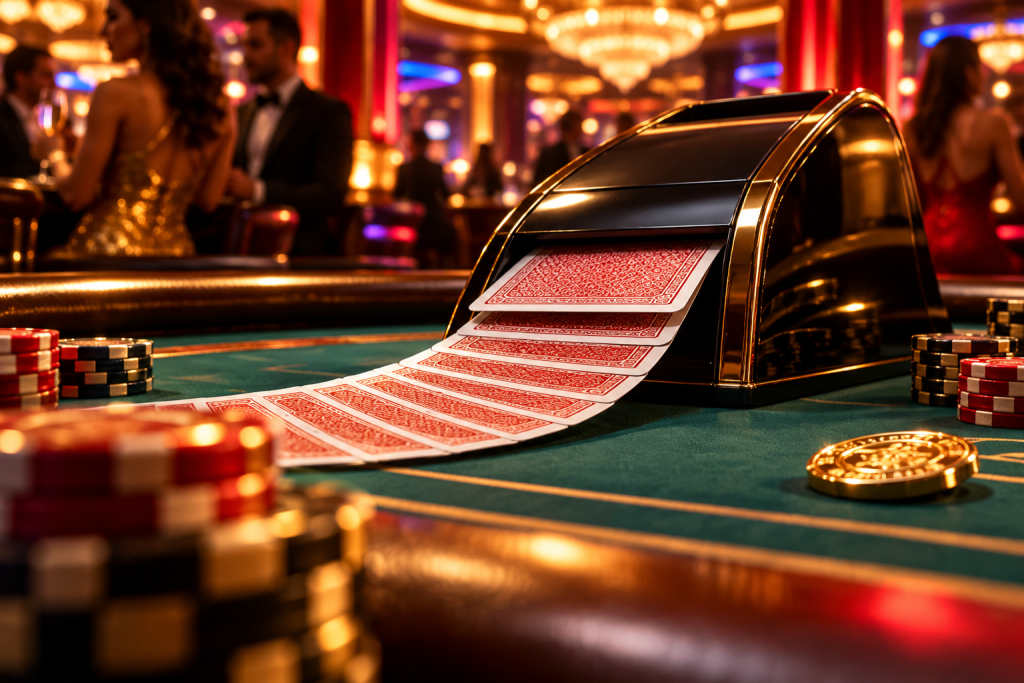
blackjackThe Shoe in Blackjack: Why Dealers Use It and How It WorksA dealing shoe is a device that holds multiple decks of cards and changes how blackjack is dealt, shuffled, and counted. Here is what the shoe does, why casinos use it, and what it means for a player at the table.30
blackjackWhat Happens When You Tie the Dealer in BlackjackA push in blackjack is a tie that returns your original wager. Learn how pushes work, when they occur, and how they affect your session.70
blackjackWhen a Blackjack Dealer Must Stop Drawing CardsThe dealer's stopping point is fixed by the table rules, not by choice. Here is how the dealer's hand is played, why the rule matters to your decisions, and how to read the rule at your own table.40
blackjackWhen the Dealer Draws in BlackjackThe dealer's drawing rules in blackjack are fixed and printed on the table, which is what lets you play your own hand with full information. This article walks through the dealer's turn, the decision points you control, and the procedural mistakes that cost new players the most.80