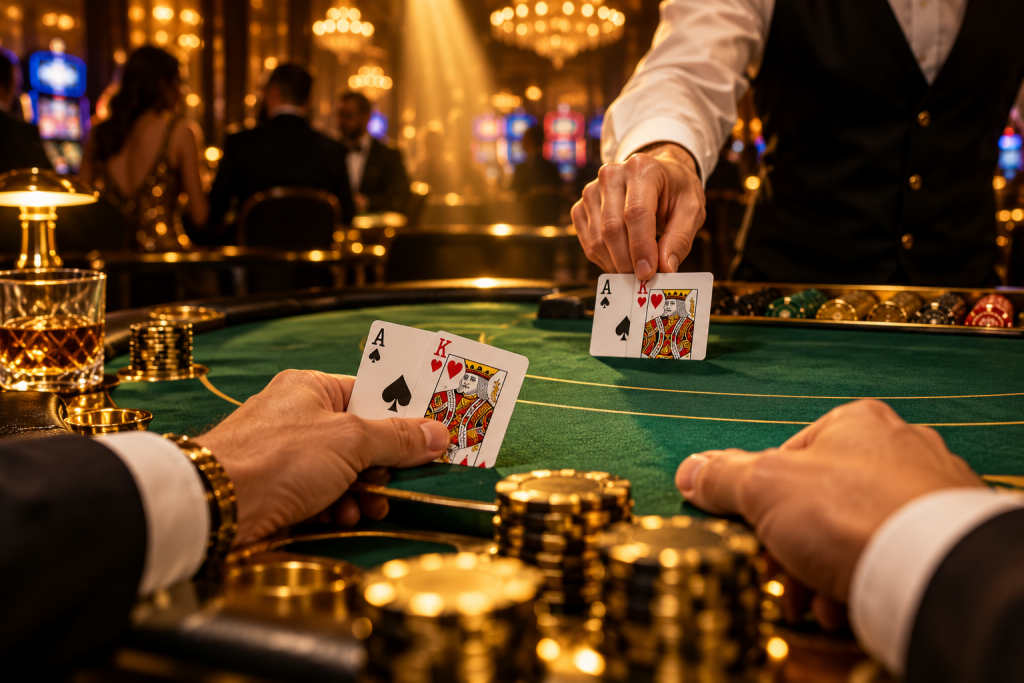
blackjackBlackjack Insurance: When It Matters and When It Doesn'tInsurance is a side bet on the dealer's hole card, not a way to protect a good hand. Here is how the bet works, why it is priced the way it is, and what changes when you hold a blackjack.00
blackjackTwo Players Get Blackjack: What Happens NextA natural blackjack on both sides of the table usually ends in a push, but the exact outcome depends on who holds the hand and the table's posted rules. Here is how the round is settled and why the dealer's hand changes the result.20
blackjackThe Odds When You Play Perfect BlackjackPerfect blackjack play means making the mathematically best decision on every hand under a specific rule set. The result is a very low long-run loss rate, but short sessions are still dominated by variance.10
blackjackBlackjack Insurance When You Also Have 21Insurance is a side bet on the dealer's hole card, and it is settled independently of your own hand. Having a blackjack does not change the math of the insurance wager itself.20
blackjackWhat Blackjack Paying 3 to 2 Means for Your BetA 3 to 2 payout means a winning blackjack returns one and a half times your stake, and the difference between that rate and a 6 to 5 rate changes how much each win is worth.00
blackjackHow to Spot a 6:5 Blackjack TableLearn to identify a 6:5 blackjack payout before you sit down, why the rule matters, and where the payout is printed on the table and in the rules.00
blackjackHow the House Edge Works in BlackjackThe house advantage in blackjack is built from the order of play and the rule set, not from a rigged deck. Understanding where the edge comes from shows why short sessions look nothing like the long-run average.20
blackjackWhat Happens When You Tie the Dealer in BlackjackA tie in blackjack is called a push. Your stake is returned, not collected by the house, but the rule can shift under specific side bets and table variations.00