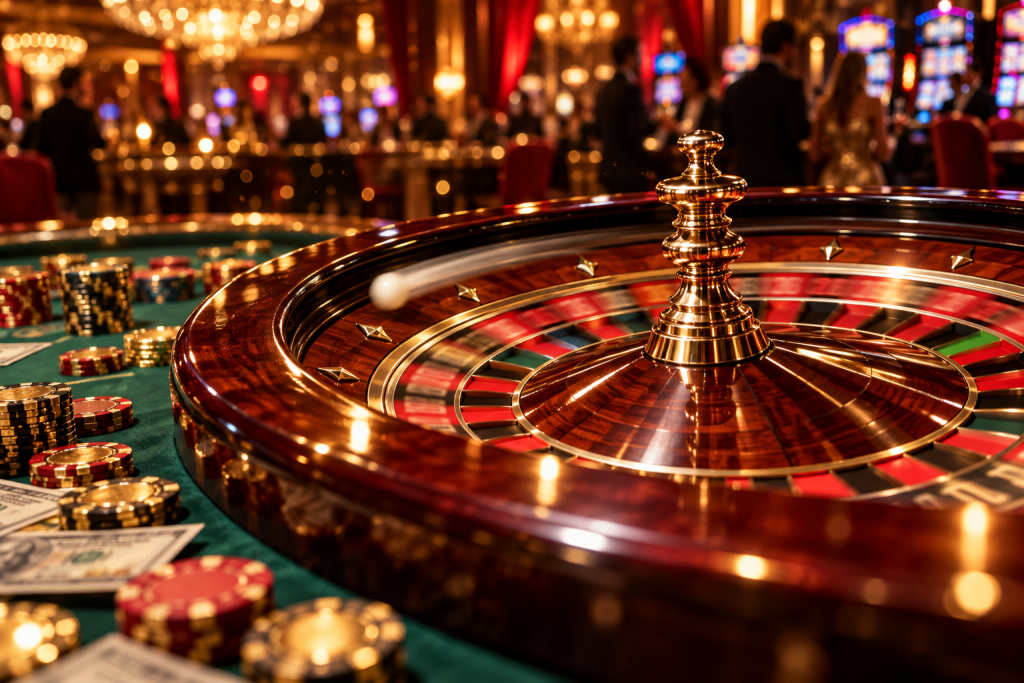
rouletteHow a Roulette Ball Determines the OutcomeThe steel ball is the final physical step in a roulette round, but the bet is settled by where it lands among the wheel's numbered pockets. Learn the sequence from spin to payout and how the wheel type changes the odds.150
rouletteEven Bets in Roulette: What They Are and the Real OddsEven bets in roulette are the wagers that pay 1:1, but the name describes the payout, not the probability. Here is how each one works and why none of them are a true 50/50 proposition.240
rouletteRoulette Odds: How the Payouts and Edge Are BuiltRoulette odds come from the wheel's pockets and the payout table, not from any pattern in past spins. This explains how the house edge is built into each bet and how to read the odds for yourself.190
rouletteDoes Benford's Law Apply to Roulette?Benford's law describes digit patterns in naturally occurring datasets, not the uniform physics of a roulette wheel. Here is why the law does not predict or detect patterns in roulette outcomes.160
rouletteWhat Beating a Roulette Table Really MeansThe roulette wheel is built so the odds stay with the house on every spin. This article explains where that edge comes from, what betting systems can and cannot change, and what shifts your expected loss.80
rouletteWhy Would Anyone Play Triple Zero Roulette?Triple zero roulette adds a third green pocket to the wheel, changing the odds on every bet. Here is how that extra pocket works and why players still sit down at the table.180
rouletteWhy Roulette Still Draws Players to the WheelRoulette's appeal comes from its simple rules, wide range of stakes, and the way a single spin can change a session. Here is what keeps people at the wheel despite the built-in house edge.150
rouletteRoulette Beating: What the Record and the Math ShowRoulette has been beaten in short bursts by luck, and a few physical or operational exploits have worked briefly. The built-in house edge means no betting system changes the long-run expected loss.240