

From Experiment to Industry Formation: Crypto's Regulatory Milestone
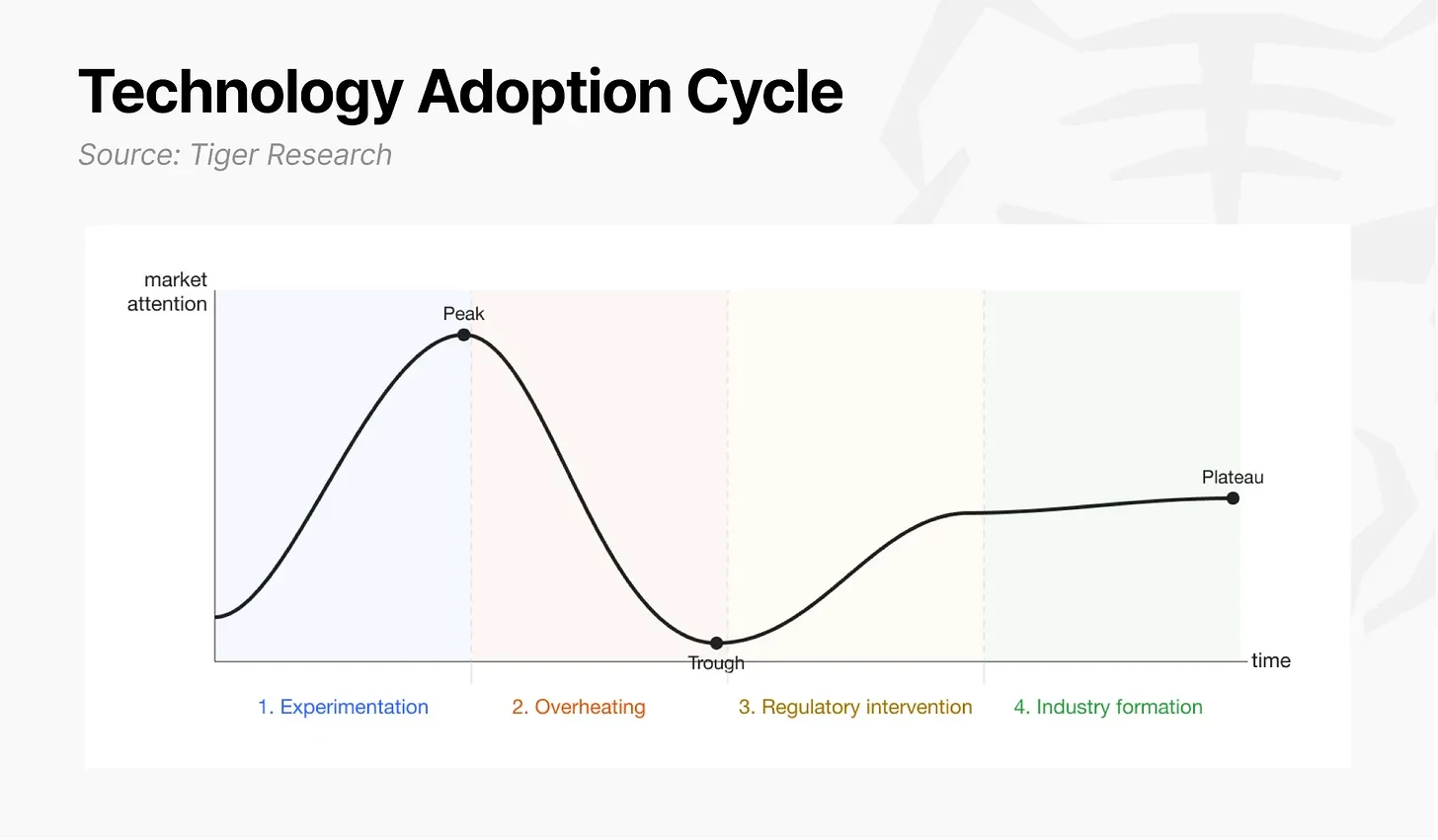
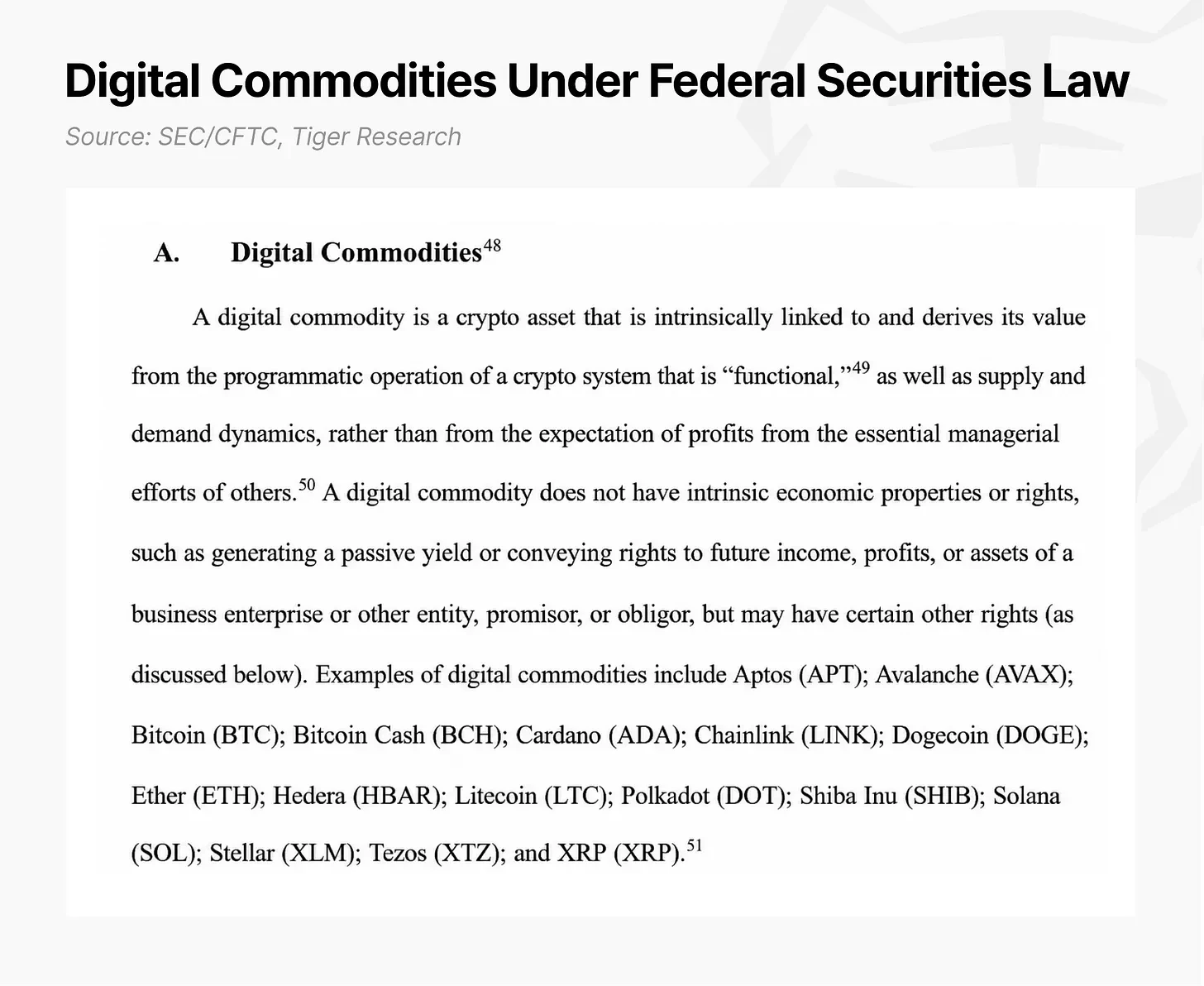
New technologies typically pass through four stages: experimentation, hype, regulatory intervention, and industry formation. The crypto sector has moved through Bitcoin's experimental validation and the excesses of the 2017 ICO and 2021 DeFi booms, hitting a turning point with the 2022 FTX collapse. Today, speculative demand has been filtered, real use cases validated, and U.S. regulators have begun formalizing the space. In March 2026, the SEC and CFTC jointly released guidance designating 16 assets including Solana (SOL) as digital commodities, replacing the outdated binary classification system and excluding protocol-level staking from securities regulation. The GENIUS Act established a clear legal framework for stablecoins. These developments mark the simultaneous dawn of regulatory intervention and industry formation.
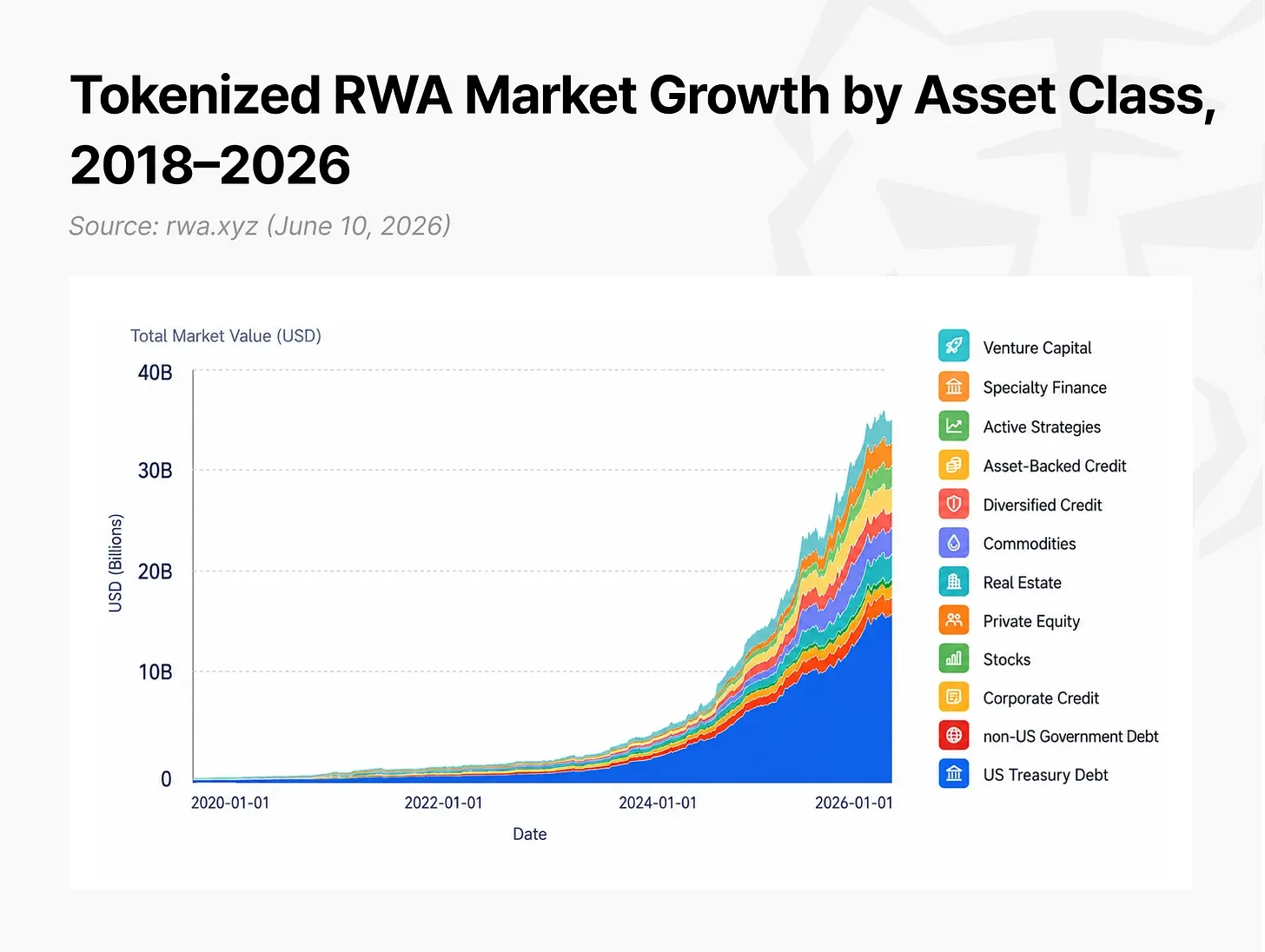
The tokenized real-world asset (RWA) market has grown from $5.4 billion to $19.3 billion in 15 months, a 257% increase. Including stablecoins, total on-chain asset value approaches $300 billion. This industrial formation is now restructuring capital markets themselves, pointing to a new paradigm: Internet Capital Markets (ICM).
Internet Capital Markets: Redefining Issuance, Trading, and Settlement
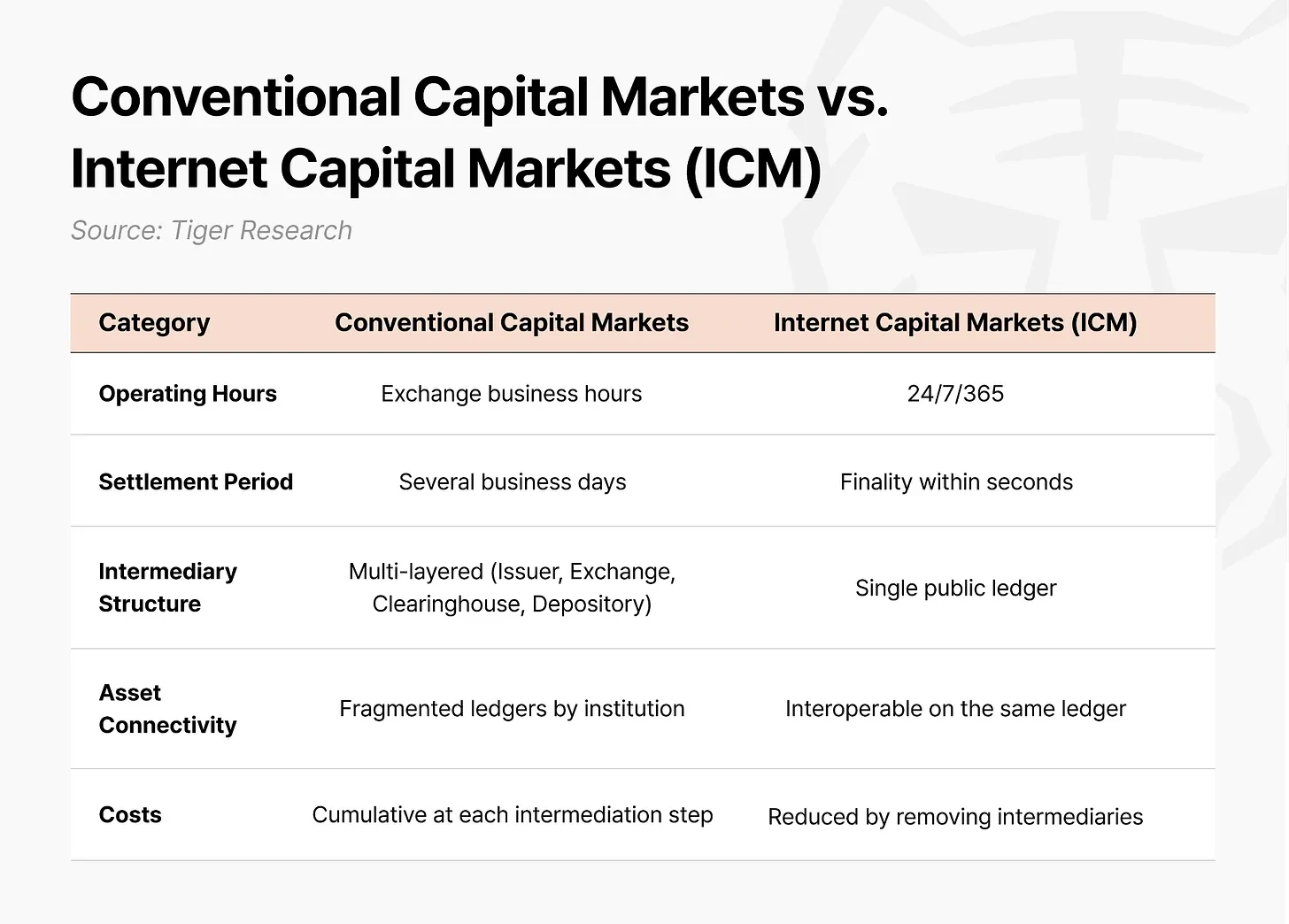
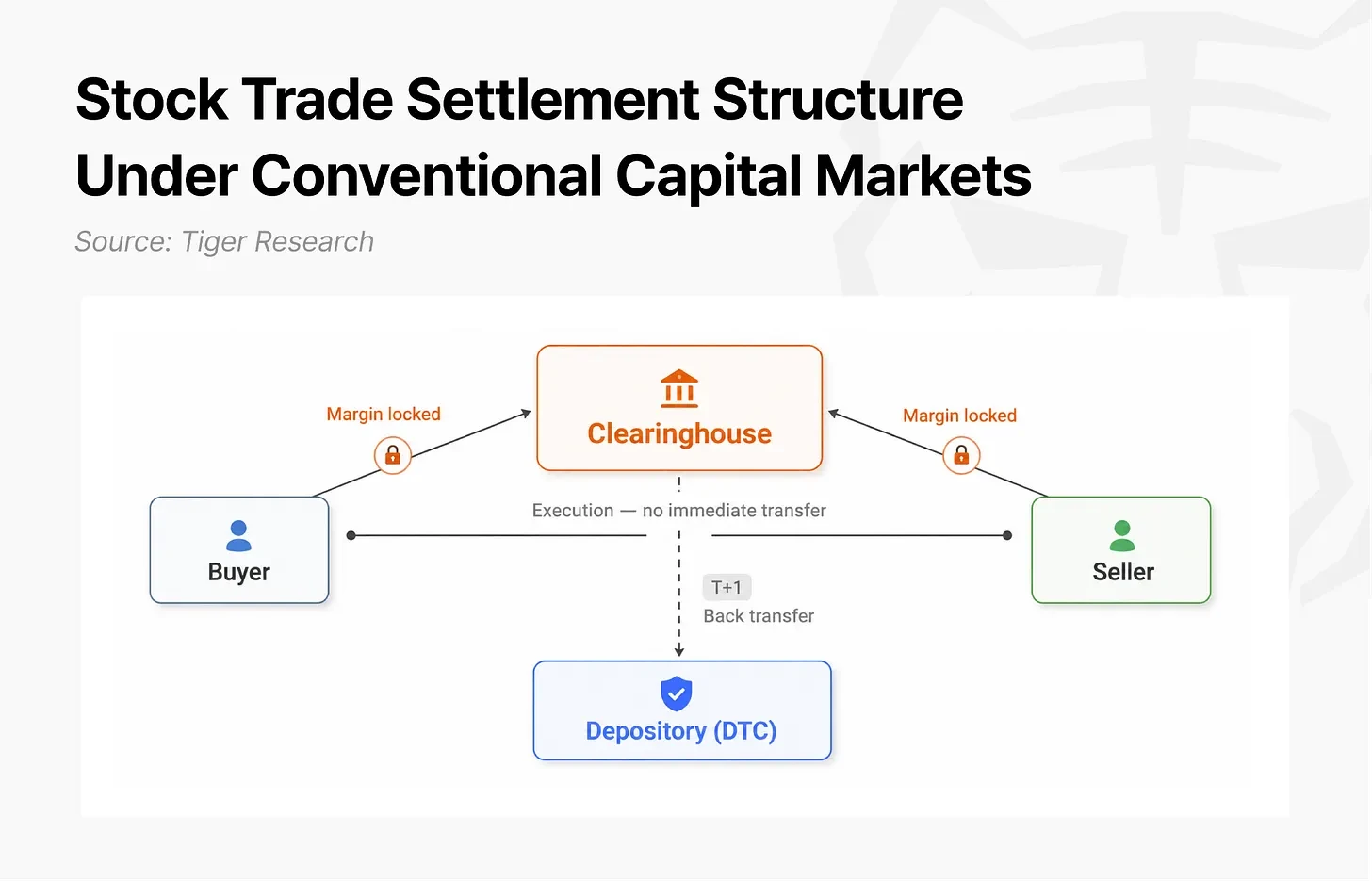
Traditional capital markets operate on an architecture predating the internet. Buying a stock involves multiple intermediaries—brokers, exchanges, clearinghouses, and depositories—with settlement taking T+1 to T+3 or longer for cross-border trades. Clearinghouses require margin and constantly reconcile between institutions, locking up capital. Tiger Research estimates the annual opportunity cost of settlement delays in the U.S. Treasury market alone at $32 billion; across all U.S. fixed income, it exceeds $45 billion.
In an Internet Capital Market, code replaces the clearinghouse: the buyer's payment and seller's asset are placed together in a smart contract and executed as a single transaction (atomic settlement/DvP). Execution and settlement occur in seconds (T+0), eliminating counterparty risk and reconciliation needs. The U.S. is replicating its dollar hegemony model: CHIPS processes over $2.2 trillion daily, and more than 99% of stablecoins are dollar-denominated. Solana has become the core public blockchain for this vision, combining technical performance with embedded compliance.
U.S. Regulatory Framework Takes Shape: Stablecoins, Digital Commodities, and Tokenized Securities
The regulated space now covers broad areas. Digital commodity status for 16 assets, including SOL, gives institutional investors legal clarity to buy, hold, and stake. The GENIUS Act defines stablecoins as a separate asset class with federal licensing standards. In March 2026, the SEC approved Nasdaq to trade tokenized securities, with DTCC piloting in July and full launch in October, covering Russell 1000 stocks, major ETFs, and Treasuries. The CFTC approved Kalshi's Bitcoin perpetual futures contract, bringing offshore perpetual liquidity (approximately $61.7 trillion in 2025) into the U.S. regulated system.
Unresolved frontier areas remain critical. Public blockchain stock trading is currently limited to non-U.S. persons (Reg S) or accredited investors (Reg D); the SEC is discussing innovation exemptions but faces opposition from Nasdaq and SIFMA over liquidity fragmentation. DEXs received temporary guidance with a five-year sunset clause in April 2026, but gaps in AML obligations and order-handling liability persist. The CLARITY Act is the key legislation to address the overall digital asset market structure, but partisan disagreements on ethical provisions for executive officers create uncertainty. The legislative window from mid-July to early August 2026 is essentially the last chance; missing it pushes timing into the pre-election period, with passage odds at 50% or lower.
Institutional Practice on Solana: From SWEEP to GLDY
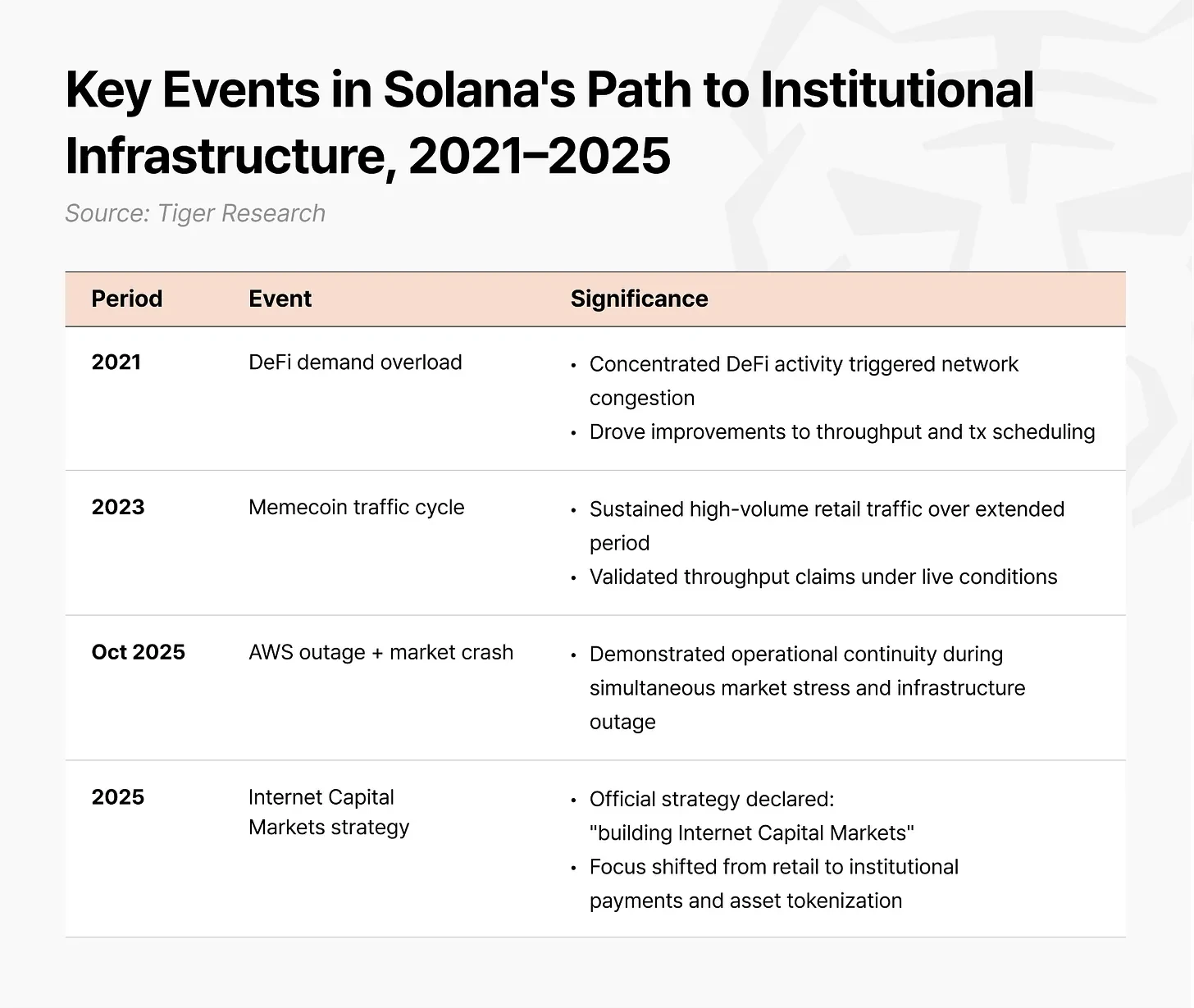
Solana has adopted 'Building the Internet Capital Market' as its official strategy, launching the Token-2022 standard that embeds freezing, confiscation, whitelist management, and confidential balance functions directly into tokens. Real transactions are now live. State Street and Galaxy launched the on-chain fund SWEEP, accepting stablecoin or fiat deposits for short-term Treasury investments, with Ondo Finance making an anchor investment of approximately $200 million (26% of its TVL). J.P. Morgan arranged a $50 million commercial paper issuance on Solana, settled in USDC with atomic settlement enabling T+0 corporate financing. Citi and PwC completed a proof-of-concept for tokenizing bills of exchange, reducing settlement from days to minutes.
Western Union issued USDPT, a dollar payment token on Solana, transforming cross-border remittance from 'pre-funded liquidity' to 'real-time on-demand supply.' Fiserv will launch FIUSD, a white-label stablecoin platform covering approximately 10,000 financial institution clients and 6 million merchants. Orca and Streamex introduced GLDY, a compliant RWA distribution infrastructure using token-level freeze/unfreeze mechanisms for 24/7 regulated trading. Apollo issued ACRED, a tokenized private credit fund through Securitize, enabling leverage of up to 2.5x using Solana's low fees and sub-second settlement, amplifying base yield from 7.4% to 12-16%. Figure bridged HELOC loan rights to Solana via Chainlink CCIP, using Kamino lending protocol for up to 9x leverage.
Infrastructure Diffusion and Network Effects: Banking, Payments, and Touchpoints
When issuance, settlement, and touchpoints converge on the same network, network effects emerge. PayPal, Circle, Tether, and Fiserv issue stablecoins or operate infrastructure on Solana; Visa expanded stablecoin settlement to Solana; Worldpay migrated merchant transaction settlement; YouTube uses PYUSD to pay U.S. creators. SoFi enables 14.7 million customers to purchase SOL directly from bank accounts and operates its own stablecoin, becoming the first federally chartered bank under OCC supervision to place its liabilities on a public blockchain. Bullish adopted Solana stablecoins as primary settlement rails across 50+ jurisdictions and processed $1.15 billion in IPO financing. Solana's settlement economics (0.5-second confirmation, $0.0013 fee per transaction) and Token-2022's programmable compliance are the core technical draws. For privacy, Solana offers Contra, allowing institutions to run separate subnets sharing the public network's performance foundation.
Strategic Windows for Asian Institutions: Fast Followers with Offshore Pilots
The era of building infrastructure from scratch for Asian financial institutions is over. The pragmatic path is as a fast follower, adopting U.S. market-validated infrastructure and regulatory references. Tiger Research classifies Asian markets by executability: the executable stage (Singapore MAS, Hong Kong SFC/HKMA, Japan FSA, UAE ADGM/VARA) where clear licensing and market infrastructure are in place, enabling immediate commercialization; the transition stage (South Korea FSC/FSS, Thailand SEC, Malaysia SC, India partial) where policy direction is clear but detailed rules are pending, requiring pre-built structures ready for regulatory confirmation; and the exploration stage (Indonesia, Vietnam, others) where legal definitions are unclear and small pilot experiments are advised. For institutions in jurisdictions with slow domestic rulemaking, an offshore path (establishing entities in Singapore or the UAE) offers an effective alternative. The Internet Capital Market is no longer a concept: J.P. Morgan, State Street, and Franklin Templeton have simultaneously chosen Solana, validating its technical and structural superiority. The variable for Asian institutions is no longer 'whether to enter' but the order and entry point. The window of 'validated but not yet standardized' is open—but for how long remains uncertain.