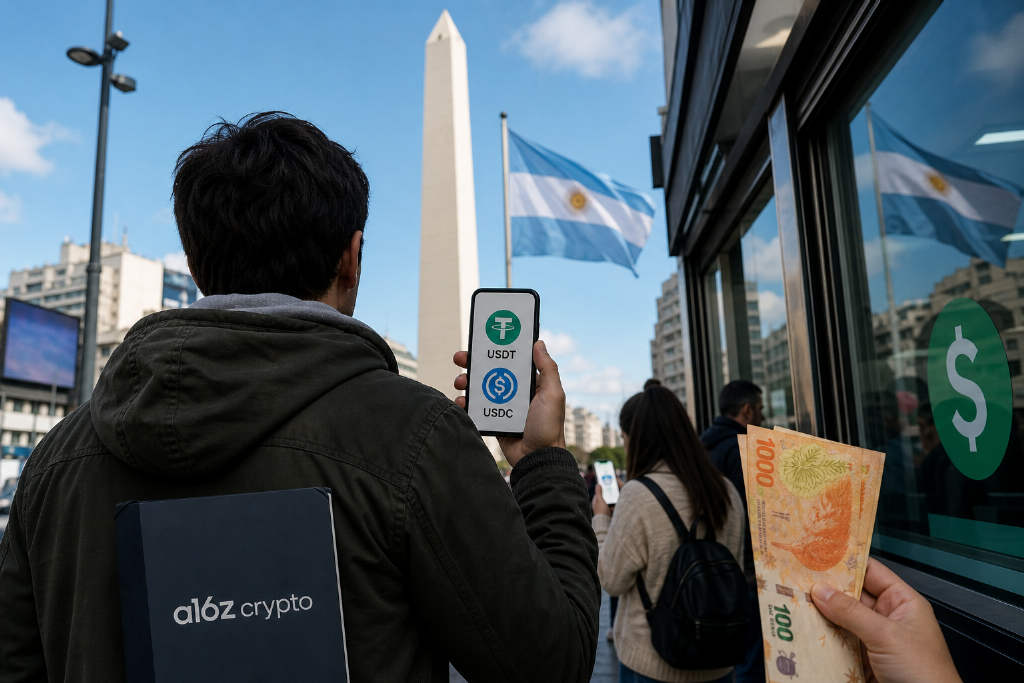
a16z crypto said in its latest report that stablecoins are becoming a key tool for people in Argentina to hedge against local currency depreciation and gain U.S. dollar exposure. According to the report, about one-fifth of Argentina’s population uses cryptocurrency, making the country one of the highest adopters in Latin America. In 2024, downloads of the country’s top 15 crypto apps rose 93% year over year. a16z said long-running high inflation, peso weakness, capital controls, and restrictions on access to dollars have pushed dollar-backed stablecoins such as USDT and USDC into a “digital dollar” role locally. The report added that 94% of crypto transactions denominated in Argentine pesos flowed into stablecoins, the highest share among major currencies tracked by Artemis. Citing Deel data, a16z also said the share of Argentine contractors receiving pay in USDC increased as inflation climbed. Even though inflation has eased locally, demand for stablecoin use has not disappeared. As of Aug. 28, 2026, Argentina’s “digital dollar” was still trading at about a 4% premium to the official U.S. dollar rate.
BlockBeats reported on Aug. 31 that a16z crypto, in its latest report, said stablecoins are becoming an important tool for people in Argentina to hedge against local currency depreciation and gain exposure to the U.S. dollar.
According to a16z, about one-fifth of Argentina’s population uses cryptocurrency, putting the country among the highest crypto adopters in Latin America. In 2024, downloads of the country’s top 15 crypto apps rose 93% from a year earlier.
The report said prolonged high inflation, peso depreciation, capital controls, and limits on access to U.S. dollars have led dollar stablecoins such as USDT and USDC to take on the role of a “digital dollar” in the country.
Data cited in the report showed that 94% of crypto transactions denominated in Argentine pesos flowed into stablecoins, the highest stablecoin share among major currencies tracked by Artemis.
a16z crypto, citing Deel data, said the share of Argentine contractors receiving salary payments in USDC increased as inflation climbed. Even though local inflation has eased, demand for stablecoin use has not disappeared.
As of Aug. 28, 2026, Argentina’s “digital dollar” was still priced at about a 4% premium to the official U.S. dollar, according to the report. a16z crypto said stablecoins in Argentina are no longer just a crisis-period inflation hedge and are gradually becoming part of everyday financial habits.
This article was originally published by Bit.Fan. For more cryptocurrency news and market insights, visit www.bit.fan. Disclaimer:
The market information, project data, and third-party content displayed on this platform are for industry information sharing only and do not constitute any form of investment advice or return commitment.
Cryptocurrency trading carries high risks. Users should fully assess their risk tolerance and make independent decisions. All profits, losses, and legal responsibilities are borne by the users themselves.