
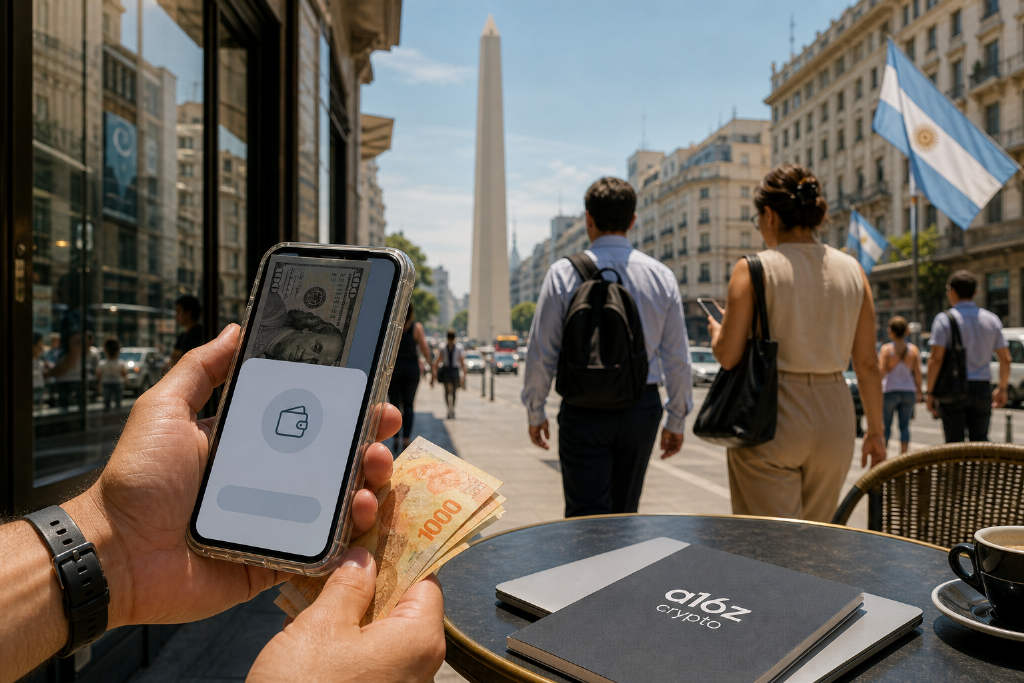
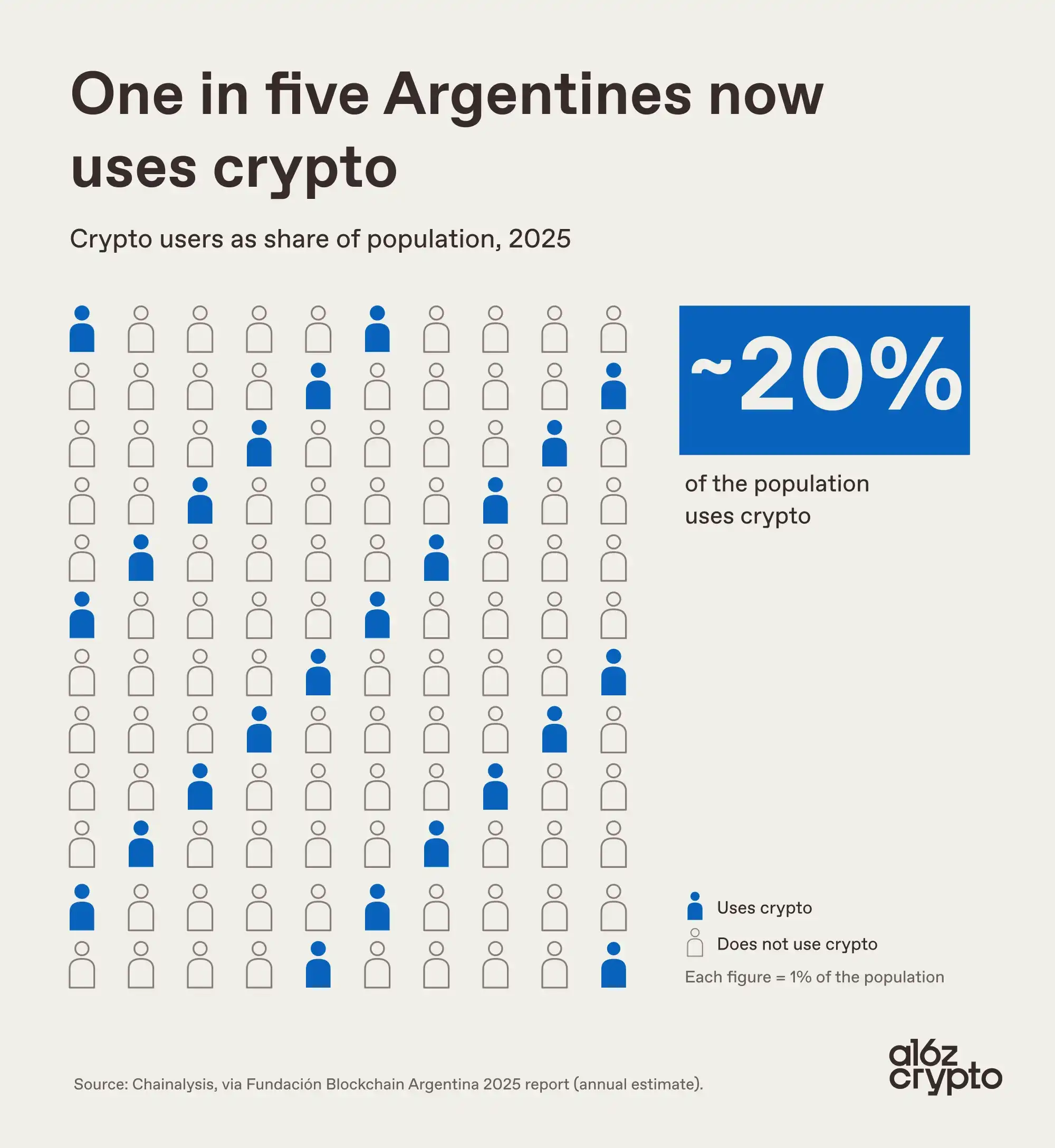
Argentina remains one of the highest-penetration crypto markets in the world, according to a16z crypto, which says 1 in 5 people in the country uses cryptocurrency. The firm argues the more important signal is not only the inflation hedge story: stablecoin use did not fade after conditions eased and instead appears to have settled into repeat behavior.
That makes Argentina a closely watched case for stablecoin stickiness, dollarization trends, and the direction of crypto payments in emerging markets.
Crypto app downloads surged in 2024
Adoption accelerated quickly. In 2024, downloads of the top 15 crypto apps in Argentina nearly doubled, up 93% from the previous year.
a16z says Argentine demand for dollars long predates crypto. During the 2001 to 2002 crisis, the government froze bank deposits and, under Decree 214/2002, forcibly converted U.S. dollar deposits and loans into pesos. After the dollar peg ended, the exchange rate moved from 1 peso per dollar to nearly 4 pesos per dollar, wiping out roughly three-quarters of the peso’s dollar value.
The episode deepened distrust in the peso and reinforced the practice of holding savings in physical dollars outside the banking system, including cash kept at home or in safe-deposit boxes.
Foreign-exchange controls helped push stablecoins higher
When Argentina reimposed foreign-exchange controls in 2019, stablecoins started gaining traction. Within months, the government capped official dollar purchases at $200 per month, and added eligibility rules that shut many people out of the market entirely.
Dollar-pegged stablecoins became an alternative way to hold dollar exposure without relying on the official channel.
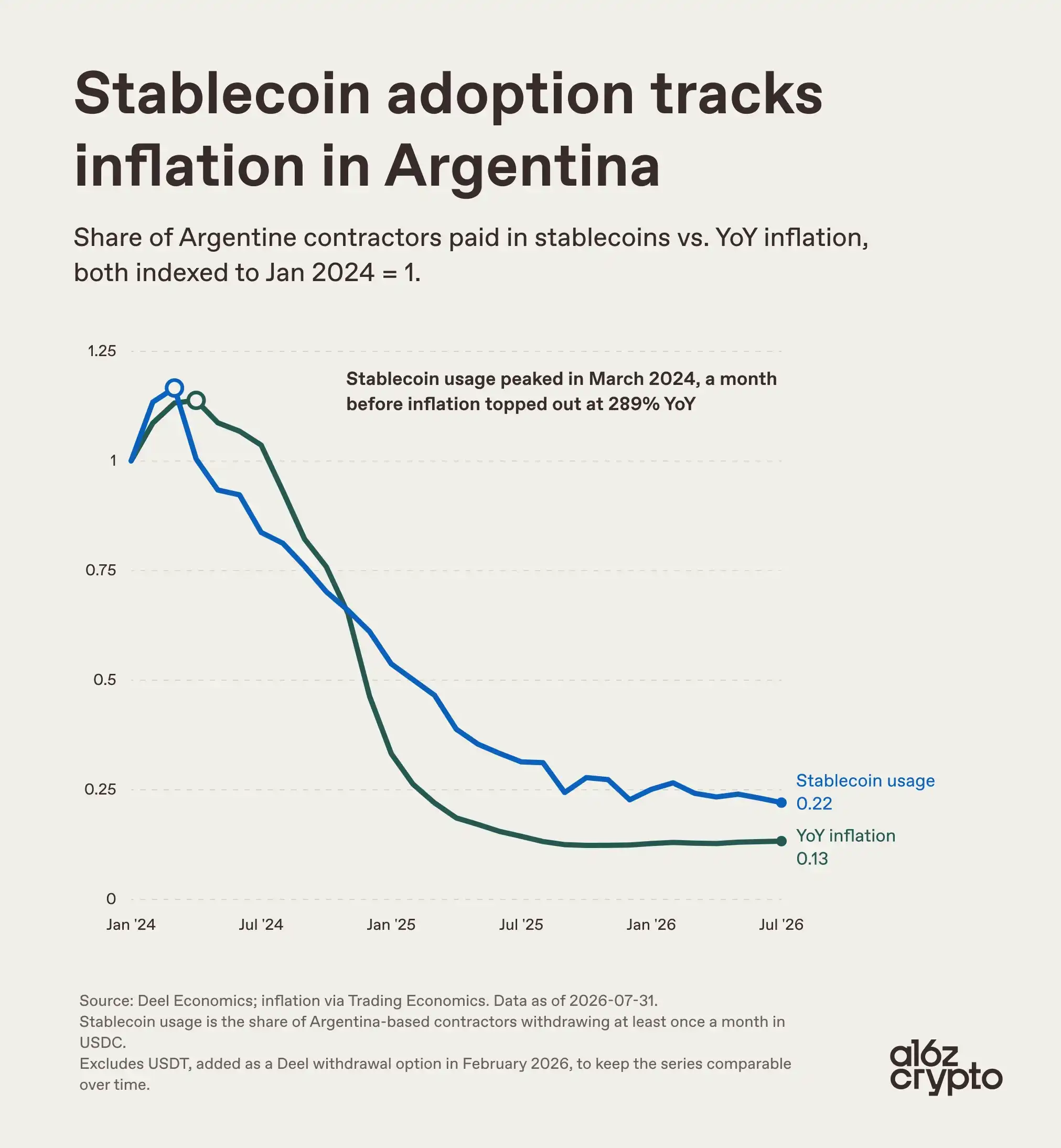
a16z says stablecoins have also taken a larger share of contractor compensation. In April 2024, Argentina’s year-over-year inflation rate reached 289%, and the share of Argentine contractors paid in USDC was also rising during that period.
Deel data points to a period of tandem movement with inflation
The payroll figures cited in the report come from Deel, an a16z portfolio company that processes compensation in more than 160 countries. Using that dataset as a proxy, the report compares the monthly share of Argentine contractors receiving pay in USDC with the country’s year-over-year inflation rate.
Because both series are indexed to January 2024, the chart shows changes relative to that starting point rather than raw values. For a stretch, the two appeared to move in tandem. Later, as inflation cooled, stablecoin payroll usage also appeared to decline.
As of July 2026, both measures stood at about one-fifth of their respective peaks.
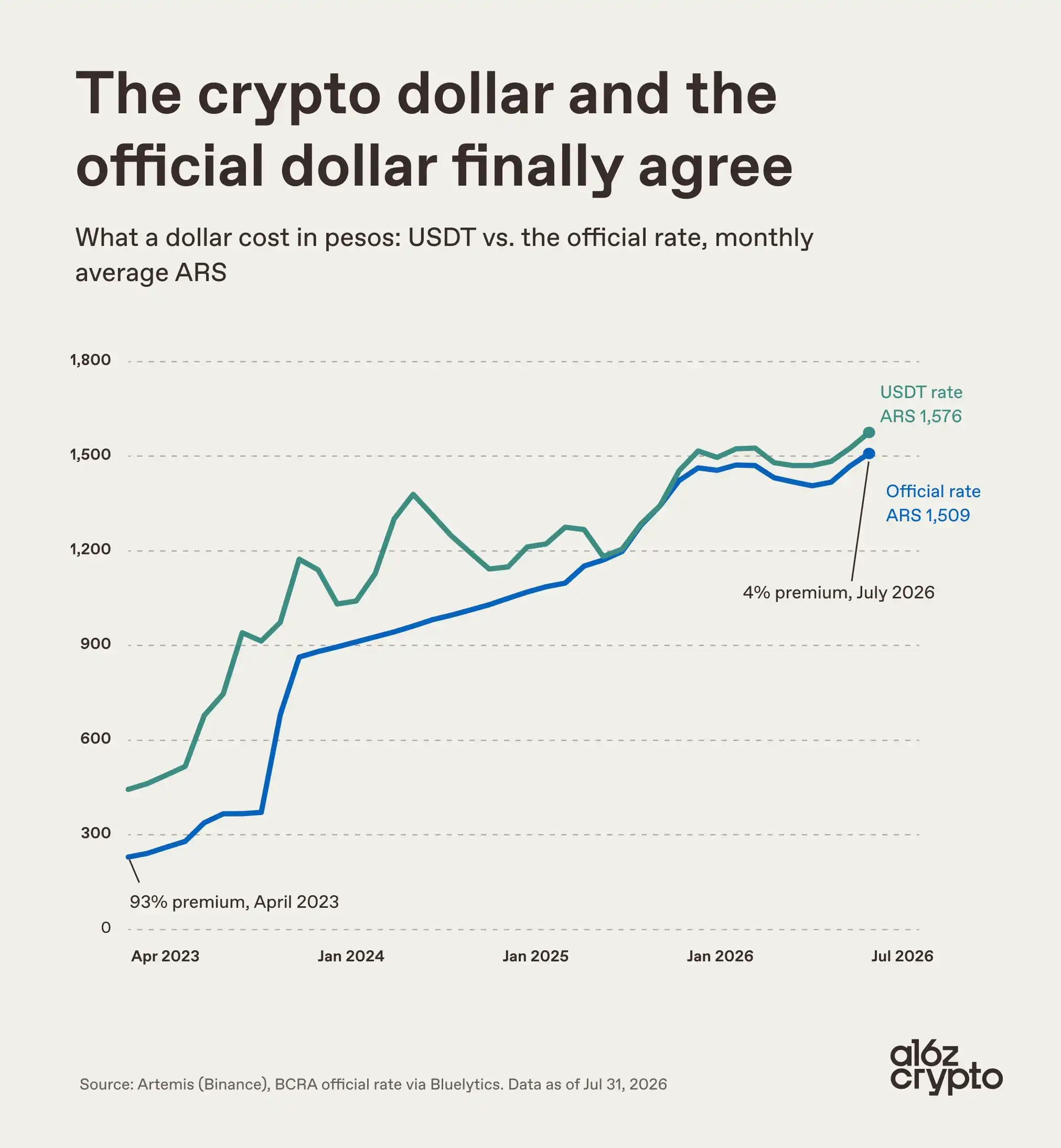
In Argentina, buying crypto with pesos often means buying dollars
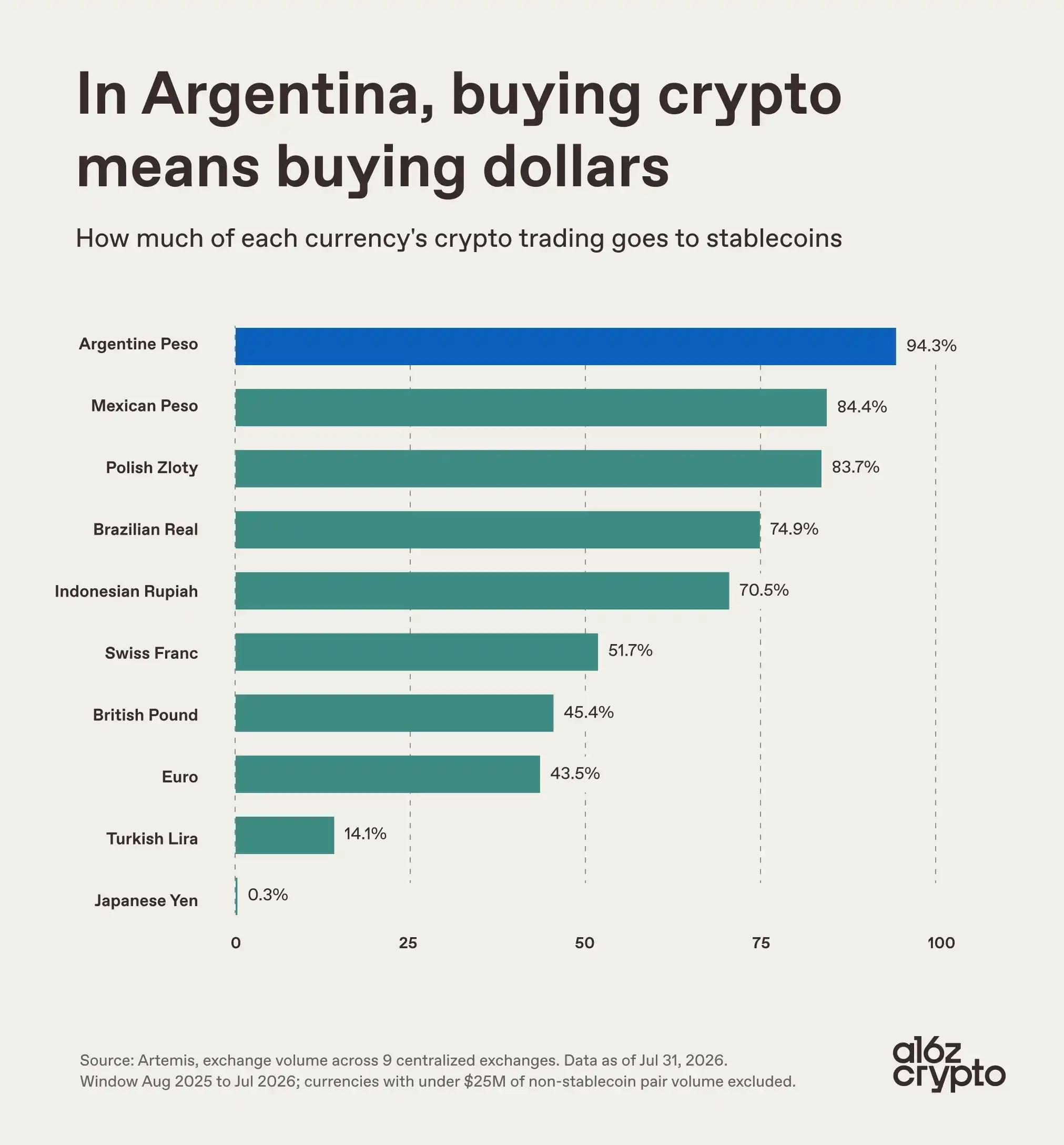
Stablecoins dominate the local crypto flow. Citing Artemis, a16z says 94% of peso-denominated crypto volume in Argentina goes into stablecoins, the highest stablecoin share among all major currencies tracked by the firm.
The report also notes that for several years, the price of a "crypto dollar" in Argentina traded well above the cost of buying dollars at the official exchange rate.
By 2023, capital controls had left many Argentines unable to access official dollars, and the gap between the official rate and the parallel market rate had widened to more than 100%. Stablecoins became an alternative because they trade around the clock and sit outside those controls.
After Argentina removed most restrictions on personal dollar purchases in April 2025, the two exchange rates largely converged. As of Aug. 28, 2026, one digital dollar still cost about 4% more than a dollar bought through the official market.
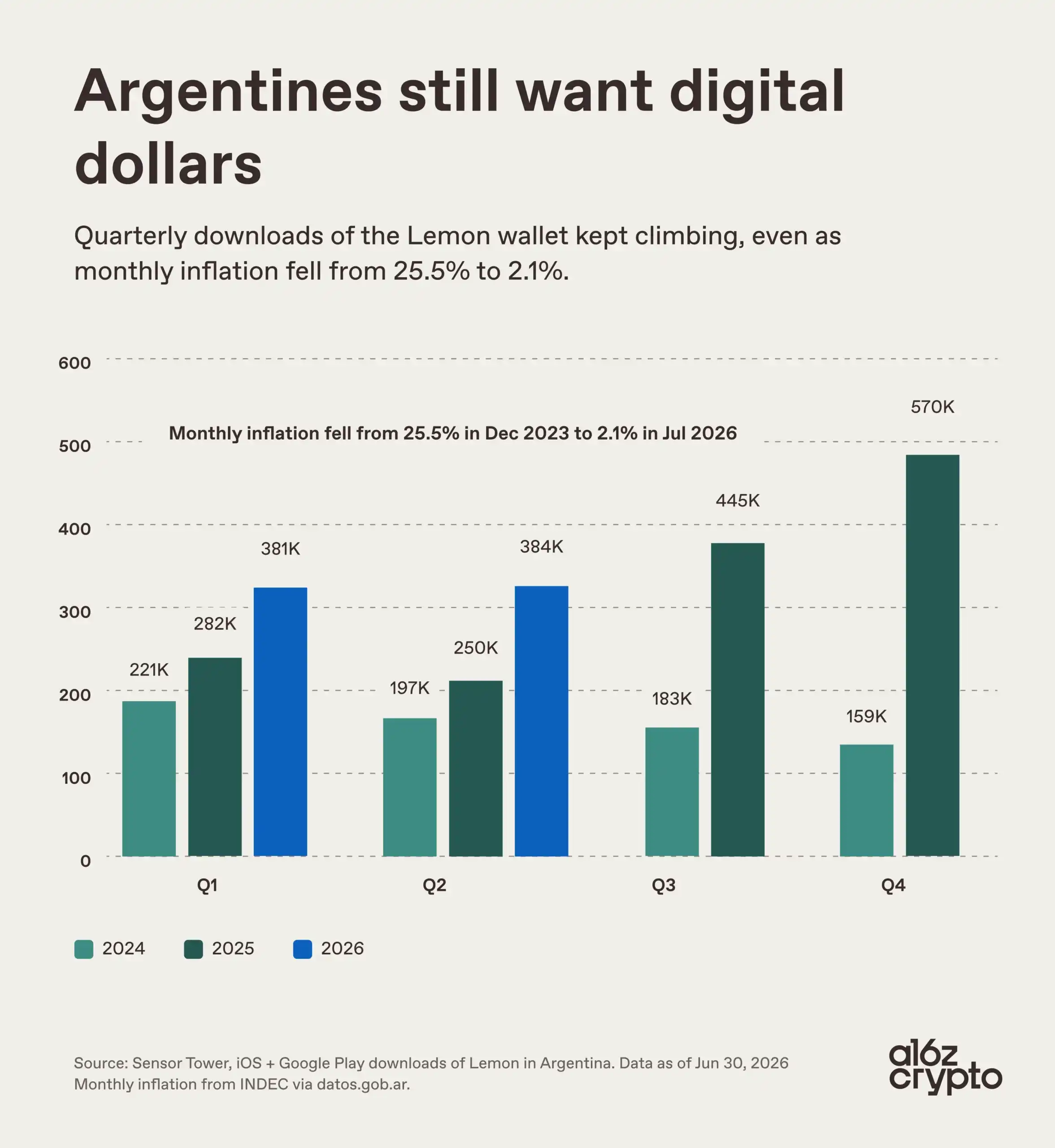
Usage persisted after inflation cooled
a16z says Argentina’s economic crisis now appears to be easing. Inflation has fallen, buying dollars is legal again, and the pressure that first pushed many users toward stablecoins has softened.
Even so, usage did not disappear. Stablecoin payroll adoption did not vanish and instead leveled off. Downloads for Lemon, one of Argentina’s largest crypto wallets, kept rising quarter after quarter even as monthly inflation fell from 25.5% to 2.1%.
For Argentine users, a16z argues, stablecoins may no longer be only an inflation hedge. They may be turning into a habit.