a16z’s seventh consumer AI ranking adds just 11 newcomers as personal agents stand out

a16z’s seventh consumer AI ranking adds just 11 newcomers as personal agents stand out

N
News Editor
2026-10-06 14:11:08
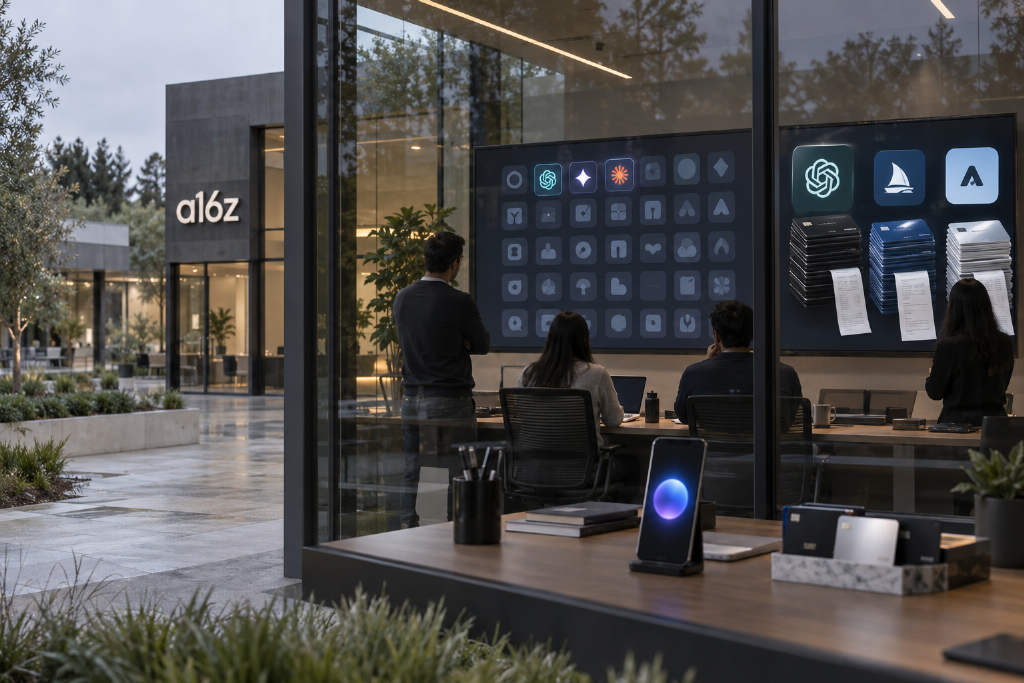
Andreessen Horowitz, or a16z, has released the seventh edition of its consumer AI ranking, and the latest update shows a market that is becoming harder for new products to break into. Across its web and mobile lists, only 11 products appeared for the first time, the smallest number of newcomers since the ranking began. This edition also introduced a new U.S. consumer spending ranking based on YipitData electronic receipt samples, shifting part of the focus from traffic to actual paid usage. The results point to a widening gap between popularity and monetization. Of the top 50 companies in the spending ranking, 29 did not appear in either the web or mobile traffic lists. The spending data also showed a sharp concentration among heavy users. The top 1% of paying users spent an average of $903 per month and accounted for 19.5% of consumer AI spending, more than the combined 16.6% contributed by the bottom 50% of users by spending. The median paying user spent $25 a month. As the leaderboard stabilizes, a16z said Personal Agent is one of the few categories still showing clear expansion, with startups and larger companies alike entering the segment.

Andreessen Horowitz, or a16z, has published the seventh edition of its consumer AI ranking. Across the web and mobile lists, only 11 products appeared for the first time in this release, the lowest number of newcomers across all seven editions.

a16z adds a U.S. consumer spending ranking

For the first time, the ranking also includes a U.S. consumer spending list. a16z used YipitData electronic receipt samples to track which AI products consumers are actually paying for.

The data suggests traffic does not necessarily translate into stronger revenue. Among the Top 50 companies in the spending ranking, 29 did not make either the web or mobile traffic lists.

Spending is concentrated among a small group of users

a16z said the top 1% of paying users spent an average of $903 per month and contributed 19.5% of consumer AI spending. That share was higher than the combined 16.6% from the bottom 50% of users by spending. The median paying user spent just $25 a month.

Personal Agent remains one of the few visible growth categories

As the rankings become more stable, Personal Agent stands out as one of the few new categories still expanding.

Half a year ago, a16z said general-purpose agents such as OpenClaw were not yet good enough for mainstream consumers. In this edition, the firm devoted a separate chapter to Personal Agent. Startups including Instinct, Tomo, Poke, Lindy and Town have appeared in the category, while Meta Muse, OpenAI Dots and xAI Grok Bot have also entered the field.

The latest ranking points to a consumer AI market where leading products are becoming more entrenched, while monetization is starting to diverge from raw traffic. The clearest new variable is no longer another chatbot, but agents that can directly complete tasks for users.

This article was originally published by Bit.Fan. For more cryptocurrency news and market insights, visit www.bit.fan.
100

Disclaimer:

The market information, project data, and third-party content displayed on this platform are for industry information sharing only and do not constitute any form of investment advice or return commitment.

Cryptocurrency trading carries high risks. Users should fully assess their risk tolerance and make independent decisions. All profits, losses, and legal responsibilities are borne by the users themselves.