
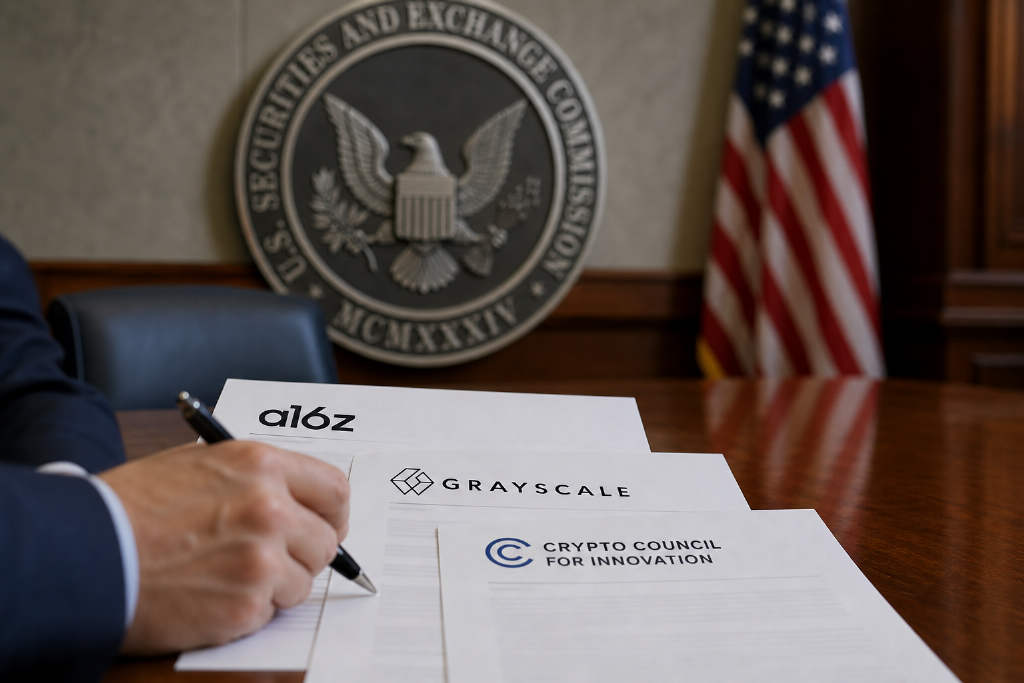
Crypto industry participants including Andreessen Horowitz (a16z), Grayscale and the Crypto Council for Innovation (CCI) are pressing the U.S. Securities and Exchange Commission to avoid blanket restrictions on so-called novel exchange-traded funds and instead review them based on each product’s risk profile, according to Cointelegraph.
The three comment letters were all submitted on Aug. 31, as the SEC’s 60-day public comment period on the regulation of novel ETFs was approaching its close.
SEC opened the consultation on June 30
The SEC launched the consultation on June 30, seeking public input on whether the current regulatory framework is adequate, how these funds should be regulated, and whether the registration process needs to be revised.
a16z says crypto ETPs should not be grouped with private-asset products
a16z argued that crypto-based exchange-traded products, or ETPs, now benefit from more mature market infrastructure, including exchange-approved listing standards and established disclosure requirements. On that basis, the firm said these products should not be placed in the same category as funds holding private assets or using other novel strategies.
Grayscale opposes added conditions tied only to the "novel" label
Grayscale made a similar case, saying digital asset products with mature compliance and disclosure records should not face new portfolio conditions or disclosure regimes solely because they are classified as novel.
CCI calls for comparable efficiency across ETF and non-ETF ETP regulation
CCI said regulatory efficiency should be comparable between ETFs and non-ETF ETPs, while existing investor protection measures should remain in place.
Industry groups reject category-wide changes but differ on labels and process
All three pushed back against category-based regulatory changes that could add extra requirements or delay product listings. At the same time, they did not fully align on classification, approval procedures and terminology.
The dispute over the ETF label stood out. a16z proposed that the term ETF should apply only to funds governed by the Investment Company Act of 1940. Grayscale, by contrast, said ETF should describe economic characteristics rather than a legal wrapper.