
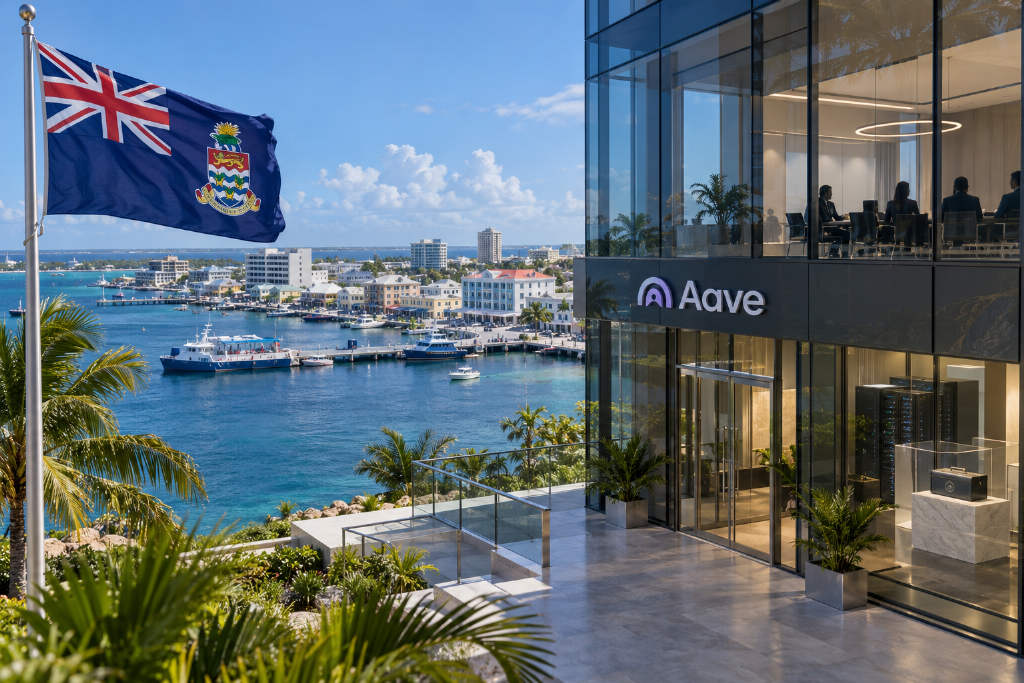
Aave Labs has published an ARFC on the Aave governance forum proposing the creation of the Aave Foundation, a Cayman Islands foundation company without members that would hold ownership of Aave Protocol trademarks and related intellectual property.
Within Aave governance, an ARFC is the detailed proposal stage. The plan is refined there, then put to a binding Snapshot vote before moving into the onchain governance process.
Why Aave says it wants a foundation
The proposal says Aave governance has funded a range of service providers over the years to build code, risk tools, models, and documentation. Ownership of those outputs, however, has not been handled the same way across different engagements. In some cases, the relevant assets are owned by the service providers that built them.
It also says Aave trademarks and major domain names currently sit outside the DAO’s control. A DAO cannot register trademarks, bring infringement claims, or hold legal title to domain names, which leaves the DAO paying for assets it cannot directly protect.
According to the proposal, a Cayman foundation company can solve that problem because it can own assets, sign contracts, and participate in litigation while also operating under a no-member structure, meaning no member has rights over the entity.
The post notes that foundations in DeFi have often drawn scrutiny because they can accumulate broad discretion over time. It says that usually happens when a foundation relies on annual treasury grants for funding and is run by the same team that originally proposed creating it. The design put forward here, the proposal says, removes both of those conditions.
The post also says that forming the entity, moving trademark registrations across jurisdictions, and adding IP assignment terms into existing agreements would each require legal work and related costs. A phased rollout is meant to give each funding request a defined scope so the community can review every step before the process continues. The DAO, the proposal says, would be able to stop the process at any point, while the foundation would still remain an operating entity with a defined governance structure.
Legal structure and control framework
The Aave Foundation would be incorporated in the Cayman Islands under the Foundation Companies Act as a foundation company without members. Under its memorandum of association, its purpose would be limited to holding, protecting, and licensing intellectual property for Aave Protocol.
The foundation would be managed by one independent director and supervised by one independent supervisor who has no affiliation with that director. After the initial appointments, the director could only be appointed or removed through an AIP.
Aave Labs, any service provider engaged by the DAO, and their affiliates would have no right to appoint the director or supervisor, and they would also be barred from holding either role.
Assets the foundation would hold
The proposal says the foundation would take legal ownership of the following assets:
- Aave trademarks;
- protocol codebase intellectual property assigned to the foundation;
- major domain names;
- intellectual property assigned to the foundation under service provider agreements.
As owner of those assets, the foundation would be responsible for applications, maintenance, protection, enforcement, and related legal action. Brand licensing would be one-way: the foundation would license the Aave name to product developers so Aave-branded products can continue to be launched, with no licensing fee charged.
The proposal says the DAO would still select service providers through the current governance process, define their scope of work, and approve compensation. Code, tools, models, and documents produced through those engagements would be assigned to the foundation and made a standard term of those agreements. In the proposal’s framing, that gives the DAO’s accumulated technical output a stable long-term owner while leaving the foundation with no authority over what gets built or who builds it.
Other duties and reporting requirements
The foundation would publish a quarterly report to the governance forum covering the assets it holds and any ownership changes, operating expenses, and any legal action taken to protect trademarks or the codebase. The first report would be due 90 days after the end of the first full calendar quarter following the start of operations.
The DAO would cover reasonable costs tied to entity formation, the engagement of a qualified company secretary, legal fees, and procedures related to transferring trademarks and intellectual property. The current proposal does not request any recurring budget. If funding is needed later, it would have to be requested through a separate governance proposal.
The proposal also states that listings, parameter changes, budgets, service provider engagements, and framework amendments would all remain under the DAO’s existing governance process.
At the entity level, the DAO would be able to appoint and remove the director through an AIP. The DAO would also hold consent rights over any amendment to the foundation’s constitutional documents, any disposal of core intellectual property, and any merger or reorganization of the foundation. It could also instruct the foundation, through an AIP, to wind up and transfer any residual assets to a successor entity.
What happens next
If the community reaches consensus on the ARFC, the proposal would move to a Snapshot vote and then to an AIP authorizing payment of reasonable entity formation costs, legal costs, and director appointment costs. After that, the foundation would be incorporated in the Cayman Islands and an independent director and supervisor would be appointed. Once the entity exists and can hold assets, Aave trademarks, major domain names, and codebase intellectual property would begin to transfer.
For future service provider relationships, IP assignment language would be added as a standard term when agreements are renewed or when service providers are replaced through the normal governance process.
The proposal says the foundation would operate strictly within that stated purpose and that governance would continue to control all protocol decisions exactly as it does now. Listings, parameters, budgets, service provider selection, and framework changes would remain in the hands of tokenholders through governance, and the foundation would have no voting, veto, or advisory rights on those matters.
The entity would have no members or shareholders, and no individual would hold an ownership interest in it. Its director would be independent, and the supervisor would be an independent service provider with no affiliation to that director. Aave Labs and any DAO service provider would have no seat at the foundation and no appointment rights.
The proposal adds that every later stage of the foundation’s development would return to the governance forum as a separate proposal and face a separate vote, giving the community the option to reject any stage.
FAQ: would the DAO still control the protocol?
Would Aave Labs gain control?
The proposal says no. Aave Protocol would continue to be governed by the DAO through tokenholders.
It says Aave Labs would not hold the director seat, would not serve as supervisor, and would have no appointment rights. Because the foundation would have no members, there would be no shareholder standing above the Aave ecosystem. The same restriction would apply to all service providers engaged by the DAO.
Would Aave governance change?
The proposal says it would not. Listings, parameters, budgets, service provider engagements, and framework amendments would continue to be decided by the DAO through the current process. The foundation would only hold legal title to the relevant assets and would have no discretion over protocol decisions.
Why the Cayman Islands?
The post says the Cayman Foundation Companies Act allows a foundation company to exist without members or shareholders while still being able to own assets, sign contracts, and participate in litigation. That, it says, would let the foundation hold and protect Aave trademarks without creating an owner above the DAO.
What if the DAO wants to dissolve the foundation?
The proposal says the DAO could at any time replace the director through an AIP or instruct the foundation to wind up and determine how residual assets should be handled, including transferring them to a successor entity. It adds that any such step would still be subject to the director’s fiduciary and statutory duties and to applicable law.
Which IP would move, and when?
According to the proposal, Aave trademarks, major domain names, and protocol codebase intellectual property would transfer once the foundation entity has been formed. Intellectual property generated in future service provider engagements would then be assigned to the foundation as a standard contractual term under the relevant agreements.