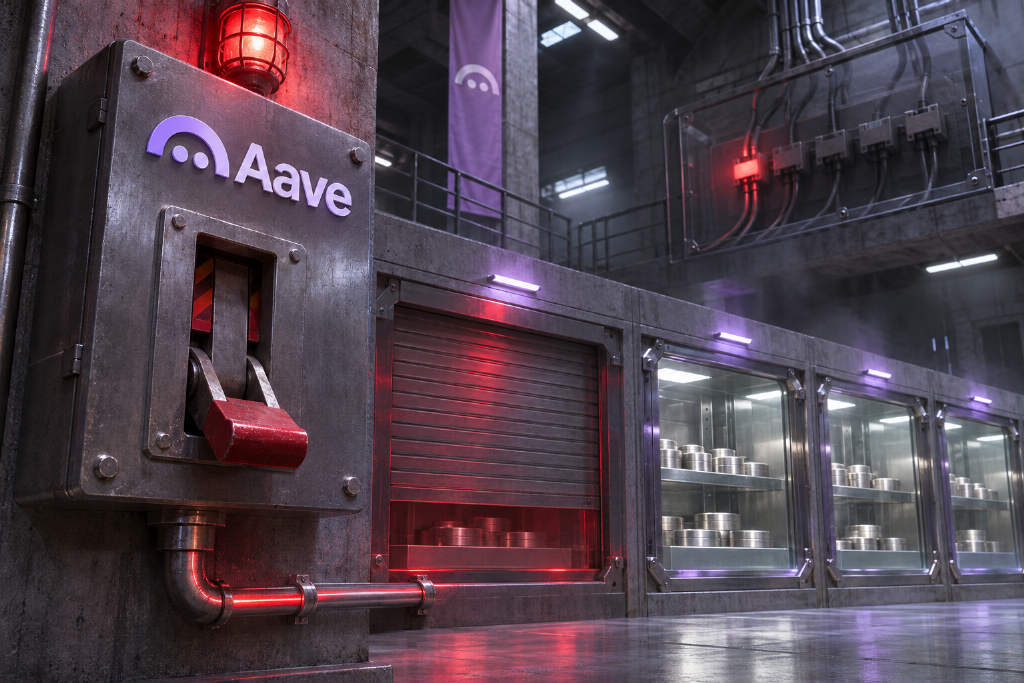
Aave founder Stani Kulechov said DeFi lending protocols need circuit-breaker mechanisms because the effects of oracle failures can take years to remove. He cited two incidents involving large losses and sudden movements of funds. A configuration error on March 10, UTC, led to about $27 million in liquidations, according to his example. In April, UTC, the LayerZero bridge used by KelpDAO was hacked for $292 million, after which Aave recorded $8.45 billion in deposit outflows within 48 hours. Aave is now advancing V4, which can freeze specific collateral assets. Kulechov also said deposits in Aave’s lending markets exceed $30 billion. He added that a DAO had previously required about $300 million in rescue funding. Techub News reported the remarks, citing Crypto Briefing. The comments were made in London on November 11, 2026.
Aave founder urges circuit breakers for DeFi lending
Aave founder Stani Kulechov said on November 11, 2026, London time, that DeFi lending protocols need circuit-breaker mechanisms. He said the effects of oracle failures can take years to remove.
Kulechov cited a configuration error on March 10, UTC, that led to about $27 million in liquidations. He also pointed to an April, UTC, incident in which the LayerZero bridge used by KelpDAO was hacked for $292 million. Aave then recorded $8.45 billion in deposit outflows within 48 hours.
Aave is advancing V4, which can freeze specific collateral assets. Its lending markets hold more than $30 billion in deposits, Kulechov said. He also said a DAO had previously needed about $300 million in rescue funding. Techub News reported the information, citing Crypto Briefing.
This article was originally published by Bit.Fan. For more cryptocurrency news and market insights, visit www.bit.fan. Disclaimer:
The market information, project data, and third-party content displayed on this platform are for industry information sharing only and do not constitute any form of investment advice or return commitment.
Cryptocurrency trading carries high risks. Users should fully assess their risk tolerance and make independent decisions. All profits, losses, and legal responsibilities are borne by the users themselves.