
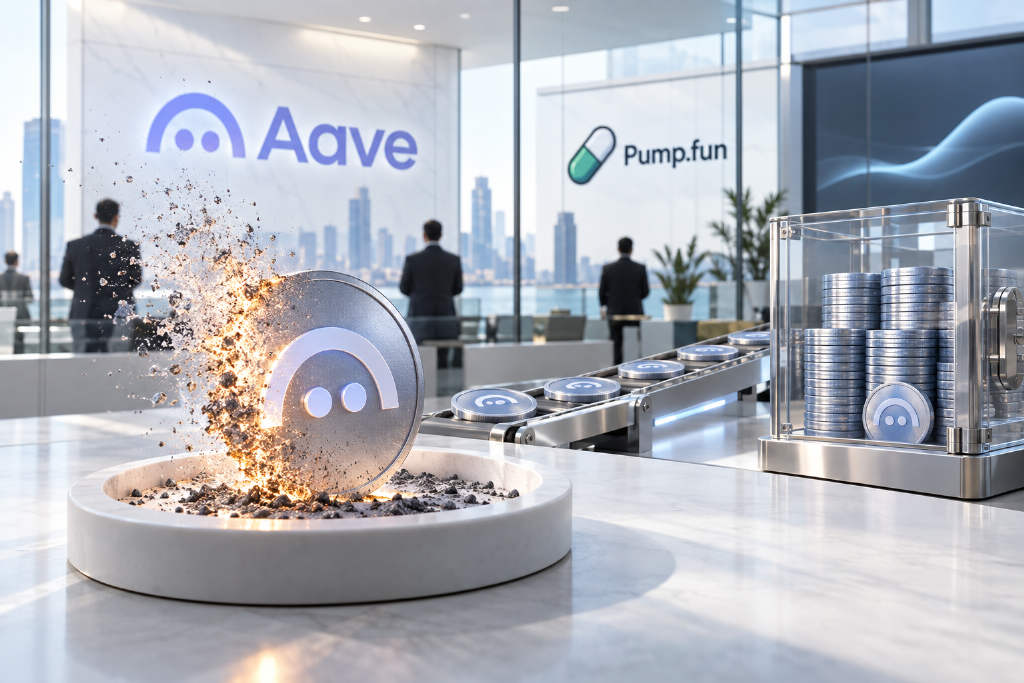
On Sept. 29, Aave founder Stani Kulechov said the team is "considering" adding a token burn mechanism to Aavenomics 3.0. AAVE rose more than 11% on the day after the post.
That same day, Pump.fun’s automated buyback contract was still running on schedule, using 50% of platform revenue each day to purchase PUMP on the open market and burn it permanently.
Buybacks and burns have become one of the defining narratives of this cycle. But in crypto, the effect depends less on the headline and more on what happens after the tokens are repurchased.
Four possible outcomes after a token buyback
Investors often compare crypto buybacks with stock buybacks. In equities, a company uses profits to repurchase shares, reducing the float and, in theory, increasing value per share.
Crypto works differently. Once a project buys tokens back, those tokens can end up in at least four very different places, and each path carries a different implication for holders.
- Treasury or ecosystem reserve. The tokens leave the open market, but they do not leave total supply. They are parked in a DAO treasury or reserve address and can later be spent again through governance. That may reduce near-term sell pressure, but it does not necessarily shrink long-term supply.
- Permanent burn. Tokens are sent to an address with no private key holder and removed from total supply. This is the closest equivalent to share cancellation. Even then, the effect can be offset if a project still has a large amount of locked tokens scheduled to unlock.
- Dedicated reserve or fund. Tokens may be moved into an insurance fund, liquidity pool, or staking reward pool. The key questions are whether withdrawals are possible, whether there is a lock-up period, and whether the tokens can eventually return to the market in another form.
- Distribution to stakers. Repurchased tokens can be paid out as yield to stakers. That is real income for stakers, but for non-stakers it can amount to dilution. It also matters whether that yield comes from actual protocol revenue or from fresh token issuance.
Aave bought more than 205,000 AAVE, but all of it stayed inside the system
Aave’s buyback story has unfolded in three stages.
In April 2025, Aave DAO approved a structured buyback plan. The finance committee was tasked with buying about $1 million worth of AAVE per week on the open market, with an annual budget of roughly $50 million. By February 2026, the program had spent about $42 million and acquired more than 205,000 AAVE, equal to 1.28% of total supply.
Where did those tokens go? They were all sent to the Aave Ecosystem Reserve. That reserve is used for staking incentives, developer grants, and service provider payments, which means the tokens can be spent again later.
In March 2026, the DAO voted to cut the annual buyback budget from $50 million to $30 million. Buybacks were paused for a period from April through June. On June 27, Aavenomics 3.0 went live and replaced the committee-led process with an on-chain automated mechanism. The system is now buying about 292 AAVE per day.
Kulechov has now raised the possibility of adding burns. But as of publication, there was no governance proposal, no burn ratio, no execution timeline, and no detailed parameter set. The article cited Cointribune as saying the market heard the word "burn" and buying followed, but "considering" and "deciding" are still separated by a full governance process.
Pump.fun burned 36% of circulating supply. The price still stayed weak
Pump.fun took a very different route.
From the token’s launch through April 2026, Pump.fun used 100% of platform revenue to buy back PUMP. That was one of the most aggressive buyback commitments in the sector. On April 28, 2026, the team burned all accumulated repurchased PUMP in one move, worth about $370 million and equal to 36% of circulating supply. At the same time, it said the model would shift to using 50% of revenue for buybacks and burns, with the other 50% allocated to business development. The buyback-and-burn process would run through an irreversible locked contract for one year.
By the end of July 2026, Pump.fun had spent about $414.6 million in total to buy back and burn 153.73 billion PUMP.
Even so, the token price remained under pressure. PUMP fell from its $0.004 launch price to around $0.0013, down about 89% from its all-time high of $0.01214.
The article cited analysis from 8Blocks, which argued that Pump.fun’s buyback amount covered only about 2% of daily trading volume. Another issue was utility. PUMP is not required to create meme coins on Pump.fun, trade them, or use PumpSwap. Platform growth and token demand are not linked by a mandatory usage path.
At the same time, tokens held by the team and early investors were still unlocking on schedule. That meant the burn pace was not enough to outstrip new supply entering circulation. Net circulating supply did not truly contract.
The article’s conclusion on Pump.fun was blunt: a buyback-and-burn system can be transparent, automatic, and irreversible, but if the token itself lacks internal demand, supply-side action alone may not create lasting price support.
Hyperliquid offers a model closer to the textbook version
Hyperliquid’s HYPE presents a different sample.
The project’s Assistance Fund uses 97% to 99% of protocol trading fees to automatically buy HYPE on the open market. In December 2025, validators formally recognized the HYPE held by the Assistance Fund as permanently burned and removed it from both circulating supply and total supply.
As of September 2026, about 48.42 million HYPE had been burned, equal to 4.84% of the 1 billion token total supply. The purchase cost was about $1.321 billion, and at current prices those holdings were worth about $4.366 billion. Annualized buyback intensity was about 7% of market capitalization, or 4 to 5 times Ethereum’s EIP-1559 burn rate.
HYPE was trading near its all-time high, with a market capitalization of about $14 billion. Hyperliquid’s revenue for 2026 year to date stood at about $429 million.
The article pointed to at least two structural differences between HYPE and PUMP. First, HYPE has real utility inside the Hyperliquid ecosystem, including staking, governance, and gas fee payments. Platform growth can translate directly into token demand. Second, Hyperliquid’s trading volume is large enough for fee-funded buybacks to matter. The platform liquidated $493 billion in the first quarter of 2026.
That does not remove the risks. The article noted that the buyback mechanism is a protocol policy rather than an immutable contract promise, so governance could theoretically change or pause it. It also noted that only about 22% of HYPE is currently circulating, with the rest set to unlock over several years.
$638 million in buybacks from January to August 2026
According to data cited in the article from Foresight News, crypto projects spent about $638 million on token buybacks from January through August 2026, up 17% year over year.
Nearly 90% of that total came from just two projects: Hyperliquid and Pump.fun.
The rest was spread across projects including the Sky ecosystem, which bought back about $26 million worth of SKY, and Uniswap, which began using protocol fees to burn UNI in December 2025.
The article argued that the more important question is not how much money was spent, but what that spending actually changed. How much of the $638 million truly reduced supply? How much simply moved tokens between treasury wallets and the market? How much was fully offset by token unlocks?
A five-point checklist for any buyback narrative
The piece closed with a checklist of five questions token holders should ask whenever a project announces a buyback.
- Where does the buyback funding come from? If it comes from real business revenue such as fees, interest, or licensing income, the structure is healthier. If it comes from treasury token reserves or fresh issuance, it is closer to moving value from one pocket to another.
- Where do the repurchased tokens go? Permanent burns to a verifiable dead address are the only clear way to reduce supply. Tokens sent to a treasury, ecosystem reserve, or discretionary fund can still return to the market later.
- Can the buyback pace outrun token unlocks? If large allocations for teams, investors, or ecosystem incentives are still scheduled for release, small recurring burns may not change the net supply picture.
- Is the mechanism irreversible or adjustable? The article said Pump.fun’s locked contract is stronger than Aave’s earlier committee-led model. Even so, Hyperliquid’s Assistance Fund could still be modified in theory through governance.
- Does the token have internal demand? This was presented as the most overlooked point and the most important one. Without a real use case, buybacks may only absorb sell pressure rather than create fresh demand. Once the budget runs out or unlocks accelerate, the price can still fall.
The article ended by noting that one post from Kulechov about "considering" burns was enough to lift AAVE more than 11% in a day. That, it said, shows how eager the market is for the burn narrative. Whether that narrative turns into durable value still depends on governance, net supply changes, and token demand itself.