
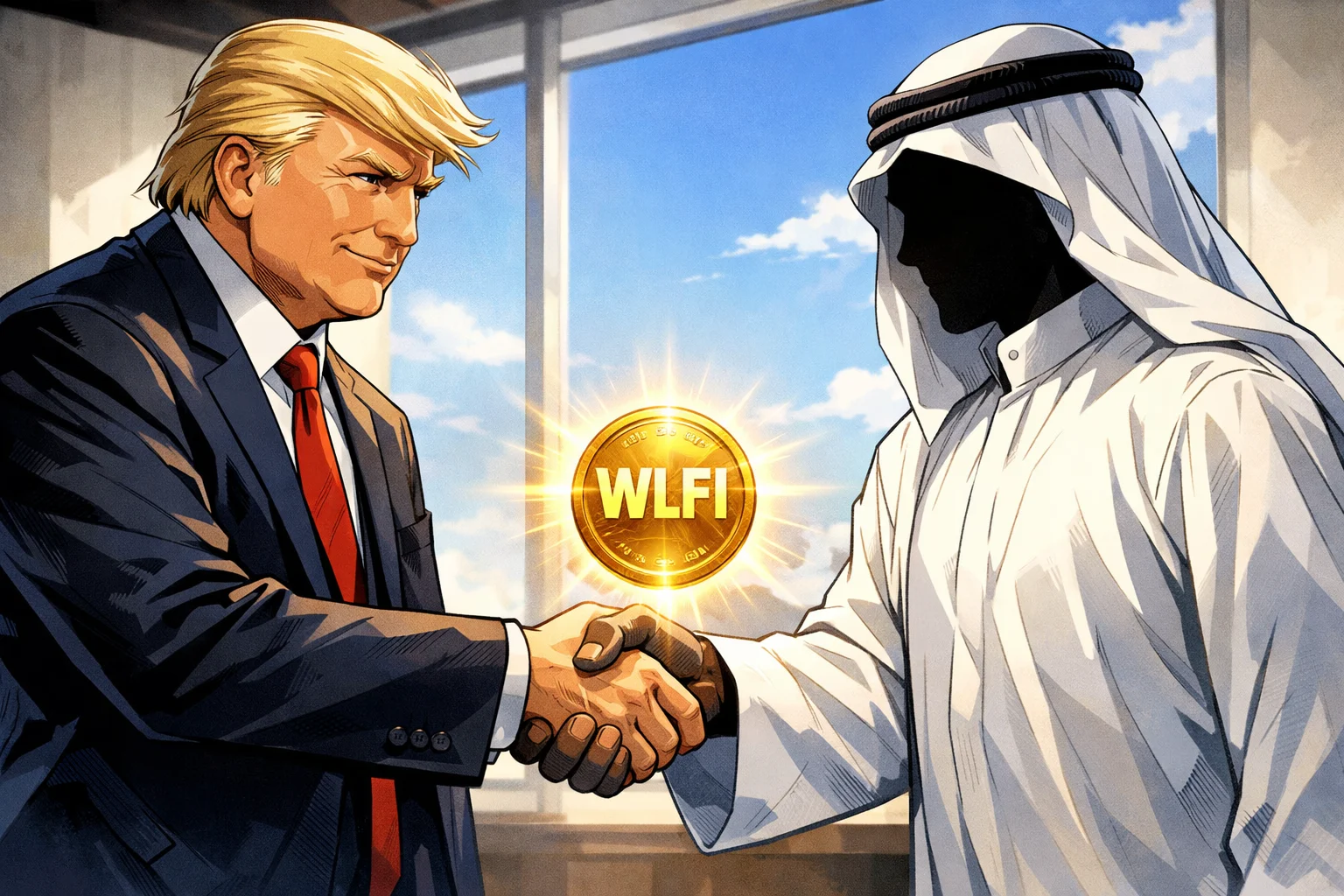
World Liberty Financial, or WLFI, the crypto project tied to Donald Trump’s family, was reported to have sold 49% of its equity to an Abu Dhabi royal insider in a $500 million deal struck shortly before Trump returned to the White House in January last year. According to the report, an initial $187 million payment had already been sent to a Trump-linked business, while the agreement remained undisclosed until recently.
A private deal signed days before the inauguration
The Wall Street Journal said the transaction was completed behind closed doors just days before Trump’s inauguration. That timing has become a central issue in the backlash. Senator Elizabeth Warren and others have questioned whether a sitting president’s family should be taking money tied to a foreign sovereign power, arguing that the arrangement raises national security concerns as well as conflict-of-interest questions.
Tahnoun bin Zayed’s role drew added attention
The report identified Tahnoun bin Zayed Al Nahyan as a key figure behind the transaction. He serves as the UAE’s national security adviser and is also described as a major force in the country’s sovereign investment network. His MGX fund has a broad presence across technology and finance. The scrutiny intensified because, after his backing of WLFI, the Trump administration approved a plan allowing one of his companies to obtain hundreds of thousands of advanced AI chips, even though US national security officials had warned that such chips could ultimately reach China.
USD1 became part of MGX’s Binance transaction
WLFI’s ambitions extend beyond token sales. In April 2025, the company launched its dollar-pegged stablecoin USD1. The token’s market value climbed past $1 billion within weeks and has recently reached $5 billion, overtaking PayPal’s PYUSD. The biggest controversy came when MGX said it would use USD1 to settle its $2 billion purchase of a minority stake in Binance, a deal described in the report as the largest stablecoin settlement transaction in crypto history.
That put a Trump family-linked stablecoin at the center of a major transaction backed by Abu Dhabi sovereign capital and involving the world’s largest crypto exchange. Warren and Senator Jeff Merkley later sent a letter to WLFI demanding that related records be preserved and produced. In its response, WLFI acknowledged that without USD1, MGX and Binance would likely have completed the deal using foreign fiat currency.
Token buyers remain stuck with most holdings locked
The political controversy is only part of the story. WLFI token holders are also facing a long-running liquidity problem. About $550 million worth of tokens were sold between October 2024 and January 2025, at prices ranging from $0.015 to $0.05. Yet more than 80% of those tokens remain locked.
By September 2025, the team had released only 20%, allowing early buyers to cash out part of their positions. The timing for the remaining unlocks is still left to the discretion of the co-founders. WLFI has fallen about 60% from its all-time high of $0.3, and holders have used the governance forum to demand a clear schedule for the rest of the unlocks.
Crypto now accounts for a larger share of family wealth
The article said WLFI has a market value of about $3.3 billion and a total supply of 100 billion tokens. Trump’s family, through DT Marks DEFI LLC, holds 60% of WLFI and receives 75% of net revenue from token sales. A New Yorker analysis published in August 2025 estimated that the family had already made $412.5 million from the project; by December 2025, that figure had risen above $1 billion, with another roughly $3 billion in unsold tokens still on hand.
Beyond WLFI, the family’s crypto exposure also includes the TRUMP meme coin and mining-related ventures. The report said crypto assets now account for about 20% of the family’s publicly visible wealth, which it put at roughly $6.8 billion.