

Addy Osmani, a member of the Anthropic Claude Code team and a former Google engineering director, said many users are still carrying over an older habit when working with Claude: giving the model too many prompts and too many instructions. His point was simple. As newer models get stronger, the way people use them needs to change as well.
He framed the article bluntly: users are probably still over-prompting Claude. In his view, the old style of specifying every step and guiding the model through each stage is no longer the default approach for newer generations.
Start with the goal and the acceptance criteria
For Opus 5.5, Osmani said users should first try a simpler pattern: describe what needs to be done and how Claude should check whether the task is complete, then let it work. He said reasoning intensity can start at /effort medium and be adjusted later if needed.
If the user has not fully clarified the requirement, he suggested asking Claude to keep questioning until it has enough information to write a requirements document. After that, the user can open a new session and run the work from that document.
Acceptance criteria, in his telling, deserve extra attention. Claude will stop once it believes the task is finished. If it can run checks, judge the result on a pass/fail basis, or validate against a clear numeric target, and if it can read the resulting report, it can continue revising and checking on its own.
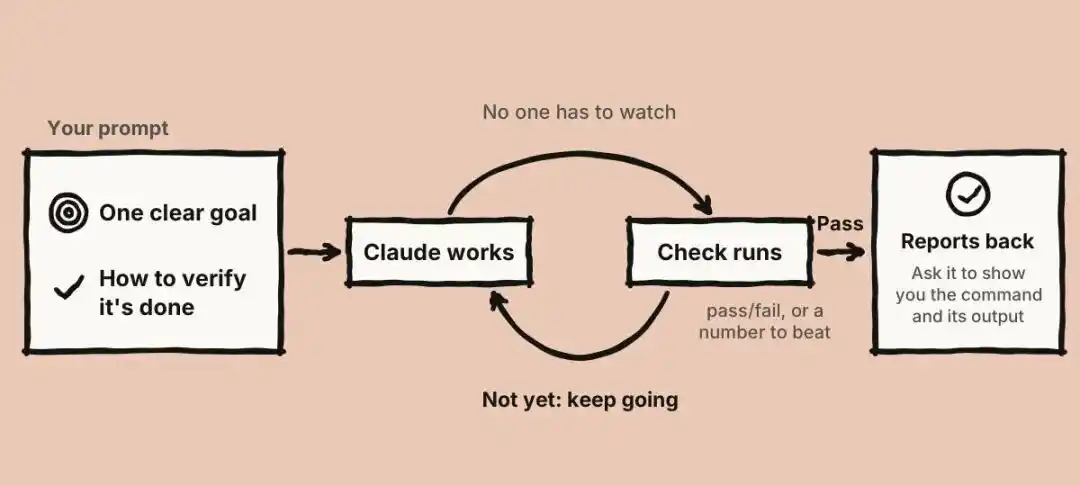
That makes the task more independent and reduces the need for user intervention in the middle. For long-running background work, he said users can set conditions with /goal and have another model check after each round whether those conditions were met.
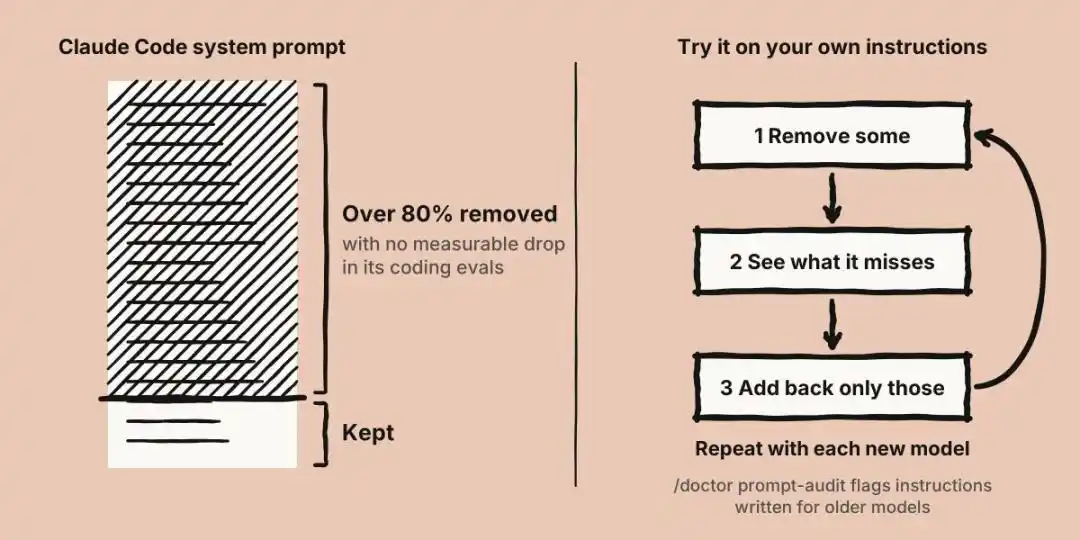
Wharton School management associate professor Ethan Mollick added a separate suggestion on when users should step in: set checkpoints during the task so the model can report early ideas or show a prototype.
Claude Code cut more than 80% of system prompts
Osmani wrote that for models including Claude Opus 5 and Claude Fable 5, Claude Code removed more than 80% of its system prompts, with no measurable decline in coding evaluation performance.
He said users should run a similar test on their own instructions when a new model is released: remove part of the prompt set first, see where the model starts missing requirements, then add back only the instructions that still matter. The /doctor prompt-audit command can help identify prompts that were written for older models.
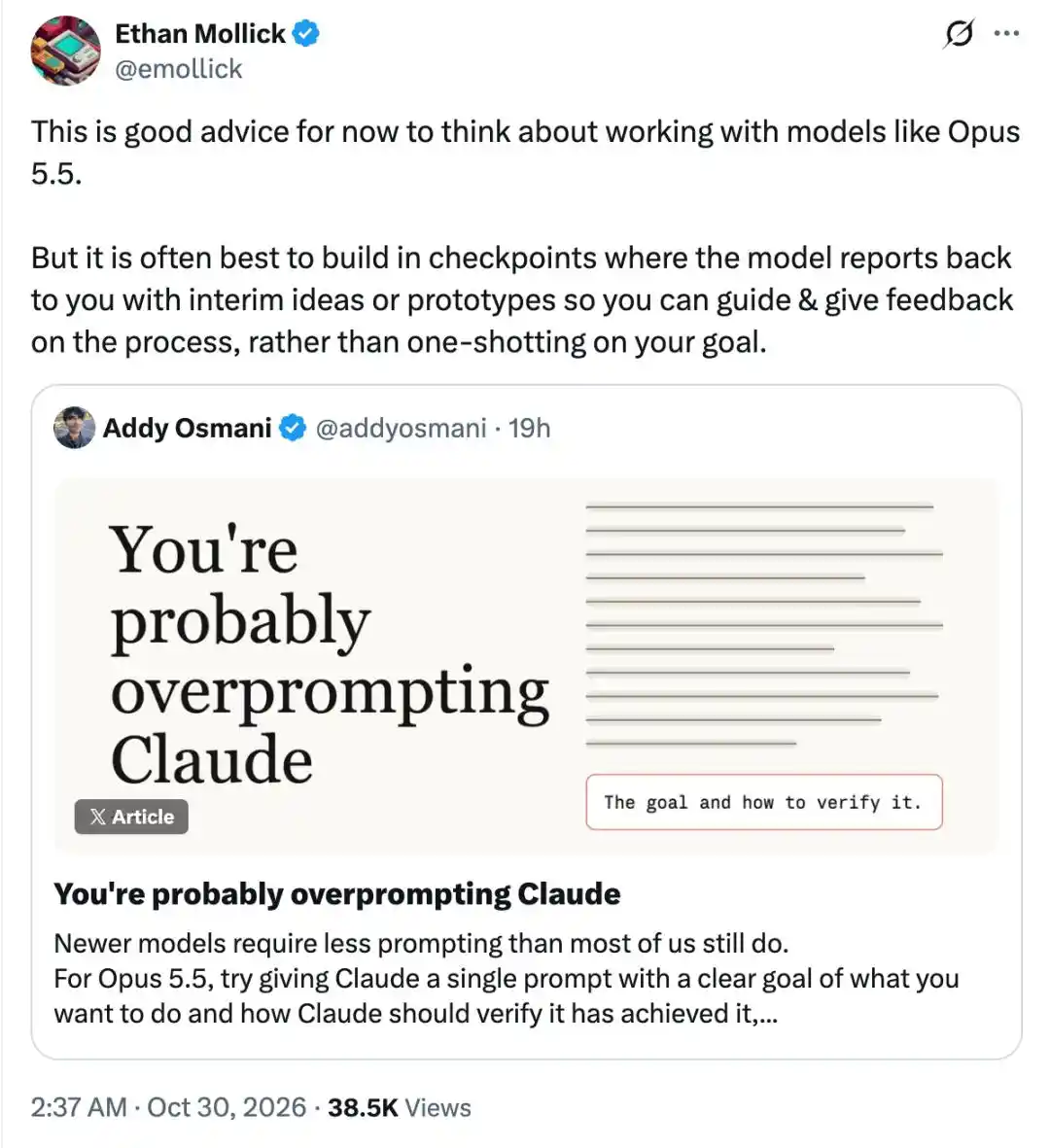
His broader takeaway was that prompts need periodic cleanup. Rules that have accumulated over time should be tested again instead of being kept by default.
Subagents should match the size of the task
Osmani said the same adjustment applies to subagents. Claude already knows how to delegate work on its own, so in many cases users can let it decide. He said explicit parallel splitting makes more sense for large, self-contained jobs such as broad reviews or code migration.
For smaller tasks, using multiple subagents can add cost and waiting time. Whether to split the work still depends on the task itself.
In his view, subagents are useful for parallel execution and second opinions, but the number of them should fit the scale of the job. Based on his observation, users building their own agents may get better results from a single agent with the right skills, while also keeping costs lower and response times faster.
Cloud sessions are for work that continues after you leave
For users who want tasks to keep running after they close the laptop, Osmani recommended Claude cloud sessions. They can be launched from claude.ai/code, from the Claude app, or through claude --cloud.
He said a cloud session reclones the code repository inside a separate virtual machine, so local commits need to be pushed to the remote before the session starts. After that, users can check progress on a phone, answer questions raised in the session, then review code diffs and create a PR. Tasks that depend on machine-specific local resources should stay on the local machine.
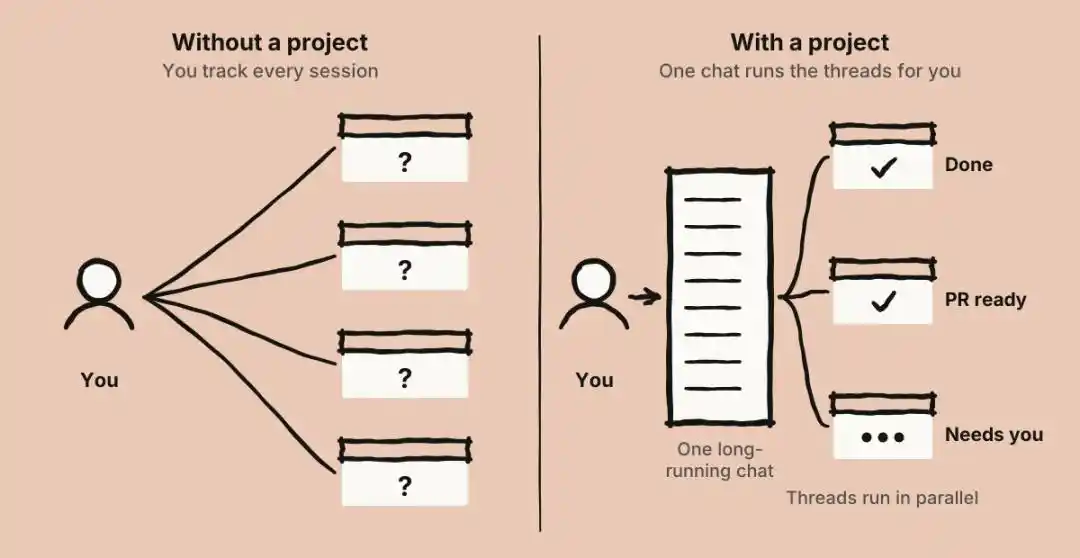
Running multiple sessions at the same time raises management overhead. Users need to track what each session is doing, which ones are finished, and which ones are waiting for a reply. Osmani's advice was to first make sure one session can complete a task independently before trying to run several at once. If every task needs frequent intervention, more sessions only add switching and coordination work.
Projects handles part of the coordination work
He said the Projects feature in Claude Code takes on some of that management burden. A project works like a long-running conversation where users can drop in tasks and questions over time. Claude then creates a separate thread for each item, usually processing them in parallel through cloud sessions.

Requirements already given for the project carry over to later threads. The Overview page brings together task progress, PRs ready for review, and items waiting for user input. According to the article, Projects was in public beta for Pro and Max users at the time.
Verification and code review matter more as execution shifts to the model
Osmani said that as more execution work is handed to the model, users need to spend more attention on checking results. Recent versions of Claude Code have made auto mode the default startup mode for interactive terminal sessions, with a classifier evaluating Claude's actions.
He also warned that auto mode still has limits, and permission prompts still need careful review one by one. When Claude reports that a task is complete, he suggested asking it to show the commands it ran and the output it produced, or to provide screenshots so the result can be checked against reality.
Code review can also start with Claude. Osmani said that inside the Claude Code team, most changes are reviewed and corrected by Claude at least once before a human looks at them. Users can use Code Review in Team and Enterprise plans, or the lighter /code-review option, which asks a subagent that has not seen the current conversation to inspect the code diff.
He added that opening a separate session with a requirements document can also produce an independent review. In that review, users can ask Claude to focus first on requirements and functionality, while treating code style as secondary.
Recheck your workflow every few months
At the end of the article, Osmani said users should revisit their workflow every few months: which prompts can now be simplified, which tasks can be handed to the model to complete on its own, and which results still need human verification.
The piece was republished from the WeChat public account Jiqizhixin, with the account ID almosthuman2014. The byline was listed as "关注大模型的."


