
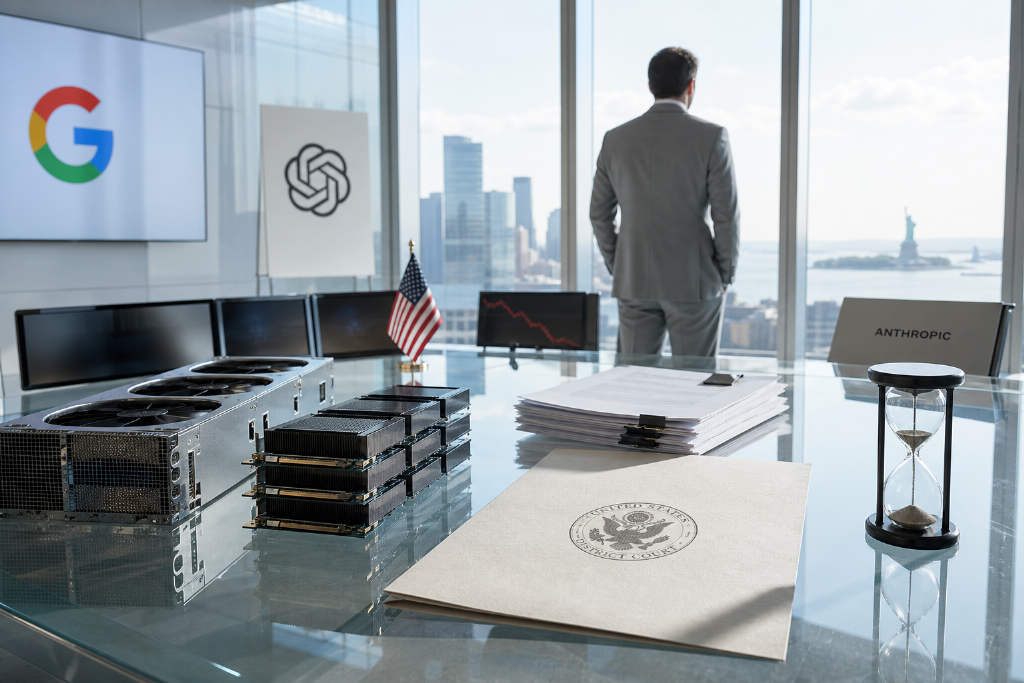
An opinion piece carried by MarsBit and attributed to the WeChat account "AI价值官," authored by RELIEX, argues that the current artificial intelligence race has turned into a capital wager that participants can hardly afford to lose. The article places today’s AI frenzy alongside episodes such as tulip mania, the South Sea Bubble, the dot-com era and the collapse of Lehman Brothers in 2008, then says the present cycle is different in scale and consequence.

Its central claim is blunt: this is no ordinary market contest, and the stakes now extend beyond corporate winners and losers.
A leveraged bet on memory suppliers, then a sharp reversal
The article says Leopold Aschenbrenner, who was dismissed by OpenAI in 2024, went on to establish the hedge fund Situational Awareness. It puts the fund’s initial size at about $200 million and says assets had climbed to roughly $45 billion before July this year.
According to the piece, the fund used leverage to build concentrated positions in memory and storage suppliers including SanDisk, Micron and SK Hynix, companies it describes as major beneficiaries of the AI buildout.
The article lists a string of financial results to illustrate that point. Samsung Electronics posted 130% year-over-year revenue growth in the second quarter, while operating profit rose more than 18-fold, with semiconductors contributing 99% of company profit. SK Hynix recorded 257% revenue growth and 557% operating profit growth. Micron’s revenue in the third quarter of fiscal 2026 rose 345.7% year over year, and GAAP net income increased by nearly 14 times. Kioxia’s revenue in the first quarter of fiscal 2026 climbed 415.5%, with net income up more than 45-fold. SanDisk’s revenue in the fourth quarter of fiscal 2026 rose 372%, GAAP net income topped $6.9 billion versus a GAAP net loss of $23 million a year earlier, and gross margin reached 84.6%.

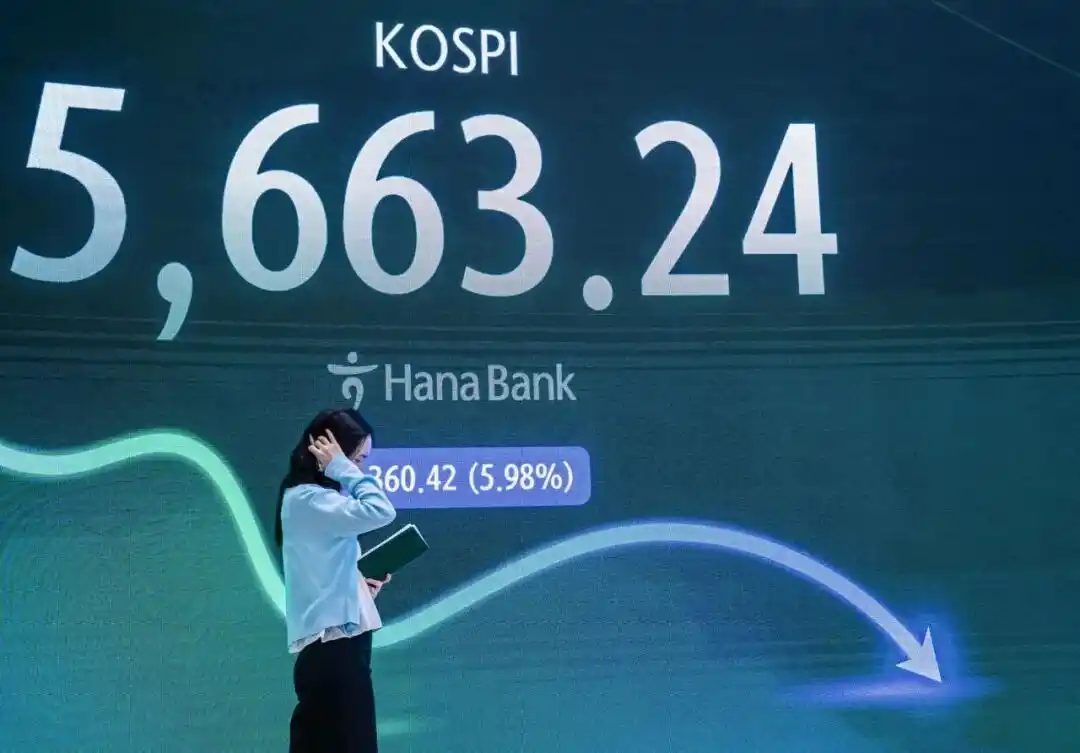
That momentum, the article says, broke in July. Shares of those suppliers were sold heavily, and SanDisk alone fell by nearly 47% during the month. Situational Awareness then reportedly lost $35 billion in a single month, surpassing the 2021 Archegos losses tied to Bill Hwang, which the article describes as a hedge fund record.
The piece attributes the move to a chain reaction inside the market: one trader locks in gains, one institution gives back profits, others follow, and the selling spreads.
U.S. litigation is presented as a warning for AI liability
The article then pivots to U.S. court developments, arguing that a broader shift may be under way in how platform and algorithm-related harms are treated.
It focuses on the social media youth addiction litigation, MDL 3047. Parents and teenagers have accused Meta, TikTok, Snapchat and YouTube of designing addictive platforms that harmed young users’ mental health, leading to depression, anxiety, eating disorders and self-harm. As of Aug. 25, the article says, the number of cases had jumped from fewer than 1,000 at the start of the year to more than 3,100.
For the first three years after the litigation began, none of the defendants paid compensation, according to the article, and large companies routinely relied on Section 230 of the U.S. Communications Decency Act as a defense. That changed in the first quarter of 2026, the piece says.
In January, Snap and TikTok reached confidential settlements with plaintiffs before a bellwether trial. In March, a Los Angeles Superior Court jury found Meta and Google negligent in certain design choices and ordered the two companies to pay a combined $6 million. In May, the first federal MDL bellwether case also settled before trial, with Snap, TikTok and YouTube agreeing to pay $27 million.
The article adds that Mark Zuckerberg appeared at a hearing in Los Angeles earlier this year. On Aug. 18, a separate lawsuit brought by 29 states against Meta went to trial first in Oakland, where the theoretical maximum penalty was put at $1.4 trillion, nearly equal to Meta’s market capitalization.
In the article’s reading, those legal developments matter for AI because companies may no longer be able to rely on familiar arguments such as “algorithms are not guilty” or “algorithms do not need values” to avoid responsibility. It argues that if a company uses AI to write code or build products, it may have to bear responsibility when problems emerge. If user-posted AI content infringes copyrights or other rights, the platform may also face secondary liability.

The article says the institutional governance of AI in the United States remains highly uncertain in legal practice, and describes that uncertainty as one of the biggest destabilizing factors in the broader AI capital trade. It also says companies including Google, Microsoft, OpenAI, Meta, Anthropic and Pentair are trying to cement their early lead with support from power centers in the White House and the federal government, even as internal political and institutional frictions create resistance.
Spending is rising fast while profitability remains distant
The piece argues that the pressure becomes more obvious on a five- to ten-year horizon.
It says Google posted a negative free cash flow figure of $5.9 billion in the second quarter for the first time in its history. In the first half of this year, Google generated $80.5 billion in operating revenue, but free cash flow fell from about $24.3 billion to just $4.3 billion.
Google’s capital expenditure, the article says, rose from $52.5 billion in 2024 to $91.4 billion in 2025, will reach $200 billion in 2026, and will continue to increase sharply in 2027. For comparison, it says total AI spending by large companies including Amazon, Google, Meta, Microsoft and Oracle in 2025 was only $121 billion.

The article cites UBS analysts as forecasting that global companies will add as much as $900 billion in new debt in 2026. Morgan Stanley and JPMorgan are described as even more aggressive, predicting that the tech industry may need to issue as much as $1.5 trillion of new debt over the next several years to fund AI and data center infrastructure.
It also revisits OpenAI. Sam Altman, the company’s chief executive, appeared before Congress in 2023, the article notes. OpenAI is said to be targeting cumulative investment of $600 billion by 2030, down from an earlier expectation as high as $1.4 trillion.
On revenue and valuation, the article says OpenAI generated about $2 billion in 2023. In March this year, the company said its monthly revenue had reached $2 billion, and it expects to become profitable in 2030. Anthropic, after raising $65 billion in May, said its revenue run rate had reached $47 billion as of early May. Three months later, the company said 2028 revenue would land between $190 billion and $200 billion. Its latest estimate for total addressable market exceeded $30 trillion.
The article puts OpenAI’s valuation above $840 billion and Anthropic’s above $965 billion, adding that both have confidentially submitted draft IPO filings. It says investors inevitably compare them with SpaceX, whose market value now exceeds $1.85 trillion.
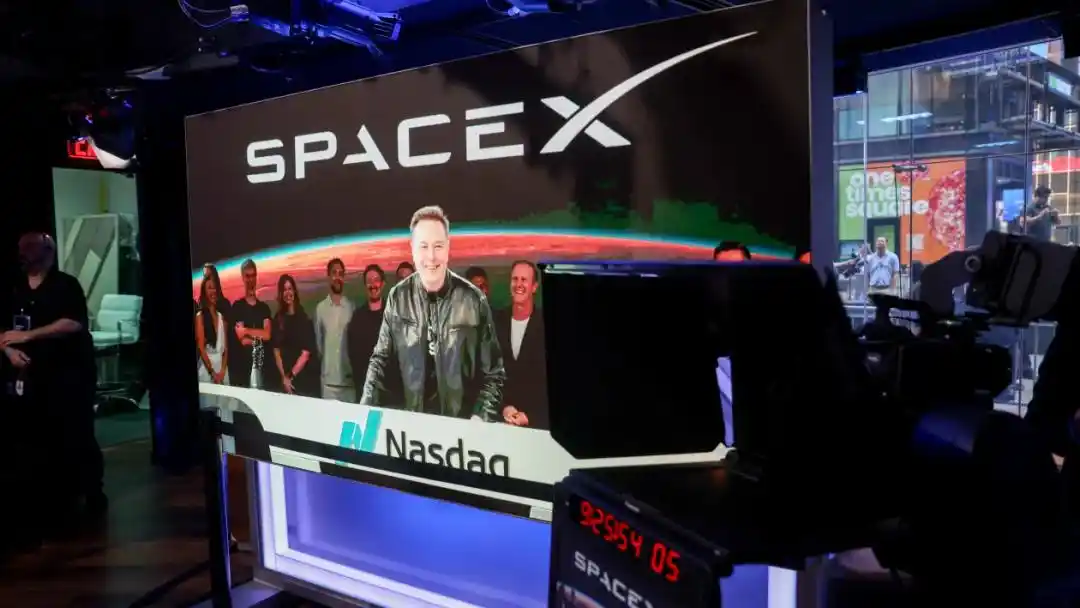
SpaceX generated $7.8 billion in revenue from April to June this year, up by more than 90% year over year, the article says, while AI-related revenue grew about 250%. At the same time, capital expenditure jumped from $2.83 billion in the same period last year to more than $18 billion, and AI capital expenditure surged from $749 million to $15.83 billion.
The article’s conclusion on this section is straightforward: AI development still depends heavily on a steady flow of capital. At first glance, it may look like a game of buying time. Yet if OpenAI’s own profitability deadline is used as the reference point, the company has only four years left. The piece contrasts that with how quickly market narratives can flip, noting that four years ago NVIDIA was still a gaming GPU company with a share price below $20, while Beyond Meat has lost more than 99% over the past five years.
The broader U.S. debt backdrop
The article closes by extending the time-versus-money argument to the U.S. fiscal picture. In its view, capital is trying to use an unprecedented scale of spending to secure a time advantage, or at least delay structural disadvantages.
Because short- and long-term interest rates have risen over the past few years, the cost of servicing U.S. Treasury debt has climbed sharply, the article says. It cites Congressional Budget Office projections that interest costs will exceed $1 trillion in 2026. By 2027, those costs are expected to surpass defense, Medicare and Medicaid, becoming the federal government’s second-largest spending item. By 2036, interest expense is projected to reach $2.1 trillion, and total interest costs from 2026 over the following decade are projected at $16.2 trillion.
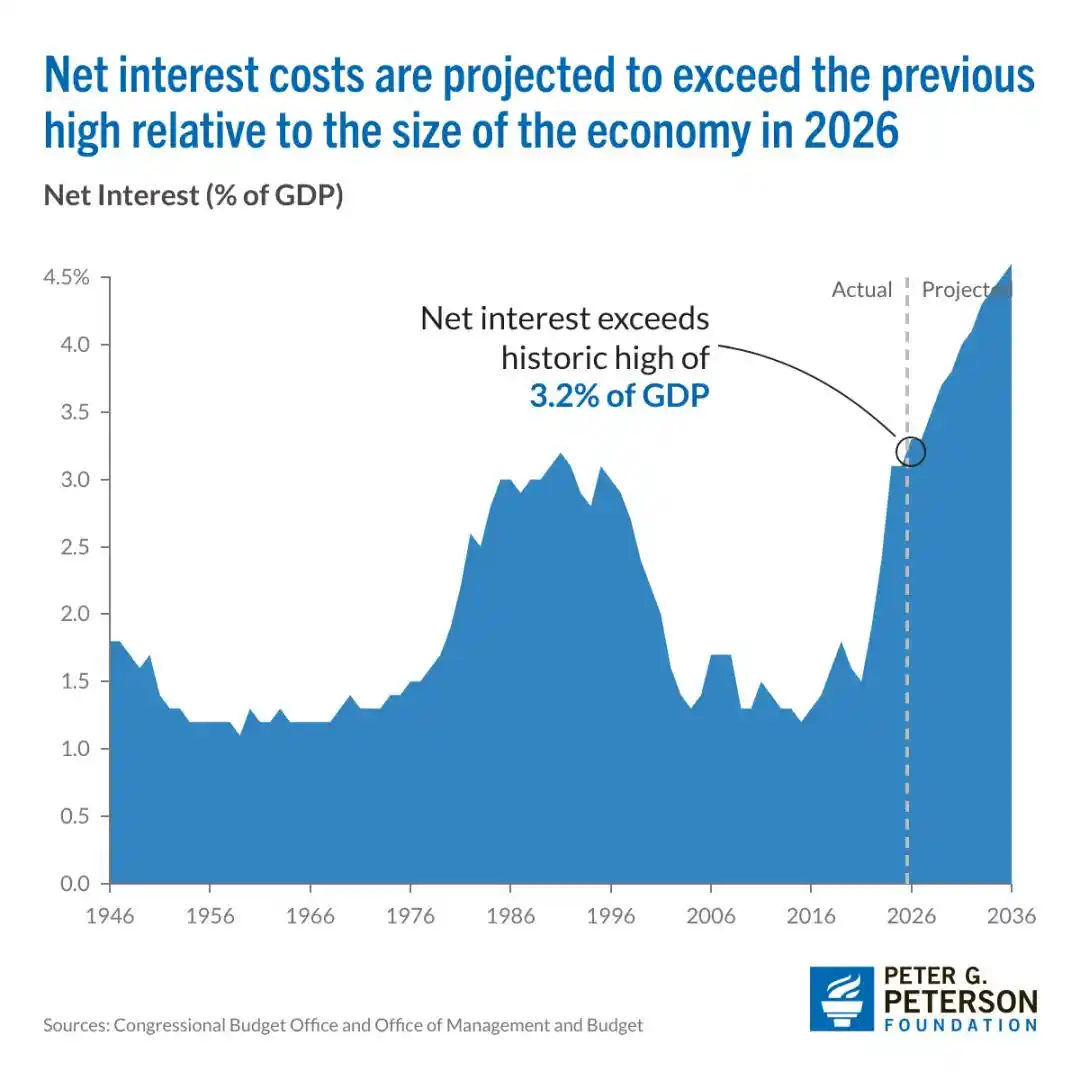
The article also says the Congressional Budget Office expects that if borrowing costs on new debt rise, the average interest rate will exceed economic growth by 2029, or R>G, and the gap will widen to 75 basis points by 2036.
That dynamic, in the article’s framing, creates a feedback loop: higher rates lift debt burdens, larger debt loads push borrowing costs higher, and those higher costs then raise interest expenses again. It argues that the possibility of a debt crisis is one reason U.S. capital markets are rushing into AI, betting that the technology could do for the country what the internet once did and help preserve a leading position.
The article ends with a hypothetical question rather than a forecast. If the true technological singularity does not come from AI, or if AI market size and returns over the next decade fall short of capital-market expectations, what happens if a market-level capital crunch and a national-level capital strain arrive at the same time?