
Bill Swearingen says he spent the past year repeating the same experiment from his home in Kansas City, where he co-founded the SecKC security meetup. After about 31 million tests, he said he can now generate patterns on demand that stop the detection software connected to Flock cameras from recognizing whatever the pattern covers. Flock is a surveillance system that has been rolling out across the United States and has drawn sustained controversy.
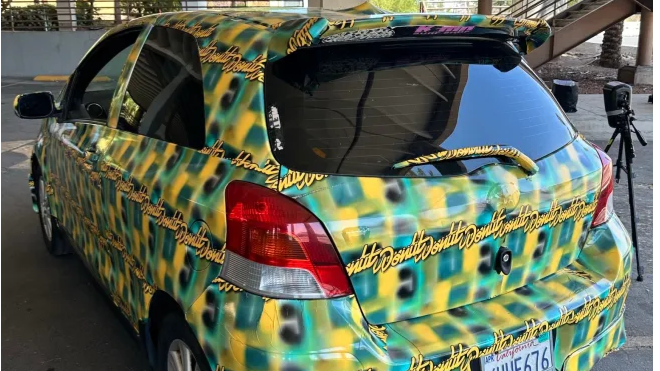
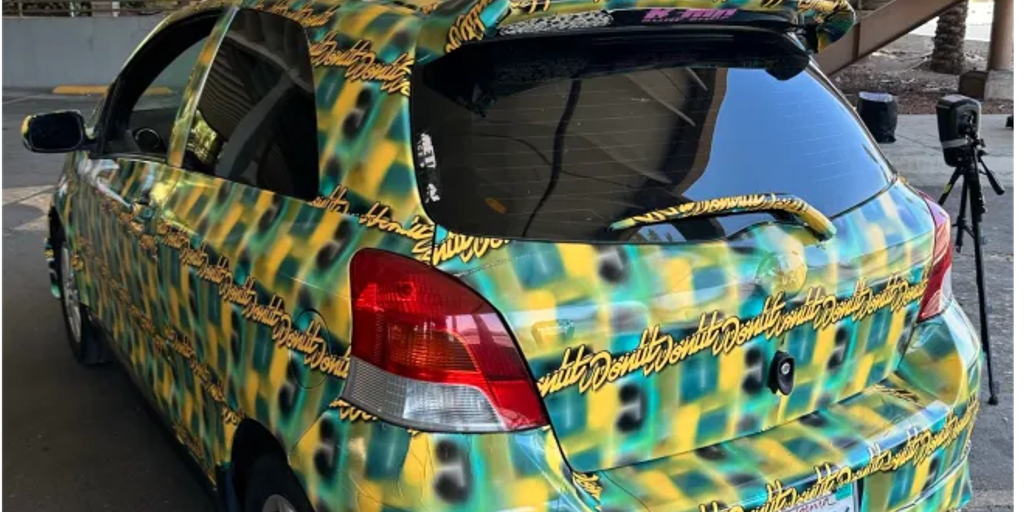
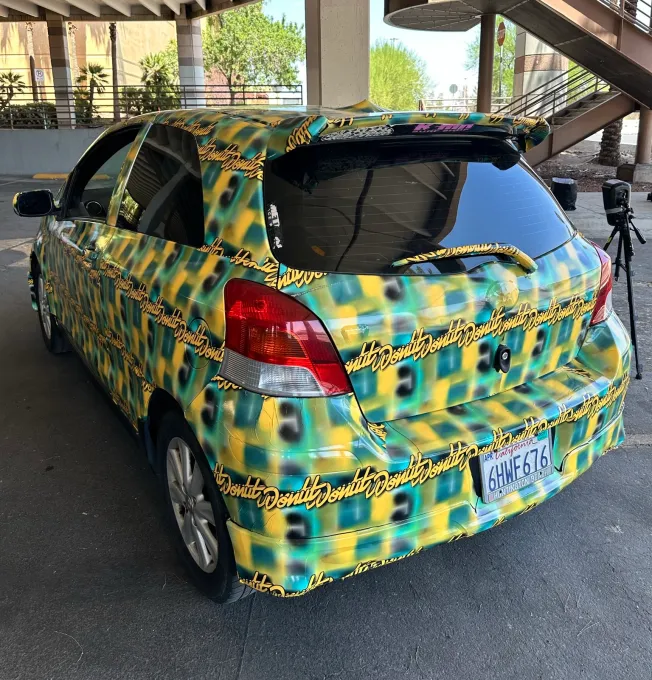
Swearingen gave the first public demonstration on Friday at Def Con. Working with the YouTube channel Donut Media, he covered a 2009 Toyota Yaris in one of his newest patterns and drove it past a Flock camera.
"We proved it was effective," Swearingen told TechCrunch, though he added that the wheels were a challenge. Donut Media said video of the demo will be released in the next few weeks.
The pattern does not blind the camera. The footage still records normally, and a person looking at the screen still sees a car. What fails is the layer above the image: the object-detection model that decides "that’s a vehicle, that’s a plate, log it."
In practice, that means an AI detector can be fed enough visual noise, engineered against the math it relies on, that the system logs nothing. The vehicle is still there in the footage, but it is no longer automatically pulled out by the software.
Adversarial machine learning aimed at computer vision
Swearingen’s method sits in the field of adversarial machine learning. The idea works because computer vision systems do not interpret images the way people do. A wrap that looks like loud graphic design to a human can register as nothing meaningful to a classifier.

He said he built the system with a reinforcement learning model that effectively grades its own output. If a pattern gets detected, the model adjusts and tries again. Swearingen described that process as teaching the model "how to paint." He said it can now produce fresh patterns every minute, while the strongest versions are being kept offline so camera vendors cannot train their systems against them.
"Privacy is a fundamental right," Swearingen said, describing the patterns as a way for people to "opt out of being tracked." He said the concept took shape last year when he wanted to attend a protest and worried that cameras would log everyone who showed up.
A longer history of dodging machine detection
People have been improvising around detection systems for years, often with simple physical workarounds. In San Francisco, activists put traffic cones on the hoods of Waymo and Cruise robotaxis to freeze the vehicles in place, an exploit that required no code.
During last year’s immigration raids in Los Angeles, protesters went much further and burned several Waymos. On protest lines, masks, hoods, and brimmed hats remain common. Clothing labels have also sold prints marketed as confusing facial recognition systems, and anti-recognition glasses have appeared as well, though the evidence for their effectiveness remains thin.
noRecognition targets systems already in broad deployment
What sets Swearingen’s project, called noRecognition, apart is the target list. According to the report, he tested against specific technology stacks already in wide deployment, and Flock is the company drawing the most attention. It is facing growing backlash on Capitol Hill, and internal documents show it pitched a plan to turn 350,000 Uber and Lyft dashcams into a mobile plate-scanning fleet.
Automated readers have already led to innocent drivers being stopped at gunpoint because of bad matches, while immigrants and protesters continue to be swept into ICE’s AI dragnet. On a separate track, lawmakers are also pressing Meta over facial recognition in its smart glasses. Any legal measure aimed at fighting automated detection technology is now being watched closely by privacy advocates.
Crowdfunding starts with shirts and hoodies
The noRecognition project is running a crowdfunding campaign to fund early merchandise. Swearingen said the first products are T-shirts and hoodies, with vehicle skins planned later. The goal, he said, is to reach a resolution high enough to work at a distance while also making the designs appealing enough that people will actually wear them.
Whether a wrapped car can be driven on public roads is a separate legal question, and plate-obstruction laws vary by state. The patterns cover the bodywork, not the license plates.
"Every failure improves my model, and so [the patterns] keep getting better and better," Swearingen said.