
AI models showed clear differences in World Cup knockout-stage forecasting
According to Odaily, a side-by-side comparison of mainstream AI tools used for World Cup knockout-stage predictions revealed a noticeable split in model behavior. Rather than converging on the same output style, the models appeared to separate into different camps based on how they framed likely outcomes, scorelines, and match narratives.
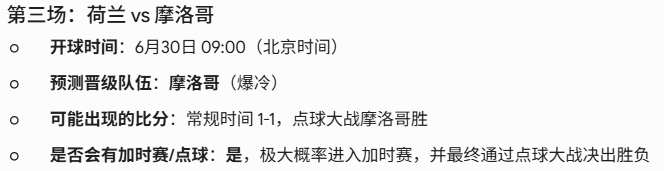
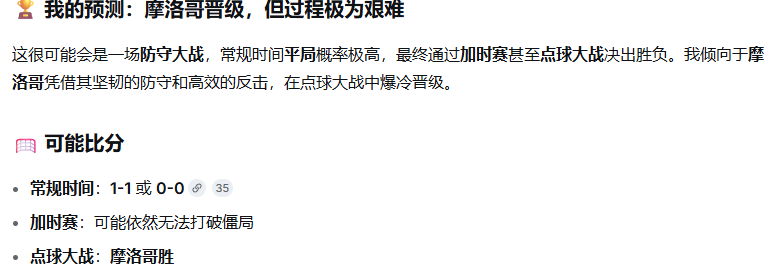
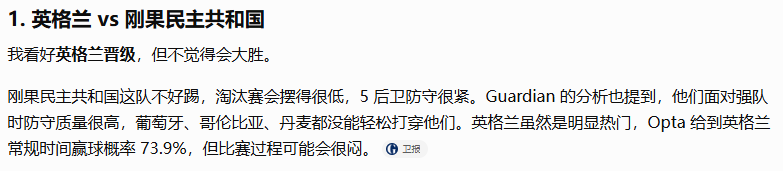
In the comparison, Gemini and DeepSeek were more likely to produce upset scripts or less conventional scenarios. Their answers leaned toward surprise outcomes and higher-variance storytelling, suggesting a stronger tendency to explore non-consensus possibilities. By contrast, Grok and Qwen were described as better at handling favorites, often expressing their forecasts through narrow-margin wins and more mainstream score expectations.

ChatGPT and Claude were stronger in process analysis than pure score calls
The report also noted that ChatGPT and Claude appeared better suited to analyzing how a match might unfold rather than simply naming a winner or projecting a final score. Their value was seen more in explaining tempo, tactical structure, momentum shifts, and key match phases. In practical terms, that means they may be more useful for users who want scenario breakdowns and qualitative match reading instead of a single outcome prediction.
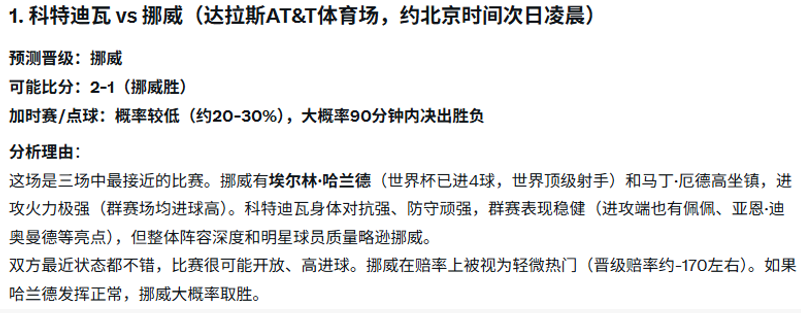
This distinction is important because it highlights that model quality cannot be judged only by whether an answer turns out to be “right.” Some systems are better at narrative exploration, some are better at stable consensus-style outputs, and others are more effective at process-level reasoning. The comparison therefore says as much about model style as it does about predictive utility.
Different models fit different decision workflows
From a professional workflow perspective, the comparison suggests a straightforward division of labor. Users looking for overlooked possibilities or upset angles may find Gemini and DeepSeek more useful. Those seeking relatively conservative views on stronger teams and tighter scorelines may prefer Grok and Qwen. Meanwhile, users prioritizing match progression, tactical reasoning, and richer contextual analysis may benefit more from ChatGPT and Claude.
For crypto-native readers, the broader implication goes beyond football. In markets driven by narrative, fast interpretation, and probabilistic judgment, the choice of AI model can shape not just the answer but the framing of the entire decision process. Whether the task is sports prediction, market commentary screening, or event-driven scenario mapping, differences in model bias and output structure matter. Odaily’s comparison underscores that selecting the right model is increasingly a use-case question rather than a search for a single universally superior system.