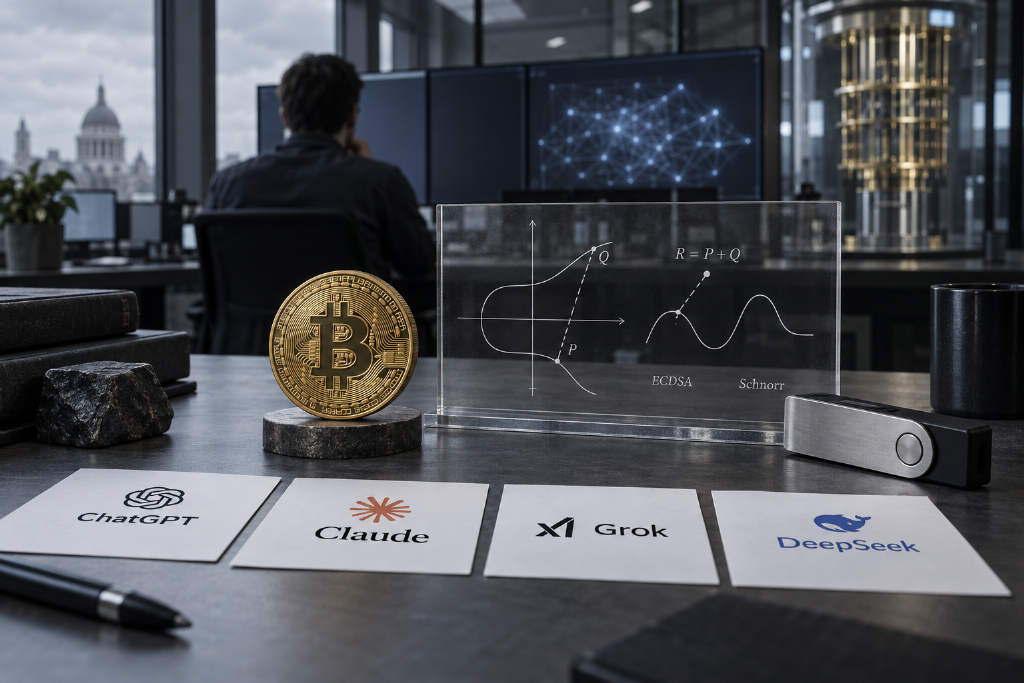
On Oct. 11, on-chain analyst Willy Woo shared AI-generated estimates on the odds of Bitcoin digital signatures being broken, putting the probability at 1.3% over the next two years. The estimates covered both quantum computing and classical mathematics or AI-assisted cryptanalysis. Researchers then used about four AI models to assess the chances that Bitcoin’s ECDSA and Schnorr signatures could be practically broken over 2, 5, 10, and 20 years. For the 20-year horizon, ChatGPT-6 Astra gave the highest estimate at about 76%, followed by Claude at about 66%, Grok at 60%, and Deepseek at 34%. All four models treated quantum computing as the main long-term threat, while placing the two-year probability in a 0% to 2% range. The models also said there is currently no practical classical cryptanalytic attack against secp256k1, and that stronger AI capability on its own has not yet produced a verified cryptanalytic breakthrough. The report was cited by Bitcoin.com News.
On-chain analyst Willy Woo shared AI-generated estimates on Oct. 11 suggesting a 1.3% chance that Bitcoin digital signatures could be broken within the next two years. The estimates covered two broad paths: quantum computing, and classical mathematics or AI-assisted cryptanalysis.
Four AI models assessed Bitcoin signature security
Researchers then used about four AI models to evaluate the probability that Bitcoin’s ECDSA and Schnorr signatures could be practically broken over 2, 5, 10, and 20 years.
- ChatGPT-6 Astra put the 20-year probability at about 76%
- Claude estimated about 66%
- Grok gave 60%
- Deepseek gave 34%
Quantum computing seen as the main long-term threat
All four models identified quantum computing as the primary long-term risk and placed the related probability for the next two years in a 0% to 2% range.
The models also said there is currently no practical classical cryptanalytic method to break secp256k1, and that improvements in AI capability by themselves have not produced a verified cryptanalytic breakthrough.
The item was reported by Bitcoin.com News.
This article was originally published by Bit.Fan. For more cryptocurrency news and market insights, visit www.bit.fan. Disclaimer:
The market information, project data, and third-party content displayed on this platform are for industry information sharing only and do not constitute any form of investment advice or return commitment.
Cryptocurrency trading carries high risks. Users should fully assess their risk tolerance and make independent decisions. All profits, losses, and legal responsibilities are borne by the users themselves.