ECDSA
11 days agoNews Editor

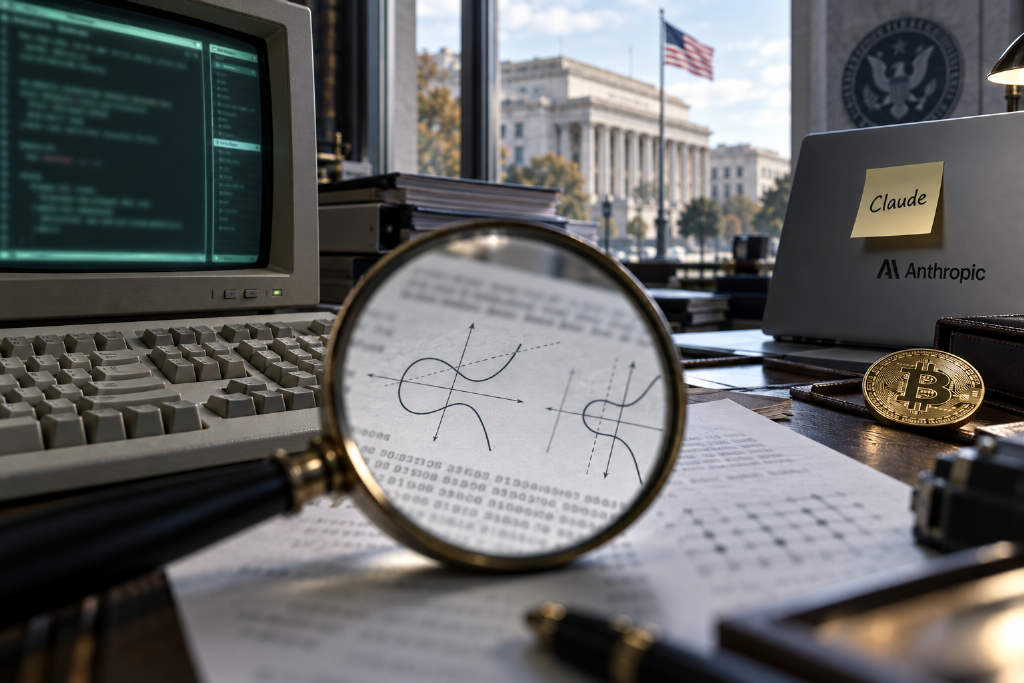
The Defiant Explains ECDSA With a Toy Elliptic-Curve Example

The Defiant has published an educational piece titled "How Elliptic-Curve Signatures Work: A Toy ECDSA Example," using a deliberately insecure elliptic curve to make the arithmetic behind signing easier to follow. The article says the setup keeps the numbers small enough for readers to trace the signing process step by step. It also highlights a core property of signature verification: the verifier needs the message and the public key, but not the secret used to create the signature. The piece is labeled under tutorial and security content, and the page notes that The Defiant stores its articles on Filecoin. The item appeared in The Defiant feed under the hot articles category.

530

The Defiant Explains ECDSA With a Toy Elliptic-Curve Example
Anthropic
16 days agoNews Editor

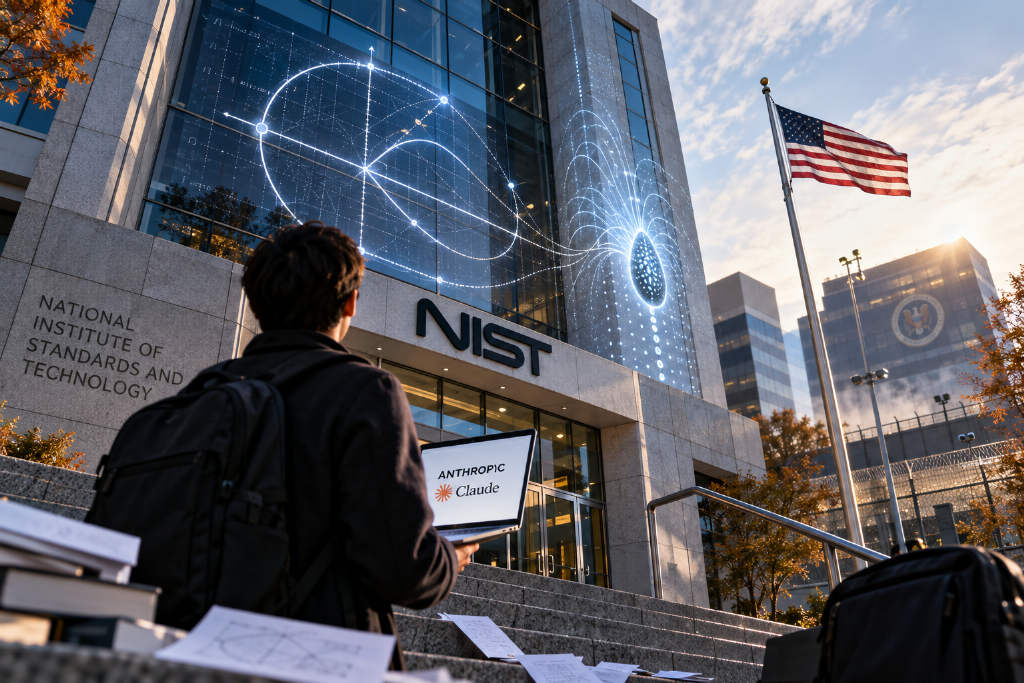
Claude traces NIST curve seeds in under 30 minutes, easing NSA backdoor concerns

Anthropic said on Oct. 16 that its AI model Claude identified the origin of the seeds used in NIST standard elliptic curves in less than 30 minutes, offering a new explanation for a long-running cryptographic mystery. Those seeds were supplied by the U.S. National Security Agency, or NSA, when NIST published the curves in the FIPS 186-2 digital signature standard in 2000, but their source was never documented, leaving room for suspicions that the parameters may have been chosen to hide a backdoor. According to Anthropic, Claude found that the seeds were not hashes of secret phrases, as some had speculated, but outputs from the C standard library random number generator lrand48 initialized with Unix timestamps. The company said the finding is not a cryptographic break, a new attack, or a weakness in ECDSA curves. Instead, it argues that the result makes deliberate manipulation less likely because the process appears reproducible. The research covered five NIST prime curves and five ANSI X9.62 example curves, with matching timestamps between May 1997 and April 1998. Some questions remain unresolved, including the origins of several base points and the seed for the binary curve B-163. Anthropic also said Bitcoin’s secp256k1 curve was not part of the study.

730
Claude traces NIST curve seeds in under 30 minutes, easing NSA backdoor concerns
Anthropic
16 days agoNews Editor

Claude cracks a 25-year NIST curve seed mystery in under 30 minutes, reviving questions around Bitcoin’s curve choice

Anthropic said on Oct. 17 that its internal model Claude reconstructed the long-unclear seed generation method behind parts of the NIST standard elliptic curves in less than 30 minutes, addressing a question that has lingered in cryptography circles for roughly 25 years. According to the disclosure, the model’s reverse-engineering work suggests the seeds were likely produced with the lrand48 pseudorandom number generator from a 1990s-era C library combined with Unix timestamps, rather than by a complex secret algorithm. The finding matters for crypto because ECDSA underpins digital signatures used across many wallets and identity verification systems. Around 2000, some parameters for NIST standard curves were supplied by the U.S. National Security Agency, while the seed generation process remained opaque, fueling longstanding speculation about possible backdoors. The report also draws a contrast with Bitcoin, where Satoshi Nakamoto chose the secp256k1 curve instead of the NIST curves commonly used elsewhere. Anthropic’s disclosure does not say ECDSA has been broken, and it does not claim any new mathematical weakness has been found in the related curves. Reconstructing how some parameters were generated may help reassess backdoor concerns, but it does not prove that every implementation is risk-free. The episode also points to a broader use for AI in security work: auditing historical cryptographic design choices and testing old assumptions.

530
Claude cracks a 25-year NIST curve seed mystery in under 30 minutes, reviving questions around Bitcoin’s curve choice
Bitcoin
21 days agoNews Editor

AI models put Bitcoin signature break risk as high as 76% over 20 years

On Oct. 11, on-chain analyst Willy Woo shared AI-generated estimates on the odds of Bitcoin digital signatures being broken, putting the probability at 1.3% over the next two years. The estimates covered both quantum computing and classical mathematics or AI-assisted cryptanalysis. Researchers then used about four AI models to assess the chances that Bitcoin’s ECDSA and Schnorr signatures could be practically broken over 2, 5, 10, and 20 years. For the 20-year horizon, ChatGPT-6 Astra gave the highest estimate at about 76%, followed by Claude at about 66%, Grok at 60%, and Deepseek at 34%. All four models treated quantum computing as the main long-term threat, while placing the two-year probability in a 0% to 2% range. The models also said there is currently no practical classical cryptanalytic attack against secp256k1, and that stronger AI capability on its own has not yet produced a verified cryptanalytic breakthrough. The report was cited by Bitcoin.com News.

660
AI models put Bitcoin signature break risk as high as 76% over 20 years
Policy and Regulation
23 days agoNews Editor

AI-driven math advances spark calls for blockchain cryptography recovery plans

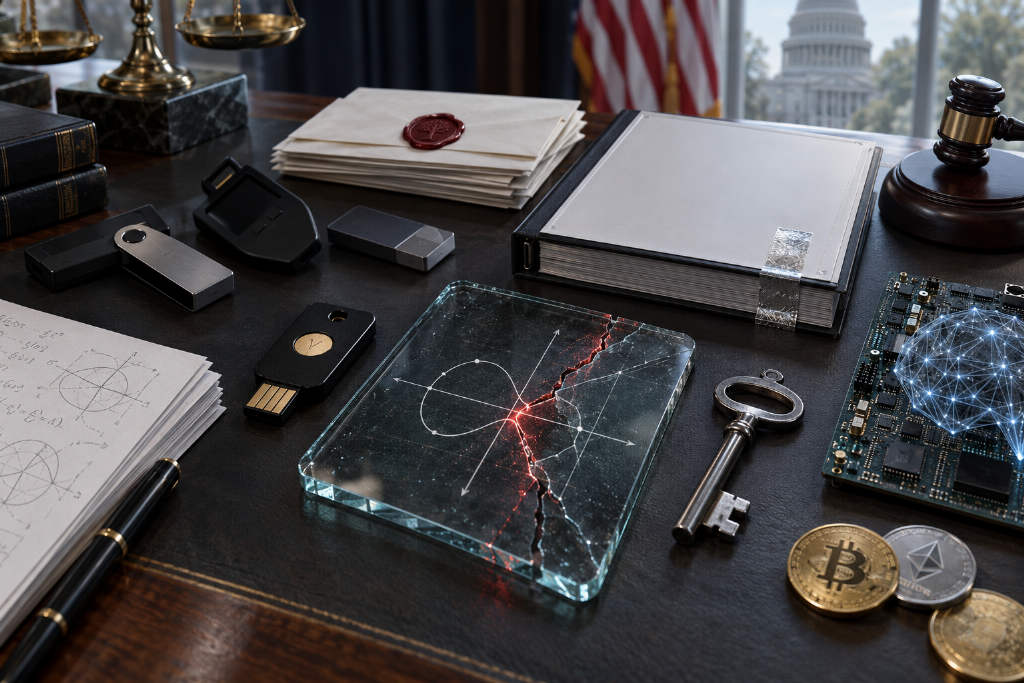
A PANews article translated from Dragonfly partner hosseeb argues that the crypto industry should start preparing for a low-probability but catastrophic failure of public-key cryptography if AI produces unexpected mathematical breakthroughs. The piece points to OpenAI’s release of 722 math papers, comments from Scott Aaronson, Matthew Green, Justin Drake and Vitalik Buterin, and says the real concern is not faster quantum computing but a direct break in the assumptions behind systems such as ECDSA. In that scenario, ordinary computers could potentially solve discrete logarithms, making modern public-key cryptography unusable. The article rejects panic and also questions individual “bunker mode” strategies that focus on moving funds to fresh addresses. Its core argument is that blockchains cannot rely on user-by-user self-protection if the cryptographic base layer fails. Instead, major chains should pre-arrange a protocol-level and ecosystem-wide emergency framework, including backup hash-based signature systems, validator-triggered emergency switches, and recovery paths for users who did not migrate in time. The proposal is presented as rough and incomplete, but the author says the industry needs a coordinated plan before any crisis arrives.

540
AI-driven math advances spark calls for blockchain cryptography recovery plans
Dragonfly
24 days agoNews Editor

Dragonfly partner proposes chain-level recovery mode against AI-driven wallet signature breaks

Dragonfly managing partner Haseeb Qureshi has laid out what he calls a "cryptographic recovery mode" for major blockchains, arguing that networks should prepare an emergency path in case AI or an unexpected mathematical breakthrough breaks today’s wallet signature systems. Writing on X on Oct. 8 in a post titled "Against Crypto Doomerism," Qureshi pushed back on Ethereum Foundation researcher Justin Drake’s warning from a day earlier that ECDSA signatures could be broken within months and that large holders should move assets to fresh addresses that have never signed a transaction, a setup Drake described as "bunker mode." Qureshi argued that bunker mode only helps individuals while a chain-wide failure would still destroy asset value. His proposal calls for a minimal hash-based backup signature scheme to be added in a future protocol upgrade, with users binding existing addresses to backup keys. At first the setup would be voluntary, then mandatory after several months. He also suggested an emergency switch that validators could activate by vote if ECDSA were compromised, forcing addresses into recovery mode without another protocol upgrade. For addresses without a pre-bound backup key, Qureshi proposed zero-knowledge proofs for users who still control their seed phrases, and a proof-of-work hurdle tied to the amount of native assets held for others. He said crisis response may require faster decisions, broader validator powers, and coordination across wallets, exchanges, RPC providers, and asset issuers.

570
Dragonfly partner proposes chain-level recovery mode against AI-driven wallet signature breaks
Justin Drake
25 days agoNews Editor

Justin Drake says AI could threaten crypto signatures within months, urges shift to “bunker” wallets

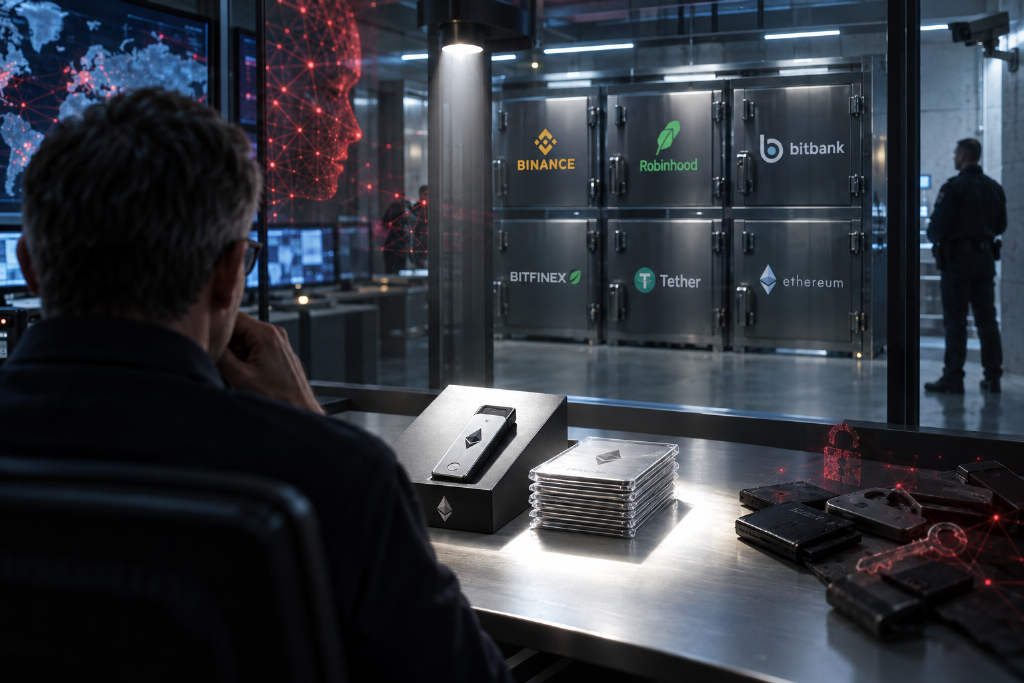
Ethereum Foundation senior researcher Justin Drake has sharply raised his warning on cryptographic risk, arguing that AI may break elliptic curve cryptography within months, potentially before quantum computers do. In a widely viewed post on X, Drake called on the crypto industry to enter “bunker mode” by moving most assets into fresh wallets that have never signed a transaction. His view is that such wallets reveal less on-chain information and may offer better protection during an initial wave of attacks. Drake said the biggest institutions should move first, naming Binance, Robinhood, Bitbank, Bitfinex, and Tether. He described never-used wallets as a form of deep cold storage and said any emergency exit should involve a full sweep into another fresh wallet, ideally in the same block. He also acknowledged that safely leaving bunker mode would require post-AI cryptography that blockchains such as Bitcoin do not currently have in consensus. The warning marks a shift from Drake’s earlier focus on quantum computing. After co-authoring a March paper with Google Quantum AI and giving June odds of a “Q-day” arrival, he is now pointing to OpenAI’s recent release of AI-generated mathematical results as a sign that mathematical superintelligence may already be near.

520
Justin Drake says AI could threaten crypto signatures within months, urges shift to “bunker” wallets
Ethereum
25 days agoNews Editor

Justin Drake’s ‘Bunker Mode’ Warning Triggers Fight Over AI, Math, and Crypto Key Risk

Ethereum Foundation researcher Justin Drake sparked a sharp debate after urging the crypto industry on Oct. 7 to calmly prepare for “bunker mode,” a controlled move of funds to fresh addresses whose public keys remain hidden behind a hash. Drake linked the warning to OpenAI’s release of 722 mathematical results a day earlier and said it is reasonable, in a worst-case scenario, to prepare for the possibility that ECDSA could break before “qday,” potentially in months rather than years. He did not say such a break has already happened. The post drew immediate criticism from several well-known figures in cryptography and crypto infrastructure. Coinbase’s Yehuda Lindell said there is no evidence pointing to a collapse of long-standing elliptic curve assumptions. Ledger CTO Charles Guillemet said treating a classical break of ECDSA within months as the working scenario still looks like FUD and warned that mass migration could create costly operational mistakes. Helius CEO Mert Mumtaz and Ethereum researcher Dankrad Feist also pushed back. Others were more sympathetic. Dragonfly’s Haseeb Qureshi called Drake’s warning sober, while Ethereum co-founder Vitalik Buterin said people should not scramble to move funds today but should take AI-accelerated mathematical advances seriously. Buterin added that unused addresses may be safer if moving funds is easy, though he cautioned that botched migrations can be more damaging than hacks.

500
Justin Drake’s ‘Bunker Mode’ Warning Triggers Fight Over AI, Math, and Crypto Key Risk
Total 43 items
Go topage