
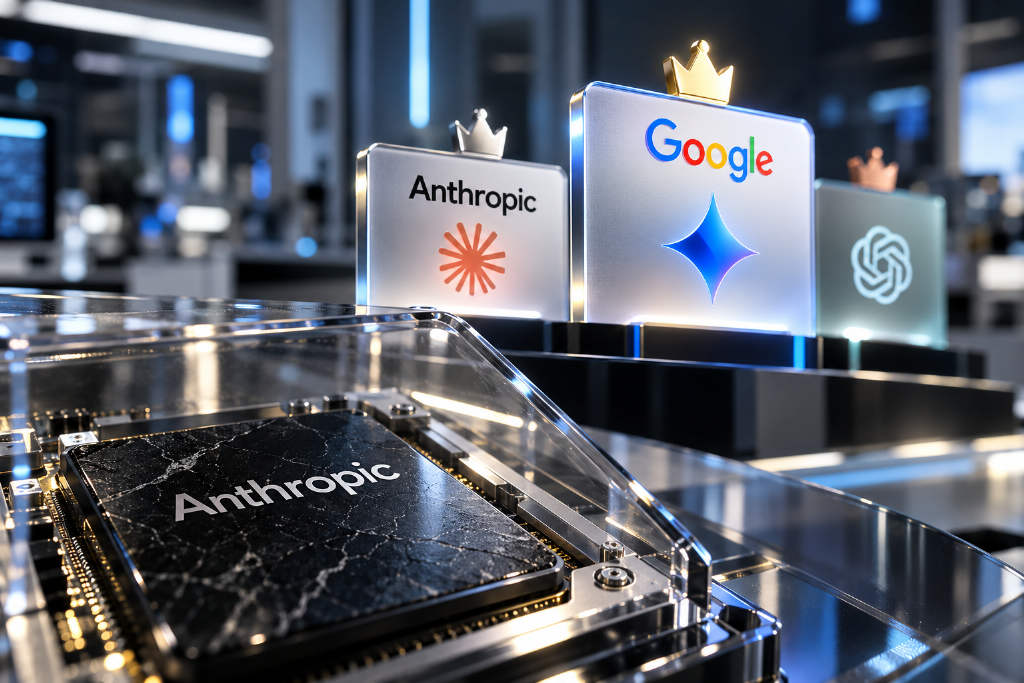
AI model rankings were rewritten twice in a single day.
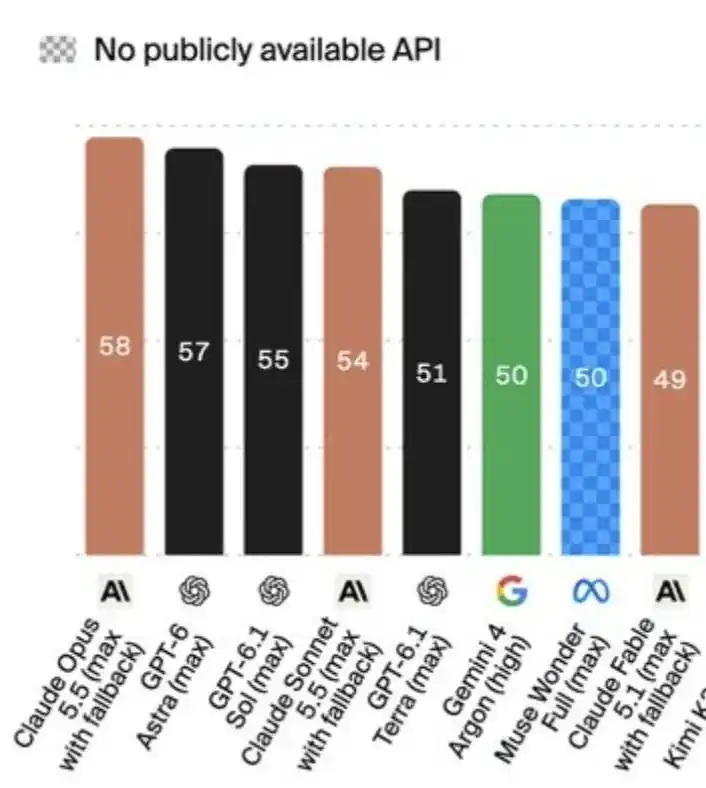
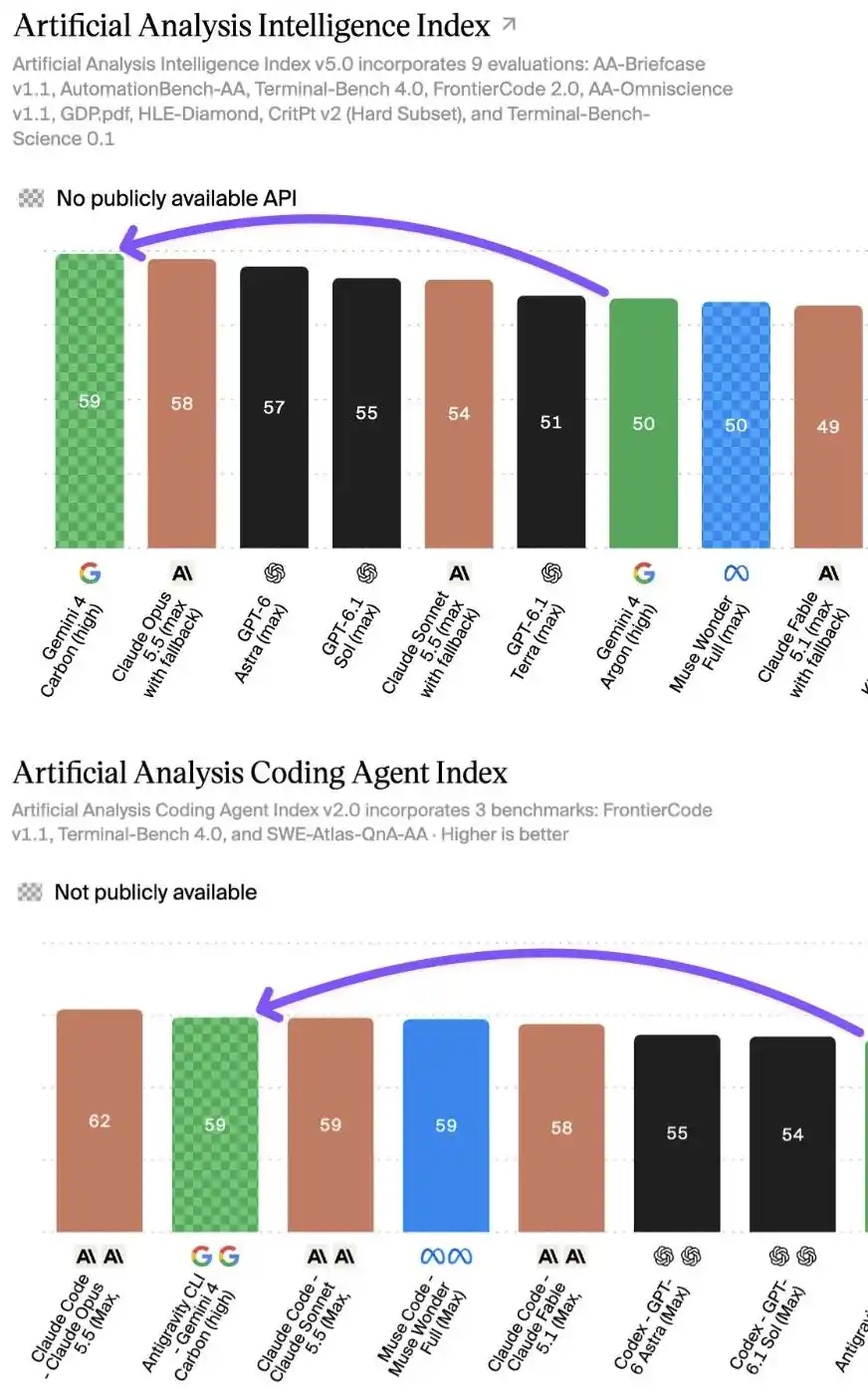
Artificial Analysis rolled out Intelligence Index v5, and Anthropic’s Claude Opus 5.5 moved to No. 1 with a score of 58. OpenAI’s GPT-6 Astra followed at 57. Soon after, Google released Gemini 4 Carbon, which posted an Artificial Analysis composite score of 59 and took over the top position.
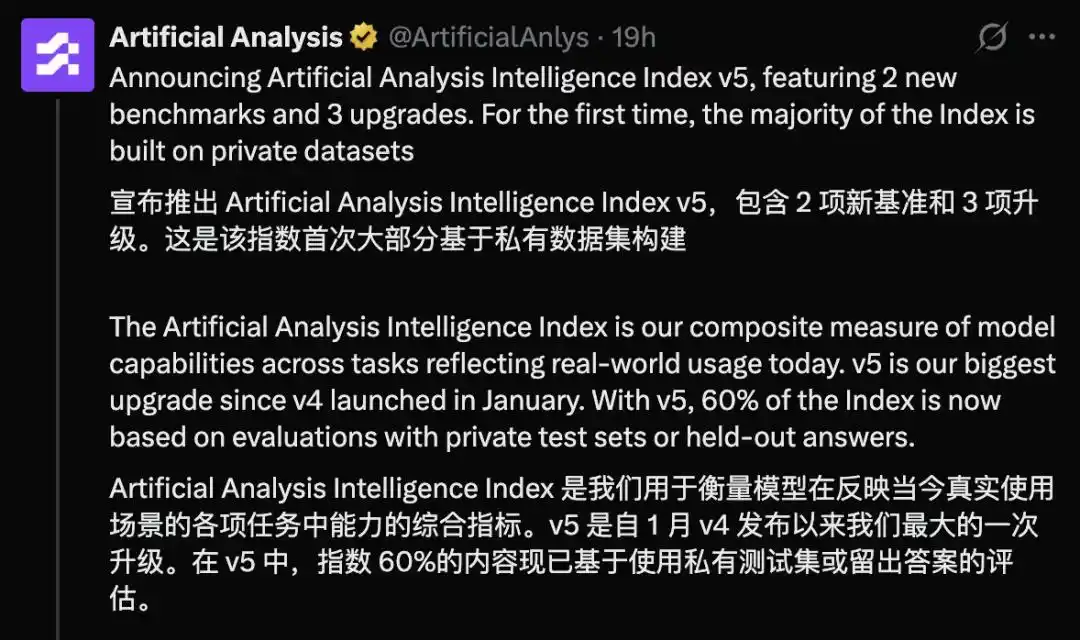
Intelligence Index v5 raised the weight of private data
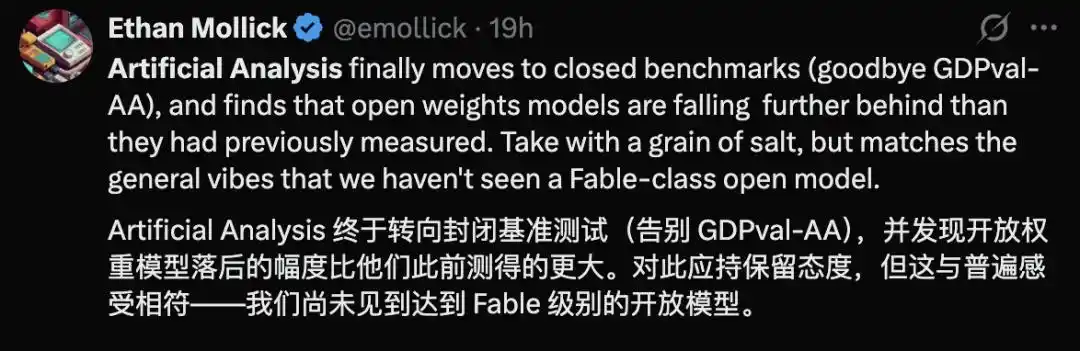
The leaderboard shift was tied not only to new model releases, but also to a change in methodology. According to the article, Artificial Analysis increased the weighting of private datasets to 60% in version 5, cutting the influence of public material and previously seen code.
The piece said older AI tests often rewarded models that had effectively absorbed public GitHub repositories. Under the new setup, models are expected to solve tasks without relying on public references or prior examples.
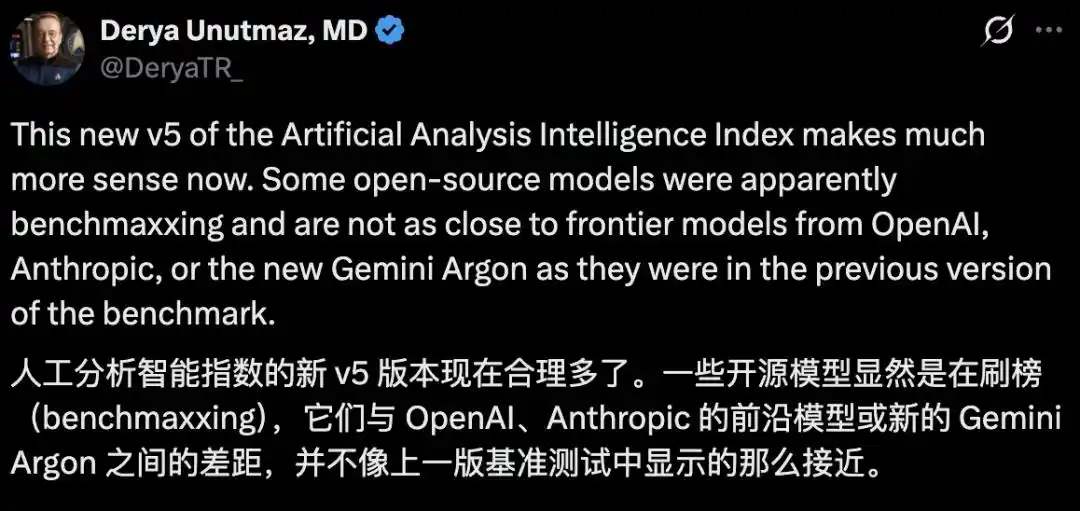
Immunology professor Derya Unutmaz said the new version is more reasonable, arguing that open-source models had previously shown excessive optimization for public benchmarks, or benchmaxxing, and that the gap between those systems and frontier models from OpenAI, Anthropic, and Gemini is now more clearly visible. The article also noted that this does not necessarily mean the gap itself has widened; the measurement standard has changed.
Anthropic stayed ahead in the coding agent index
Anthropic still led the coding agent index with 62 points. The report said the revised benchmark added much harder code and research workflow challenges, pushing models closer to the kinds of engineering logic handled by real programmers and researchers rather than simple code-generation tasks.
Under that tougher setup, Claude Opus 5.5 preserved Anthropic’s lead in complex reasoning and real-world task execution.
Hidden model Obsidian 3 appeared in FrontierCode 2.0 data
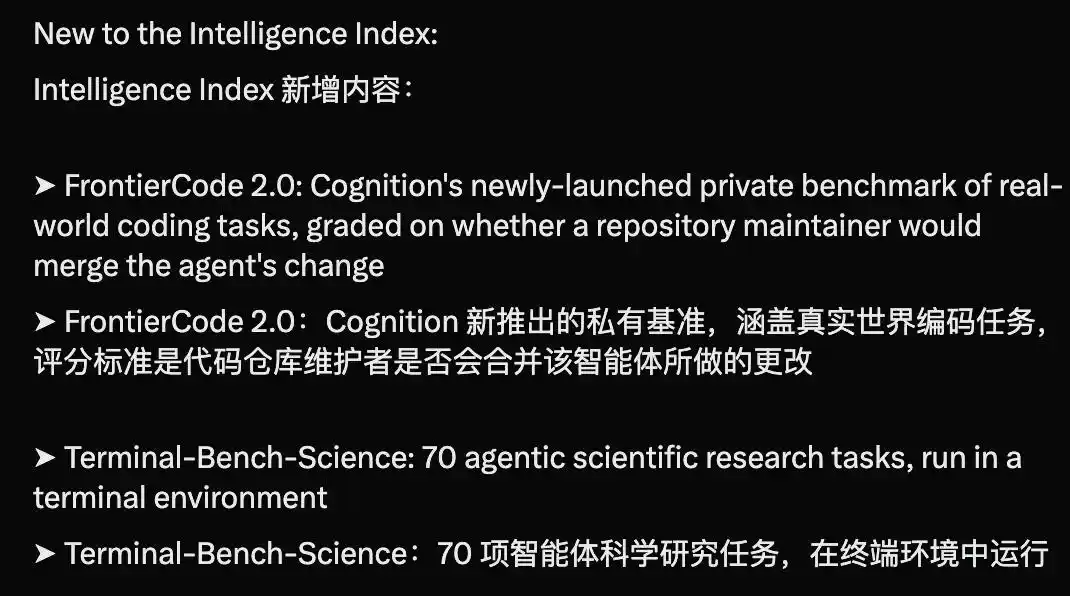
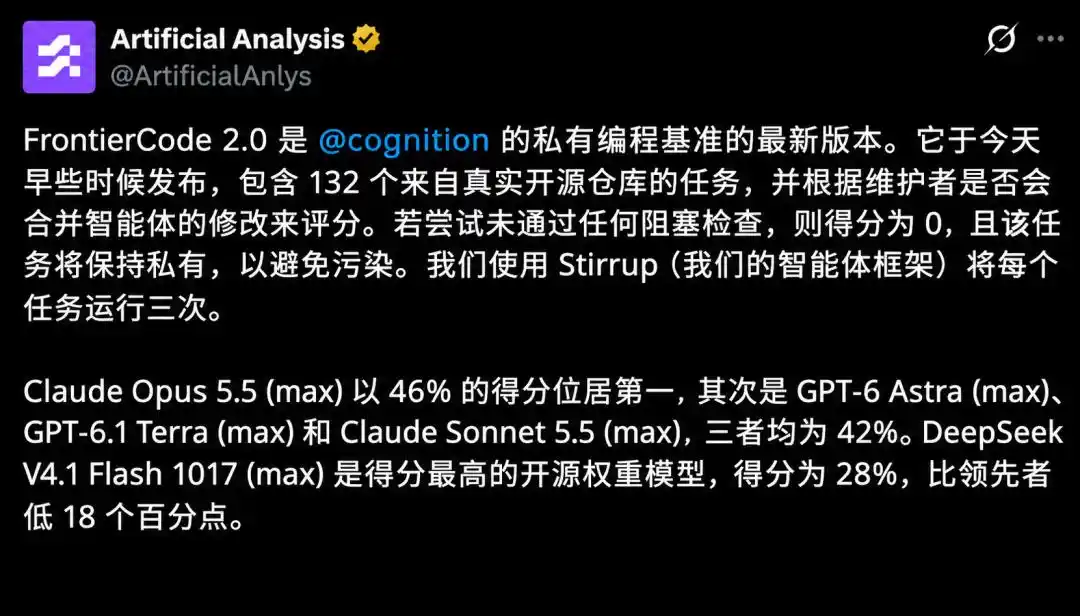
A separate benchmark drew even more attention. Cognition released the latest version of its private coding benchmark, FrontierCode 2.0. The test includes 132 tasks drawn from real open-source code repositories, and the scoring rule is blunt: whether project maintainers would merge the submitted changes.
The article said any blocking check failure results in a zero for that task. To limit data contamination, the tasks are kept confidential. Artificial Analysis also runs each task three times in the Stirrup framework to reduce one-off variance.
On the public leaderboard, Claude Opus 5.5 (max) led with 46%. GPT-6 Astra (max), GPT-6.1 Terra (max), and Claude Sonnet 5.5 (max) were next, all at 42%.
Users then examined the site’s data interface and found an unlisted model entry in data.json: Obsidian 3. The leaked figures showed Obsidian 3 scoring 46.8% in high-reasoning mode, above Opus 5.5 at 45.5%.
Community speculation linked it to Fable 5.5
The discussion quickly turned to identity. The article said Obsidian 3 was run in the claude-code environment, a dedicated testing framework currently used by only six Claude-family models.
Based on that clue, community members speculated that Obsidian 3 could be Anthropic’s unreleased Fable 5.5.
Small performance gain and high cost triggered debate
The leak also raised questions. By the figures cited in the article, Obsidian 3’s 46.8% was only 1.3 percentage points above Opus 5.5 at 45.5%. In max mode, the two were even tied at 45.5%.
Cost became another focal point. The article said that under comparable effort levels, Obsidian 3 costs about 3.6 times as much as Opus 5.5. In high mode, the cost per task was listed at $8.62. In some extreme max-mode cases, the cost per task rose to about $47.
One developer wrote on X, 「If this is Fable 5.5, it doesn’t look impressive enough.」 The article added that some observers believe performance worsens as more thinking is applied, making the model look more like an early checkpoint than a final release candidate.
Others focused on reasoning and research use cases
Another line of argument in the article was that coding success rate may not be the main point. It said industry observers see Obsidian 3 as more stable in the mid-to-high reasoning range, with potential gains in reasoning and intuition, inferring human intent, raising the ambition level of tasks, producing out-of-distribution thinking, and generating novel solutions.
Under that view, solving a new research problem that nobody has tackled before may matter more than fixing a large number of known bugs.
The report also said the leaked material appears to be benchmark node data rather than a confirmed final release build, leaving open the possibility that Anthropic is still tuning price and performance.
Three parallel signals emerged from the latest benchmark cycle
The current picture points to three separate developments. Claude Opus 5.5 briefly moved ahead of GPT-6 Astra, showing Anthropic’s competitiveness in coding-related evaluations. Gemini 4 Carbon then overtook Opus 5.5, putting Google back at the top of the table. And the appearance of Obsidian 3 shifted attention to what may be Anthropic’s next unreleased model.
The original article was published by the WeChat account Xinzhiyuan (ID: AI_era) and credited to ASI Qishilu.



