
This article was originally published by Bit.Fan. For more cryptocurrency news and market insights, visit www.bit.fan.
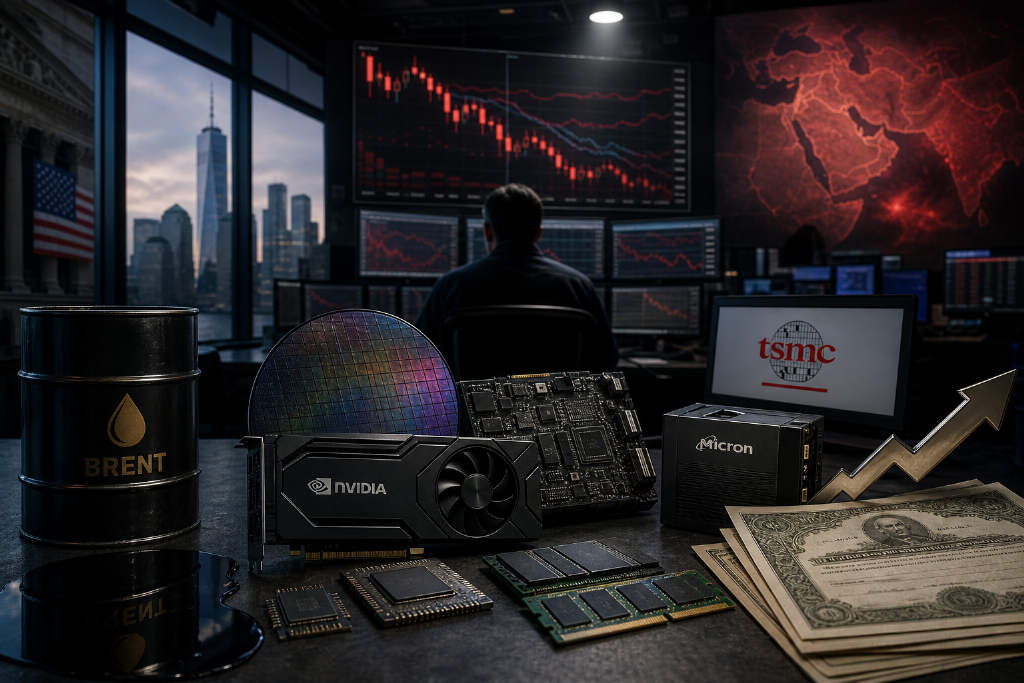
AI Stocks Drop as Oil, Yields and Middle East Tensions Reprice Risk
N
News EditorU.S. equities opened lower on Aug. 18, with AI and semiconductor names leading the decline. Micron briefly fell nearly 7%, TSMC ADR lost about 4%, and NVIDIA, Broadcom and Meta also weakened. The move followed rising oil prices, higher Treasury yields and renewed Middle East tensions, not a single earnings report or an abrupt collapse in AI demand. Reuters reported that U.S.-Iran talks stalled and Brent crude climbed back near $90 a barrel. That in turn revived inflation concerns and pushed long-dated Treasury yields higher, with the 30-year yield touching about 5.29%, the highest since 2007, while the 10-year yield held around 4.71%. Energy stocks rose instead, with XLE up more than 1% intraday. Still, the article says there is not enough evidence that AI infrastructure demand has turned. U.S. industrial output for July rose 0.2%, semiconductor production increased 2.4%, and Microsoft and Amazon’s latest results still point to strong cloud demand. Gold and silver did not rally either, suggesting investors were focused more on yields and the dollar than on classic safe-haven flows. The piece highlights three numbers to watch next: Brent above $90, the U.S. 10-year yield, and AI companies’ revenue, orders and free cash flow.
U.S. stocks opened lower on Aug. 18, and AI and semiconductor names absorbed most of the pressure. Micron at one point fell nearly 7%, TSMC ADR dropped about 4%, and NVIDIA, Broadcom and Meta also moved lower. The Philadelphia Semiconductor Index briefly lost more than 3%.
The selloff was not tied to one company’s earnings or a sudden drop in AI orders. Instead, markets were reacting to three things at once: Middle East tensions, higher oil prices and rising bond yields.
Reuters reported on Aug. 18 that U.S.-Iran talks had stalled, which weakened hopes for a ceasefire. Brent crude moved back toward $90 a barrel. Higher energy prices revived inflation worries, and long-dated U.S. Treasury yields climbed as a result, putting pressure on expensive tech shares.
The 30-year Treasury yield briefly rose to around 5.29%, the highest level since 2007, according to Reuters global markets reporting. The 10-year yield held near 4.71%. Markets now see a September rate hike by the Federal Reserve as less likely, but higher oil prices leave open the risk of another hike later this year.
That matters for growth stocks. When rates rise, investors tend to cut the valuation they are willing to pay for companies whose profits lie far in the future. AI stocks, memory chip makers, optical communication names and semiconductor equipment companies have all run ahead of earnings over the past year, making them natural candidates for profit-taking when yields spike.
Micron, SanDisk, Intel, Corning and KLA all fell more sharply than the broader market. NVIDIA, Broadcom, TSMC ADR and Meta also weakened. Energy shares moved the other way, with the XLE ETF gaining more than 1% intraday. The rotation points to money shifting, at least for now, from high-growth AI and chip names into energy, health care and consumer staples.
That drop does not mean AI demand has suddenly disappeared. U.S. industrial production for July rose 0.2%, and semiconductor output increased 2.4%. Production of high-tech equipment and industrial machinery also remained supported by AI-related investment, which suggests demand for data centers, chips and related equipment is still there.
Reuters also reported mixed U.S. economic data on Aug. 18. Housing remained under pressure from high mortgage rates, with overall July housing starts down 12.4% from the prior month. Manufacturing, however, continued to grow on the back of AI infrastructure spending and defense outlays. Microsoft and Amazon’s latest earnings also pointed to strong enterprise cloud demand and persistent shortages in AI computing capacity.
Gold and silver did not benefit from the geopolitical backdrop. Reuters precious metals reporting said spot gold fell about 0.5%, while silver, platinum and palladium also weakened. That suggests the market was focused more on yields and the dollar than on a simple safe-haven trade.
The key issue now is not just the conflict in the Middle East. It is whether that conflict keeps oil prices high enough to revive inflation and change the Federal Reserve’s rate path.
For investors, three numbers matter next: whether Brent crude can stay above $90 a barrel, whether the U.S. 10-year yield can retreat, and whether AI companies keep delivering revenue, orders and free cash flow. As long as cloud usage, memory demand and data center construction remain intact, a stock correction is not the same thing as a fundamental reversal.
Companies in the AI supply chain with real profits, strong cash flow and long-term contracts should be better able to handle a high-rate environment than firms that rely on debt or on valuation tied mostly to distant growth expectations. If Middle East tensions cool and oil and long yields ease, the hardest-hit AI and semiconductor shares could rebound quickly. If oil keeps rising, capital may continue to move away from expensive tech and toward energy and defensive sectors.
The AI demand story is not over. What is changing is how the market is pricing it.
40
Disclaimer:
The market information, project data, and third-party content displayed on this platform are for industry information sharing only and do not constitute any form of investment advice or return commitment.
Cryptocurrency trading carries high risks. Users should fully assess their risk tolerance and make independent decisions. All profits, losses, and legal responsibilities are borne by the users themselves.