
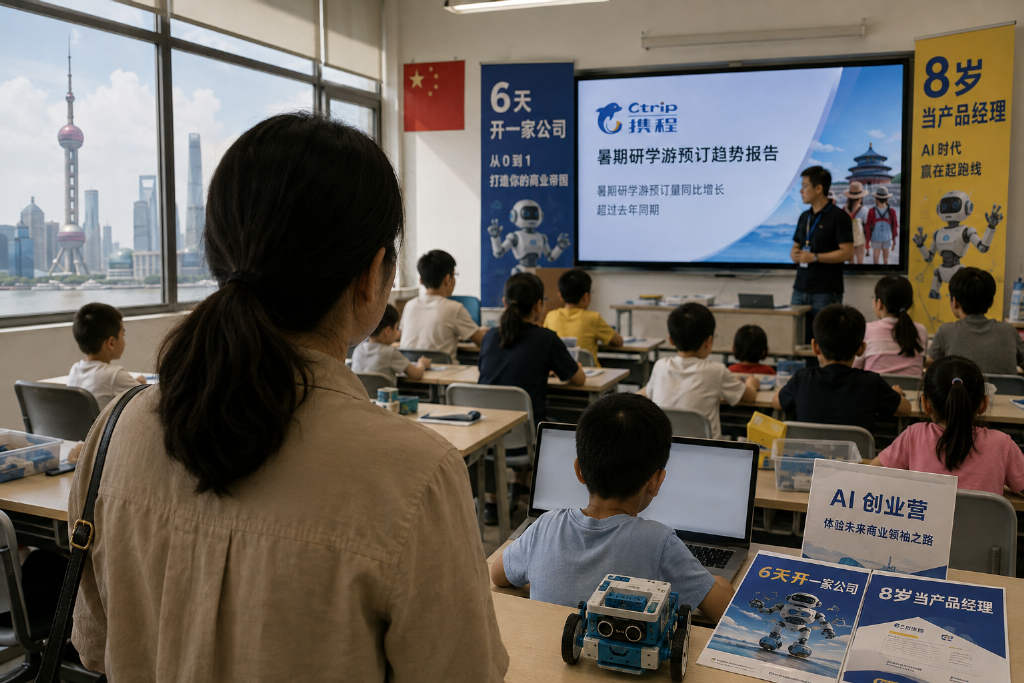
AI summer camps turned into one of the busiest businesses in China’s study-tour market during the recent summer break.
According to the report, China’s domestic study-tour market is expected to exceed 240 billion yuan in 2026. Data from Ctrip showed that AI study-tour orders this summer jumped 370% from the same period last year. Prices across the market varied widely. Some camps charged several thousand yuan for a week, while others cost more than 10,000 yuan in less than five days. Promotional pages were filled with slogans such as 「start a company in six days」 and 「become a product manager at age eight」.
Once the vacation ended and parents began reviewing what they had actually paid for, the answers diverged. Some said their children had at least seen new tools and environments. Others said the classes were too basic, hands-on instruction was thin, or the event was dominated by selling more courses.
The original report spoke with five parents, including one who also runs camps. Their bills and experiences looked very different. One parent paid 12,800 yuan for an AI creative camp in Shanghai and saw the contract for the first time only after the child had already arrived on the first day. Another spent more than 10,000 yuan on a Hong Kong study-tour program and later found that the child’s understanding of AI was about the same as before the trip. One parent described a roughly 6,000-yuan program as little more than a daycare-style class wrapped in AI branding. Another spent nearly 5,000 yuan taking two children to a camp in Hangzhou and said the family ended up sitting through three days of sales presentations, including a pitch for a 39,800-yuan long-term program.
The final account came from a parent involved in running a camp. Her view was different. She said children do not necessarily find AI itself exciting, and that what matters more is whether they use AI while working through real tasks and real questions.
A 12,800-yuan camp in Shanghai, and the contract appeared on day one
Li Yi’an, whose 18-year-old child joined an AI creative camp in Shanghai after the college entrance exam, said she wanted the student to learn something new before university started.
The child had previously used AI image-generation tools and editing tools for video work, but had never studied AI in a structured way. She came across a Shanghai-based AI creative camp on social media. Its promotional material focused on AI visual creation and highlighted 「systematic advancement」 and 「practical application」. The display page showed commercial images, short character videos and complete creative plans. Her child was willing to attend, so she paid 12,800 yuan and booked round-trip flights and a hotel.
Before enrollment, the organizer never sent her an electronic contract. She said the first time she saw any contract was on the opening day, after the child had already arrived in Shanghai and photographed the paper version for her. At that point, flights and accommodation had already been paid for, and backing out had become difficult even if the terms differed from what she had expected.
She said the first two days were fairly basic. On the first morning, students mainly introduced themselves and the instructor briefly walked them through the AI tool interface. In the afternoon, students practiced on their own and the class ended early. Day two focused on examples and creative thinking. The teacher did not demonstrate the whole process from beginning to end and did not break down the key steps one by one. Her child could follow the explanation, but still did not know how to turn the ideas into a full project independently.
At first, she assumed the pacing was meant to accommodate complete beginners. By the third day, she started to worry. She said the teacher spent quite a bit of time filming students interacting and preparing images for social posts and platform content, while students mostly discussed plans among themselves and experimented with generated images. The photos sent to parents looked full and active, but the actual time spent with teacher-led operation was limited. On the fourth day, the camp arranged an outdoor shoot with a model and makeup artist. Students rotated in turns, and the waiting time was noticeably longer than the actual shooting time. Her child found it novel but still could not clearly explain what had been learned.
The part that came closest to what the family expected arrived only in the final two days. Teaching assistants started covering workflow and practical methods, and the material was more specific and more aligned with what the child had hoped to study in the first place. By then, however, the six-day camp was already nearly over. Looking back, she said the main exposure was to AI visual creation: seeing tools and cases, making plans and images, joining an outdoor shoot, and then learning workflow.
Li Yi’an said the earlier sections might have worked as an introduction for a student with no prior exposure to AI tools. But her child already had some foundation, and the family had signed up for something marketed as advanced. They expected a project-based progression that would lead to a reusable method. She said the camp was not a complete loss. Her child saw a professional shoot and found the workflow segment useful. Even so, she did not think the six days were worth more than 10,000 yuan.
Her main regret was not asking in advance what each day would actually look like. She said she still believes AI is worth learning, but many camps are simply cashing in on parents’ belief that AI is the trend. Her advice is to get the contract and a detailed timetable before paying, and to ask not only what will be taught, but how many days the main lecturer will actually teach, how much time each day is spent operating with students, and whether students can independently complete a full piece of work at the end.

After two camps, one parent says many programs still stop at teaching tools
Zhang Yun, a parent in Shanghai with a child in fifth grade, said her son has long been interested in technology and likes trying new tools. That led her to think it might make sense for him to encounter AI early and see what this technology, which may affect many future jobs, really looks like.
Even so, she had concerns when choosing a course. She said many AI study-tour products have appeared over the past two years. Some look polished and high-end, but once she checked more closely, part of the market turned out to consist of little more than online videos and a few concepts, without genuine hands-on work for children. She compared several major offerings before eventually enrolling her child in two camps.
The first was a one-day Fudan youth AI study tour in Shanghai, which she attended with the child. Before going, she worried it might be just another simple science-popularization session. The actual experience was better than expected.
She said the class did not bury children under complex technical language. Instead, it began with examples that children could readily understand. Teachers used vivid analogies to explain the basic logic of machine learning and how AI uses data training to complete recognition. The program also included a debate session in which children split into groups and prepared arguments on topics such as whether AI would become an all-purpose assistant or a potential rival. She said many of the children’s ideas were good, and the design did help build curiosity about AI through play.
That experience convinced her that AI study tours could offer gains outside the classroom. Later, when she saw a longer and more systematic course, she paid more than 10,000 yuan for a five-day AI study tour in Hong Kong, hoping her child would receive more structured learning and real AI practice.
This time the child went alone. After coming back, he talked happily about what he had seen in Hong Kong. But when she asked what AI content he had learned during the week, she found his understanding of AI was largely unchanged. She said much more time had gone into campus visits, activities and lectures than into learning AI itself. The takeaway was mostly that he had 「played with」 a few AI tools, knew how to ask questions, and had used AI to generate images. If she asked why AI could generate those things or whether the outputs were reliable, he could not answer.
That fell well short of what she had expected when paying for the program. She had imagined a concrete project in which the child would move from idea generation to design to completion with AI and come away with a real sense of how AI helps solve problems. Instead, he mainly learned how to use several tools.
The experience led her to conclude that many AI courses are still stuck at the stage of teaching children how to use tools. In her view, if that is all a course does, it is not fundamentally different from playing with Lego or video games. Children may find it fresh and enjoyable, but the amount they truly learn is limited. She also said this is where many parents can misjudge things: they want their children to encounter AI early because they fear missing the next competitive opportunity, but teaching a few AI tools is not fundamentally different from the old idea of teaching basic computer operation. The concept is newer. The substance is not necessarily deeper.
If she chooses this kind of course again, she said she will care most about two things: whether there is real project practice, and whether the teacher can guide children to think.
A 6,000-yuan "AI CEO" camp that felt like managed childcare
Zhou Lan, a parent in Hangzhou with a child in the second year of junior high school, said her family is not especially anxious about AI. The child’s father is a programmer at an internet company, while she herself does not really understand technology.
Last summer, her husband’s employer and a local training institution jointly ran a three-day AI interest camp as a staff benefit. The family paid only a few hundred yuan in materials fees. The child received introductory AI lessons, toured a major tech campus, and learned from instructors who were actually working in technology. The experience was good enough that the family wanted to try a longer camp this summer so the child could study and have fun at the same time.
She said this year was different, and not in a good way.

The program was called the "AI Little CEO" camp. She saw it forwarded in a parent group. The ad line promised that children would "learn to start an AI company in five days," and promotional pages were filled with images of children in business attire giving roadshow-style presentations and holding company placards. Since the summer break needed filling anyway, she enrolled. The camp lasted six days, and the total cost for commuting attendance came to about 6,000 yuan, which was higher than several alternatives she had checked.
Before signing up, a salesperson sent over a course outline. It sounded grand, she said, and although she could not fully judge it, she thought it looked credible enough to pay. The materials promised a teacher-student ratio of 1:3. In practice, she estimated it was closer to 1:5 or 1:6.
The first two days were labeled an "interest development" section, and parents were allowed to sit in. She attended. On day one, the teacher spent most of the time showing PPT slides. The so-called AI hands-on practice amounted to teaching children how to chat with AI, ask questions, and have it generate a picture. She said her child could have figured that out at home on a tablet in 10 minutes. On day two, the class shifted into code, with children learning to use AI to generate code. Her husband felt it was basically an old children’s Python summer class in new packaging. The only change was replacing "write the code yourself" with "ask AI to write the code," while the underlying concepts stayed much the same.
During the next three days, children attended on their own and were split into small groups. Each group set up a "company," chose a CEO, named the company, and then worked on a product. In reality, Zhou Lan said, that meant using AI to produce simple code, images, PPT slides and a front-end webpage.
The last day was dedicated to presentation of results. Her child had fun every day, but when she asked what had actually been learned, there was no clear answer. She rated the camp four out of 10, with the biggest deduction tied to value for money. At more than 1,000 yuan a day, she said, it felt like a daycare-style class dressed up in AI language. The strengths were that it was safe, convenient and enjoyable for the child. The weakness was the gap between the sales pitch and the actual result.
Looking back, she said the answer depends on the type of organizer. Camps backed by major companies or universities, or programs like the one the family attended last year with direct corporate involvement, seemed more reliable to her and were more reasonably priced. But once summer arrives, all kinds of AI camps flood the market and raise prices, making it very hard for ordinary parents to tell the difference.
A parent says a nearly 5,000-yuan Hangzhou camp turned into three days of selling
Xiatian, a Beijing-based media worker and mother of two, has one child aged 14 and another aged 9.
She had planned to let them get some exposure to AI during the summer. She then saw an organization promoting an AI summer camp in Hangzhou with attractive claims: 「visit Alibaba headquarters」, 「build a robot by hand」 and 「experience brain-computer interfaces」. She was about to travel to Shanghai for work, Hangzhou was nearby, and the price initially looked acceptable. One adult and one child cost 2,980 yuan, and an additional child required another 1,980 yuan, with two nights of accommodation and meals included. She did not do much background checking before signing up.
Afterward, she concluded it was a marketing event wrapped in AI language.
She said the atmosphere felt off from the first day. There was no explanation of the teaching outline and no formal introduction to instructors. Instead, the event opened with applause prompts. The host asked everyone to applaud parents who do not hit their children, then moved into a narrative built around anxiety over the need for China’s education system to stay ahead. She also noticed that the credentials of on-site teachers were vague and difficult to verify online.
The promised 「visit to Alibaba headquarters」 turned out to be a lecture in a classroom about Alibaba’s development history and stories about entrepreneurs. After that, the children assembled a tiny mechanical dog in a multifunction hall within the park area. She estimated the device was worth around 20 yuan, under 10 centimeters long, rough in workmanship and, in some cases, partly damaged.
In the afternoon AI programming session, children used a simple AI tool to generate small apps, mostly basic parkour games or product display pages. She described the process as template-based operation completed through prompts. The later "roadshow" session also became superficial because of the crowd size. There were about 100 people split into 10 groups, and only one child from each group got on stage, meaning most children never had a real chance to present.
In her view, the real center of gravity was the content aimed at parents.
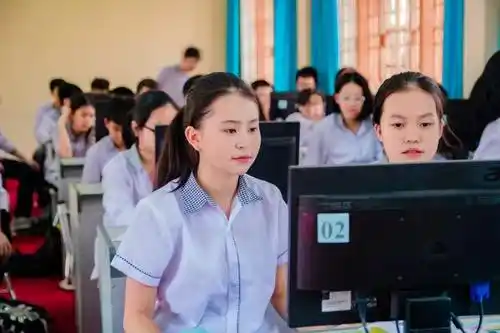
After building anxiety on day one, the event turned to sales on day two. An institution called "XX Youth Business School" entered the session and promoted a long-term program priced at 39,800 yuan. The pitch claimed that every winter and summer vacation over the next 10 years would include a seven-day camp to help children "discover talent" and receive "teaching suited to individual aptitude." The sales style resembled livestream promotion and came with add-ons such as a "Dunhuang desert trip."
What was not clearly disclosed on site, she said, was that the 39,800 yuan was only the entry cost. Additional payments would still be required for each later camp. If a family followed the full 10-year cycle, total spending could reach hundreds of thousands of yuan or even more than 1 million yuan.
She also said the sales environment appeared deliberately staged. She observed that one "parent" rushed onto the stage first to say they wanted to sign up and pay, but no actual registration process followed.
As for the Alibaba reference, she said the event had simply used space in Alibaba’s open campus area and had no official cooperation with Alibaba Group. She also said the promised age-based teaching arrangement was not delivered. Students on site ranged from four or five years old to 14 or 15 years old, but they were taught with the same material in mixed-age grouping. Before enrolling, she had explicitly asked whether her two children, who are five years apart in age, would be separated by age. She said the organizer promised they would be grouped accordingly, but that did not happen.
In the end, she treated the nearly 5,000 yuan as a lesson in social cognition. It let her two children observe sales scripts, staged atmosphere and information screening in real life.
If friends ask whether they should sign up for similar AI summer camps, she said they should verify three things first: whether teacher backgrounds can be checked, whether there is any embedded sales session, and what the actual specifications of the AI tools and hands-on products are. She said parents should ask for unedited photos of the physical items rather than rely only on promotional images showing smiling children, because children may simply be happy to socialize with peers rather than genuinely learning much.
A camp organizer says AI may matter less to children than adults assume
Yu Yingjun, based in Beijing, works in corporate training and is the mother of a 10-year-old girl. She is also a corporate executive coach and leadership trainer. Together with friends, she is preparing a PBL, or Project Based Learning, innovation school. This summer, the group organized a four-week summer camp that also served as a trial run for the school.
One teacher on the team had worked at IBM in earlier years and later moved to Xiaomi to work on AI. He had been exposed to the field very early, had two children of his own, and had also run AI summer camps, according to the report. The group included AI in the curriculum because they initially thought it would be one of the most engaging parts for children.
The first approach was straightforward. Instead of lecturing on concepts, the teacher asked children to provide prompts and use AI to generate music or images. The response was weak. Yu Yingjun said few children engaged and some even fell asleep.
That made her realize that AI does not stimulate children in the same way it stimulates adults. Adults have spent time writing articles, making PPT slides and gathering materials, so seeing AI complete those tasks in seconds can feel dramatic. Children do not have that same memory of effort. For them, the world is already new. An AI-generated image may be no more interesting than finding a strange animal in the mountains.
The team then changed direction quickly.
They split the children into two groups, gave them an activity budget, and sent them to nearby village shops to browse, buy things and complete a market-research task. The desire to shop and decide how to spend the small budget created its own motivation. Once the children ran into questions about how to investigate, how to ask, or how to organize information, they turned back to AI.
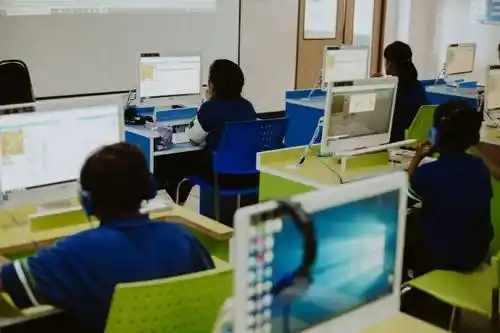
Her conclusion was that AI is, in essence, a tool. When the goal is attractive enough, complex enough and challenging enough, and when there is no suitable person nearby to ask for help, AI can become useful support.
She used her own daughter as an example. The girl wanted to develop an ice cream product one day, so she rushed to finish homework at school, invited classmates home, checked Xiaohongshu, and then co-created with Doubao in the kitchen late into the evening. Yu Yingjun said there was no need to force her child to use AI. But if the child came home to extra homework and then had to go to a separate AI class on purpose, she would likely drag things out until bedtime.
The camp she helped organize hosted eight or nine children each week, with a teacher-student ratio close to 1:1, and charged 5,580 yuan per week. Teachers included a doctor of traditional Chinese medicine, a PhD from Beijing University of Posts and Telecommunications, an Armenian foreign teacher, and an art teacher who had graduated from an art school in London and worked as a curator. The children built houses, maintained pool ecology, made cheese and designed food, with AI joining these activities as a supporting tool.
She said the school they are preparing follows the same logic: start with real things, then look for the knowledge needed when problems arise.
Yu Yingjun added that she feels little anxiety about any supposed "AI starting line" and does not insist that her daughter must attend university in the future. What matters more to her is that the child grows up physically and mentally healthy while keeping an interest in learning and exploration. She also said many forms of intense child-focused education are really ways for parents to soothe their own anxiety. Over years of executive coaching, she said she has seen plenty of people who answered every major life multiple-choice question correctly — attending a good university, joining a good company, marrying and having children — only to reach later life without knowing what to do next.
In her view, what may matter in the future is not mastering one tool earlier, but knowing what one wants to do when facing questions without standard answers, and having the ability to look for those answers.
What parents began to focus on after the summer surge
The experiences in the report differ, but several recurring questions run through them: whether contracts and daily schedules are fully disclosed before payment, how much time teachers actually spend guiding students through operations, whether projects are built around a clear task, and whether a course is teaching children to understand problems or merely teaching them to call a set of tools.
The prices cited in the report cover a broad range: 12,800 yuan for six days, more than 10,000 yuan for five days, roughly 6,000 yuan for six days, nearly 5,000 yuan for a two-night program, and 5,580 yuan per week for a smaller camp. Higher fees did not automatically translate into deeper instruction.
Some parents approached AI as a new educational investment and did not want their children to miss the trend. After going through the programs, many of them came away paying closer attention to contracts, schedules, teachers, project practice and time allocation, while becoming more cautious about recurring sales language. Phrases such as 「systematic learning」, 「practical application」, 「enter a major tech company」, 「product manager」 and 「startup roadshow」 did not mean the same thing from one camp to another.
From the organizer’s side, the report offered a separate point: children’s interest in AI may not come from the tool itself. For many of them, the real driver may be a worthwhile problem first, and AI only later, as part of solving it.
The original article noted that the headline image and images used in the story were from Pexels. At the request of interviewees, the names Li Yi’an, Zhang Yun, Zhou Lan and Xiatian were pseudonyms.
The piece was originally published by the WeChat account Dingjiao (ID: dingjiaoone) and credited to Jin Yufan, Lei Jing, Wang Hanxing, Wang Lu and Chen Dan.