
AI models show clear divergence in World Cup knockout-stage forecasting
Odaily’s comparison suggests that major AI models behave quite differently when asked to predict World Cup knockout matches. Rather than converging on similar answers, the models appear to express distinct forecasting styles. In the summary provided, Gemini and DeepSeek are described as being better at writing “upset scripts,” meaning they are more likely to produce unexpected outcomes, reversals, or less consensus-driven scenarios.
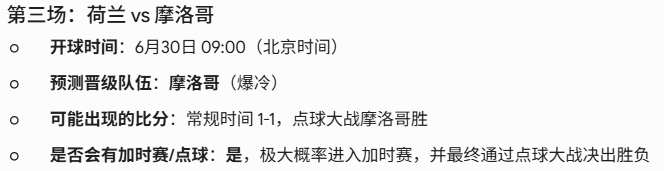
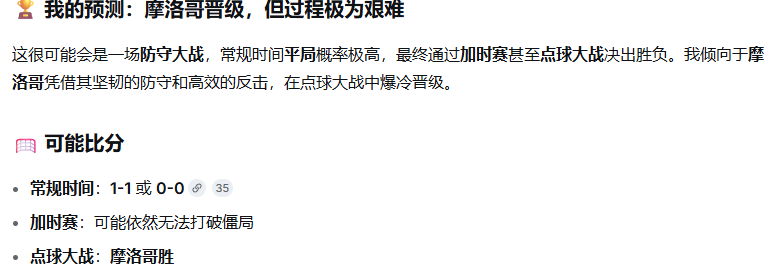
By contrast, Grok and Qwen seem more comfortable with favorite-versus-underdog structures and are better at handling tighter scoreline calls in matches where the expected winner is relatively clear. Their outputs are framed as stronger in “small-score” predictions, which implies more controlled, conservative match expectations rather than highly dramatic swings.

ChatGPT and Claude are positioned more as match-analysis tools
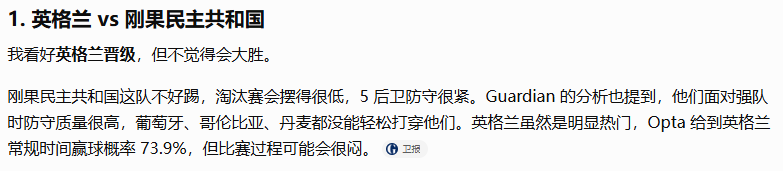
The same comparison places ChatGPT and Claude in a different category. Their advantage is not presented primarily as direct score-picking or upset hunting, but as process analysis. In other words, they appear more useful when the goal is to understand how a match may develop: tempo shifts, tactical patterns, turning points, and the broader logic behind a result.
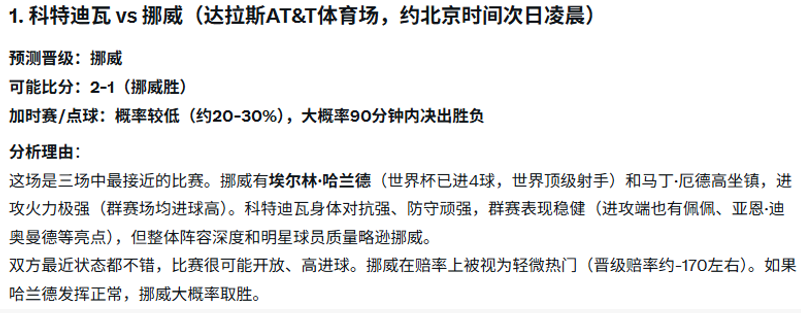
That distinction matters because prediction tasks are not all the same. A model that is strong at naming a final score is not necessarily the one that provides the most useful breakdown of a game’s progression. Odaily’s framing implies that ChatGPT and Claude may be better suited for readers who value structured reasoning about the match itself rather than a purely outcome-based answer.
The comparison highlights differences in model style, not just “who is more accurate”
What stands out from the brief is that the exercise is less about declaring one model universally superior and more about identifying different model tendencies. Gemini and DeepSeek lean toward surprise outcomes. Grok and Qwen appear more measured in popular matchups and more effective at narrow-margin score calls. ChatGPT and Claude offer stronger narrative and analytical value in describing the game process.
For professional readers, this kind of comparison is useful because it shows that the same prompt domain can produce very different outputs depending on the model. Some systems are more outcome-driven, some are more process-oriented, and some naturally generate more dramatic scenarios. The original source is Odaily: https://www.odaily.news/zh-CN/post/5211670 .