
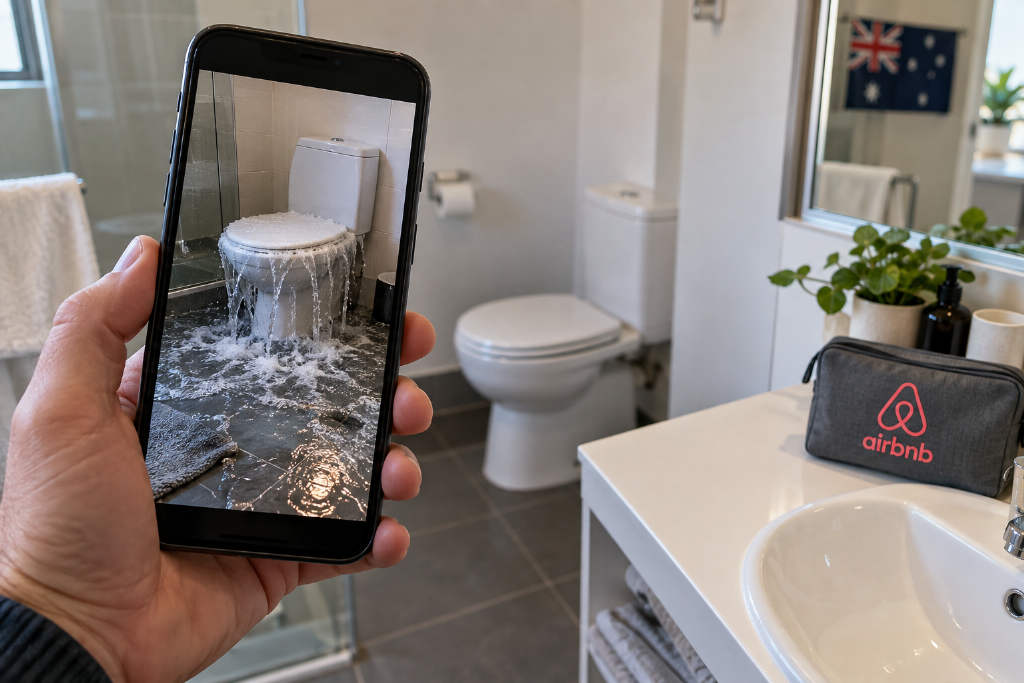
An Airbnb host in Australia sought A$1,700, or about $1,183, from a guest over an image showing an overflowing toilet and a flooded bathroom. The dispute gained traction after the guest posted the photo on Reddit and asked other users to examine it. Several users said the image showed multiple inconsistencies, and one claimed Gemini identified it as carrying Google’s SynthID invisible watermark.
Guest posted the image on Reddit for review
According to BlockTempo, the incident took place in Australia. The host’s damage claim relied on a single photo. The guest described the host as "one of the biggest Airbnb operators in the state" and posted the image on Reddit under the username FurinaDeFontaine, asking others to assess whether it looked authentic.
Users pointed to details they said did not add up
In the original post, the guest said the image showed signs often associated with AI-generated visuals. The toilet appeared to be dripping, but there was no visible splash. The door handle seemed unusually high at eye level. The guest also argued that if the bathroom had really filled with that much water, the rest of the property should have shown more extensive flooding.
A day later, the guest added that there was another floor below the bathroom. If the upstairs floor had really been covered by several inches of water, the guest wrote, "the entire first floor should have become an aquarium." Other Reddit users raised similar points, saying the standing water did not appear to have spread into adjacent rooms and that no ceiling damage was visible despite the bathroom being upstairs.
The guest’s own defense was straightforward: during the stay, they said, they had not even used the toilet paper, though they did not rule out the possibility that someone else had used the bathroom and that some traces in the image could have been real.
Gemini check was said to show a SynthID watermark
The post said the biggest issue came from Gemini’s detection feature. After users uploaded the image, the reported result was that it contained a SynthID watermark.
SynthID is Google’s invisible marker embedded in some AI-generated or AI-edited content. As described in the report, it works like a stamp that cannot be seen by the naked eye when the image is produced, and it can often still be detected after resizing, color adjustment, or compression.
Guest said Airbnb ruled the claim ineligible
The guest wrote on Reddit the next day that the case had been closed and that Airbnb found the host’s claim ineligible. Airbnb has not publicly confirmed that outcome, and there has been no legal determination that the host intentionally falsified evidence.
Airbnb policy details drew scrutiny
The report also reviewed Airbnb’s dispute rules. According to Airbnb’s help page, hosts can submit a claim through the Resolution Center, and guests have 24 hours to respond. If the guest pays in full, the case ends. If the guest makes a partial payment, rejects the claim, or does not respond, the host can ask Airbnb to step in. Airbnb’s community support team then reviews the host’s evidence and the guest’s response to decide who is responsible and whether the amount is reasonable.
If the guest does not pay on time, or if an appeal fails, the payment method on file can be charged. After that charge is made, the guest has 60 days to appeal.
The host-side explanation says hosts can submit photos or videos together with repair estimates or receipts within 14 days after checkout, with coverage of up to $3 million. The same page also says some host damage protection claims "may be expedited and automatically reviewed without prior human review." If a guest disagrees with the outcome, the guest can request a manual review.
Fourteen days to prepare, 24 hours to answer
BlockTempo said the process leaves hosts with 14 days to prepare materials while guests get only 24 hours to respond. As the cost of generating AI-made images keeps falling and realism improves, the cost of verification may rise.