

Variant partner Alana Levin said the crypto market’s key debate has changed after what she described as a likely bottom in July 2026. The question through the summer was when the market would finally bottom. Now, she wrote, the focus has shifted to whether a new bull market is actually underway and which assets are most likely to attract the next wave of capital.
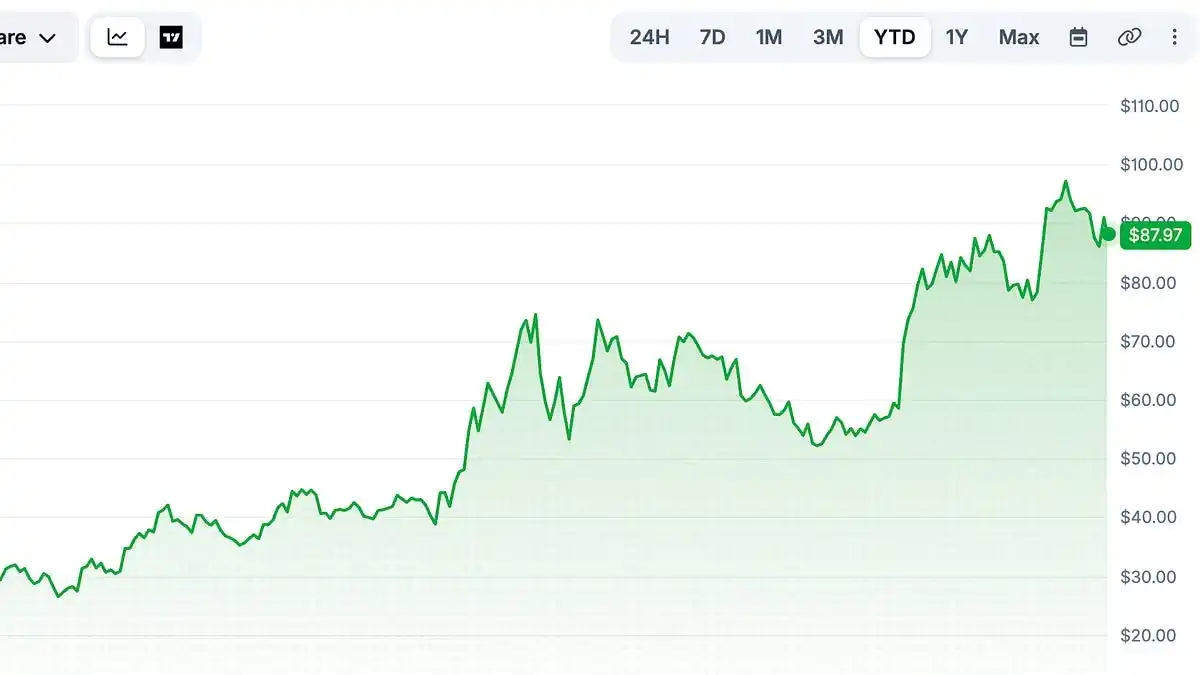
Levin noted that in an article published in early July, she argued the market was close to a floor when Bitcoin was at $59,000, Ether was at $1,600, and Zcash was at $420. At this point, she said, that question has a clearer answer: the bottom was likely set, and it likely happened at some point in July this year.
The market’s main question has moved past the bottom
Levin framed the next stage of the discussion around two issues. First, is the current move the start of a real bull market, or a deceptive pump fake. Second, if the market is in the early phase of a broader bull cycle, which categories of projects are best placed to capture outsized upside.
She said those questions naturally lead to others, including how long the bull market could last, what is driving it, and which black swan risks could puncture the setup. In this piece, though, she starts from a working assumption that crypto is already in the early stage of a new bull market.
Two main destinations for marginal dollars
Levin said a broad consensus is taking shape around two categories that are most likely to absorb each new marginal dollar entering the market.
- Assets that are money, or protocols that function as money, with Bitcoin as the clearest example of a digital store of value.
- Protocols that make money, meaning projects with real business cash flow and fee income.
She described these two groups as the market’s main liquidity reservoirs. The next layer of analysis, in her view, is what happens when a large share of market participants comes to believe that these are the must-own assets.
Bitcoin as the valuation anchor, revenue quality as the test
For assets that function as money, Levin said Bitcoin remains the undisputed leader in digital store-of-value positioning. Any asset trying to compete for digital reserve money status will, in practice, be judged against Bitcoin. That means investors will look at its market capitalization as a percentage of Bitcoin’s market capitalization, and how that ratio changes over time.
She argued that pure store-of-value assets have theoretically open-ended upside because their addressable market is tied to the total stock of human money. In that framework, relative market cap versus Bitcoin becomes the most durable comparison point.
The lens is different for protocols that generate revenue. Levin expects public-market investors in crypto to become much more demanding about the quality of that revenue.
- Is the revenue driven entirely by highly speculative crypto-native activity, such as Pump, or does it benefit from broader tailwinds in financial activity, such as Hyperliquid and similar high-frequency financial infrastructure?
- Can the business model retain users and revenue if the broader crypto bull market fades?
- What do the unit economics and real margin profiles actually look like?
She said the questions crypto investors are now asking increasingly resemble the standards used in the U.S. public equity market for listed companies.
Why valuation premiums may split wider
Levin said different answers to those quality questions will lead to clear dispersion in valuation multiples. In her view, projects with the following three traits are the most likely to command stronger revenue and earnings multiples:
- Deep exposure to the continued expansion of real-world assets, or RWA, and stablecoins, rather than dependence on purely crypto-native speculative activity.
- A clear path to institutional users and compliant distribution channels.
- Proof that the project survived the last bear market while still being led by a founder-CEO with long-term vision.
She suggested that these are the kinds of assets most likely to attract sustained institutional capital.
AI-linked token narratives look more like trades than holdings
Levin also separated out a third category: projects that bring traditional non-crypto business models on-chain. She said these assets will most likely trade as narrative-driven opportunities rather than long-term value investments.
The appeal is easy to understand. Investors can point to a mature valuation in a traditional sector and ask how large the upside could be if the on-chain version reaches similar scale.
She said the clearest examples right now are projects trying to map onto different layers of the AI stack, including routing protocols, decentralized inference, GPU compute networks, data collection, and user-facing front ends.
Levin said she is highly skeptical that most of these businesses actually need a blockchain. She also warned about what she called a token-versus-equity split. In many cases, the core commercial value legally sits inside the equity of the operating company, while only a small portion of revenue is used to buy back tokens in the secondary market. A project generating revenue does not automatically mean the token captures that value, she wrote.
She added that this pattern is not new in crypto. Even if such projects can work as trading vehicles during periods of market euphoria, she sees them as a reverse signal for market tops. If they begin to surge across the board and outperform the wider market, that may indicate that discipline in the market is breaking down.
Drawdowns may start to look more like mature markets
Levin said crypto has always been deeply cyclical, with the industry broadly following a four-year bull-bear rhythm over the past decade. This cycle, however, she sees a structural shift. Some core assets with stronger fundamentals never really entered a deep bear market at all, and instead kept compounding on the back of improving underlying data.
She said institutional capital is likely to cluster more tightly around assets with real earnings power. Those assets will still go through cyclical corrections, but she expects their drawdowns to move closer to the 10% to 30% range more typical of mature financial markets, rather than the 90%+ collapses that defined earlier crypto cycles.
For Levin, that change is one of the clearest signs that crypto finance is moving into a more mature phase.



