

Alibaba posted fiscal first-quarter revenue of 268.95 billion yuan, or roughly $40 billion, on Thursday, up 9% from a year earlier and slightly ahead of the 268.88 billion yuan analysts had expected.

The result marked the company’s fastest quarterly growth rate in about three years. Nearly all of that growth came from one area: cloud and AI.
Cloud and AI drove the quarter
Alibaba Cloud’s external revenue growth accelerated to 45%, while revenue from AI-related products reached 12.38 billion yuan, or $1.82 billion. The company said that business has now logged a 12th straight quarter of triple-digit year-over-year growth.
According to Alibaba’s earnings statement, CEO Eddie Wu said the quarter’s performance reflected improving commercialization of the company’s full-stack AI push.
That effort is coming with a heavier bill. Capital expenditure rose 75% to 67.7 billion yuan, or about $10 billion. Alibaba said the increase was tied mainly to higher chip prices and expanding compute capacity as AI demand continues to outstrip supply.

Bloomberg reported that free cash flow swung to an outflow of more than $6.6 billion for the quarter.
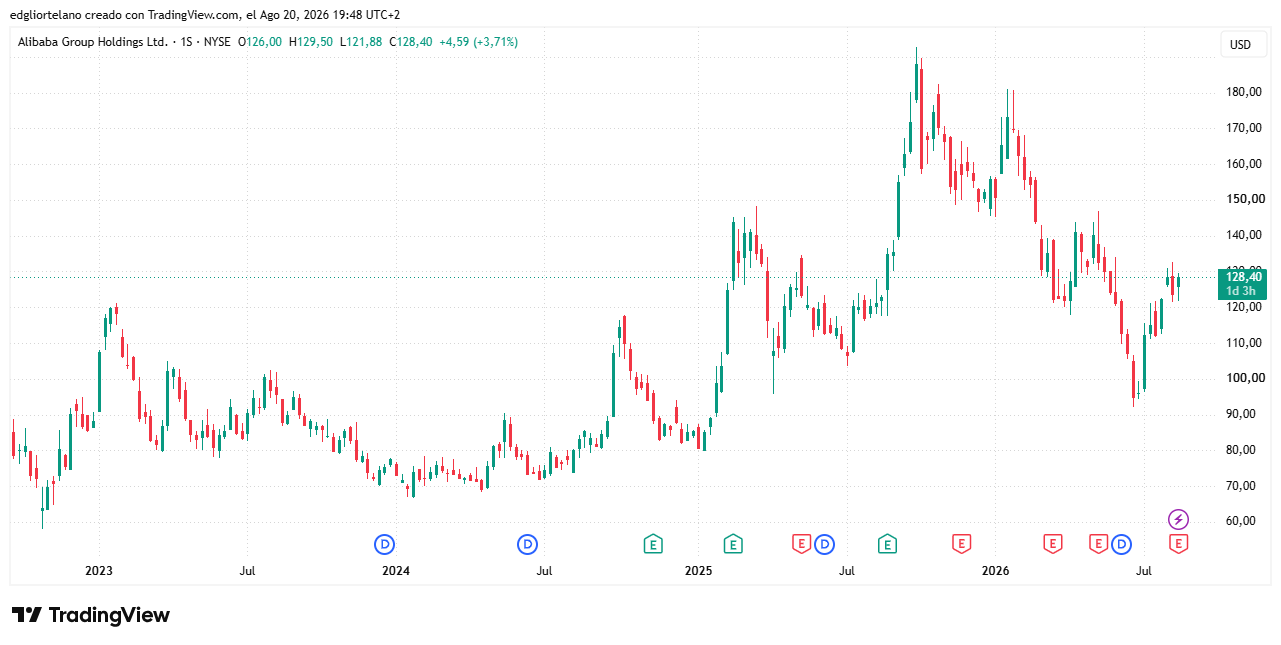
Investors reacted quickly. Alibaba’s U.S.-listed shares fell around 5% shortly after the opening bell, then recovered part of the move by midday.
Qwen distribution becomes a bigger part of the strategy
Alibaba’s cloud results arrived as the company puts more emphasis on distributing its Qwen models rather than only training them.
Earlier this month, Alibaba released Qwen 3.8-Max, described as its most capable model, as open weights for the first time at that scale. In April, it shut down the free tier of its Qwen Code coding agent.
The company is also pushing outside China. Apple is pairing its in-house model with Alibaba’s Qwen to bring Apple Intelligence to Chinese iPhones. The deal could make Apple the first foreign company allowed to run a proprietary AI model inside China.
Distribution trends are showing up in usage data
That distribution strategy is already appearing in the numbers. Chinese open-weight models went from less than 2% of tokens generated on OpenRouter in late 2024 to roughly 61% by mid-2026.
At the same time, Decrypt noted that Alibaba’s quarterly profit had shrunk by three-quarters.