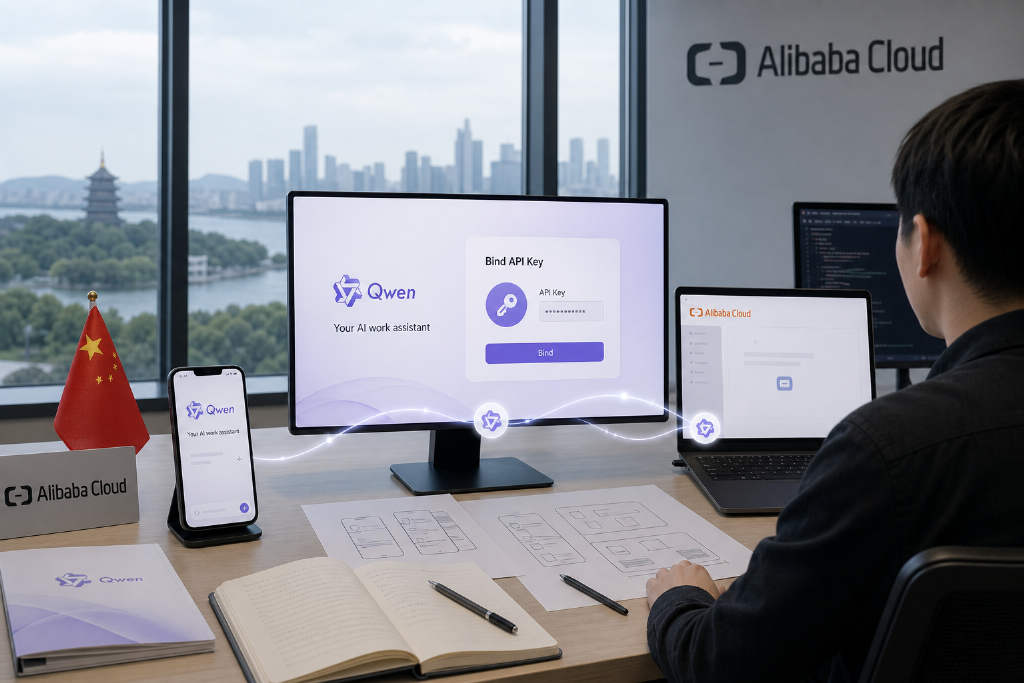
Alibaba Cloud’s Token Plan has officially been connected to the Qwen app and PC client, allowing users to use the same subscription quota inside Qwen’s Work Assistant after binding a dedicated API key. Once connected, users can spend their existing plan credits on more complex tasks, including operating a computer and browser, calling Skills, and creating Office documents, apps, and websites. The update extends a single pool of model usage from developer-focused tools into Qwen itself, rather than limiting it to coding and agent environments. Token Plan already supported tools such as Codex, Claude Code, Cursor, Qoder, and OpenClaw, and those credits can now also be shared with Qwen Work Assistant. Supported models include Qwen3.8-Max, with different models and tools drawing down usage under a unified Credits-based deduction system.
Alibaba Cloud’s Token Plan has officially gone live on the Qwen app and PC client.
After binding a dedicated Token Plan API key inside Work Assistant, users can spend their own subscription quota on more advanced tasks. Those tasks include operating a computer and browser, calling Skills, and creating Office documents, apps, and websites.
The change extends the same pool of model quota from developer tools to Qwen. Token Plan already worked with AI coding and agent tools including Codex, Claude Code, Cursor, Qoder, and OpenClaw. Qwen Work Assistant can now share that same allocation as well.
Supported models include Qwen3.8-Max. Different models and tools are deducted under a unified Credits system.
This article was originally published by Bit.Fan. For more cryptocurrency news and market insights, visit www.bit.fan. Disclaimer:
The market information, project data, and third-party content displayed on this platform are for industry information sharing only and do not constitute any form of investment advice or return commitment.
Cryptocurrency trading carries high risks. Users should fully assess their risk tolerance and make independent decisions. All profits, losses, and legal responsibilities are borne by the users themselves.