On June 1, Binance officially launched trading for over 8,000 US stocks and ETFs for non-US users, enabling zero-commission fractional shares with a minimum investment of $5. Users can purchase these securities using cryptocurrencies like USDC, USDT, and BNB. Behind the scenes, Binance selected the US compliant broker-dealer Alpaca to handle asset custody, dividend distribution, and corporate actions. While Binance’s expansion into traditional finance drew significant attention, Alpaca had already quietly become the critical infrastructure provider powering the global stock tokenization movement. Coinciding with Binance’s announcement, Bitget and Gate were also making major moves into stock tokens — and, like Binance, they turned to Alpaca.

Exchanges Line Up Behind Alpaca
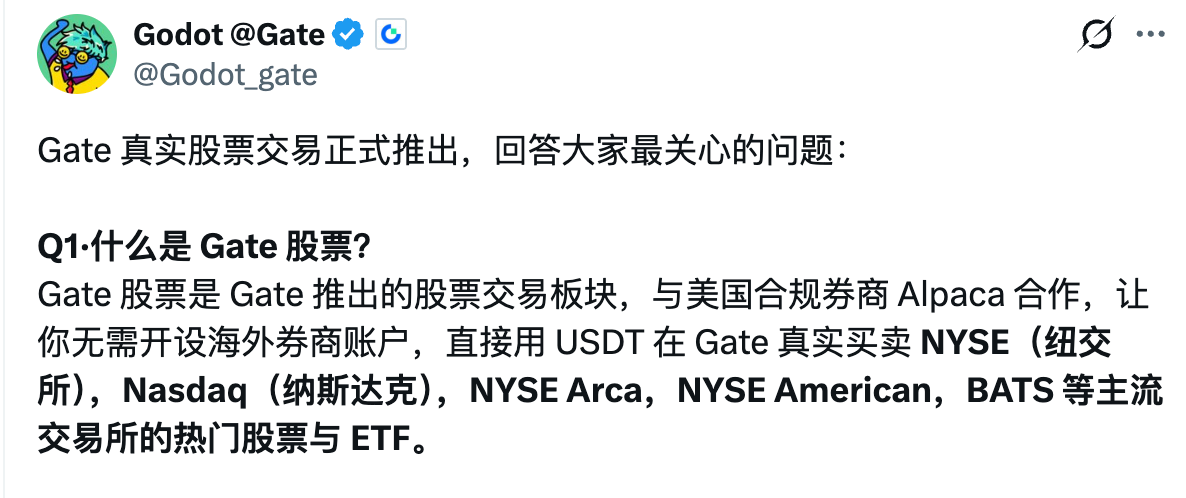
Binance is not the only exchange betting on stock tokenization. On May 28, Bitget announced the upcoming launch of Reality, a stock token platform that will issue rTokens — derivative tokens pegged 1:1 to underlying stock assets. Bitget’s Chinese-language representative Xie Jiayin confirmed that the underlying brokerage for Reality is Alpaca. Just a few days later, on June 1, Gate unveiled its own real stock trading service, allowing users to trade US stocks and ETFs directly with USDT. Gate official Godot also confirmed that its brokerage partner is Alpaca.
Alpaca Dominates DeFi as Well
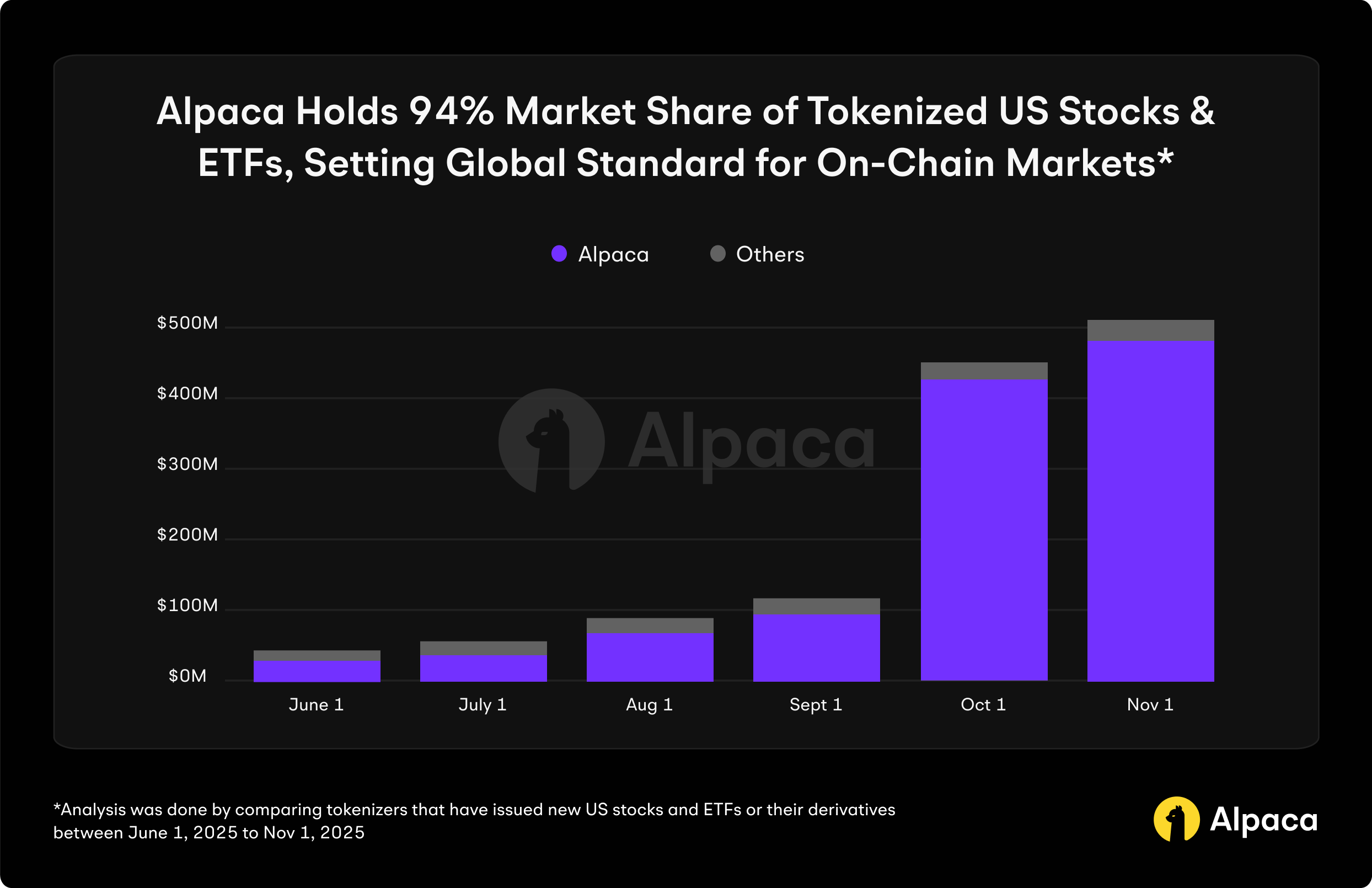
In the decentralized finance (DeFi) arena, Alpaca’s footprint is equally prominent. Ondo, the leading platform for tokenized stocks, announced its partnership with Alpaca back in September of last year to tokenize US stocks and ETFs. Its direct competitor, xStocks (a Kraken-backed protocol), followed suit in December, revealing plans to work with Alpaca to accelerate global adoption outside the US. According to data disclosed by Alpaca on December 4, the firm already commanded a 94% market share in the tokenized US stock and ETF sector. Whether it’s CeFi or DeFi, nearly every stock token trading service you can find relies on Alpaca behind the scenes.

From Quant APIs to a Full-Asset Broker
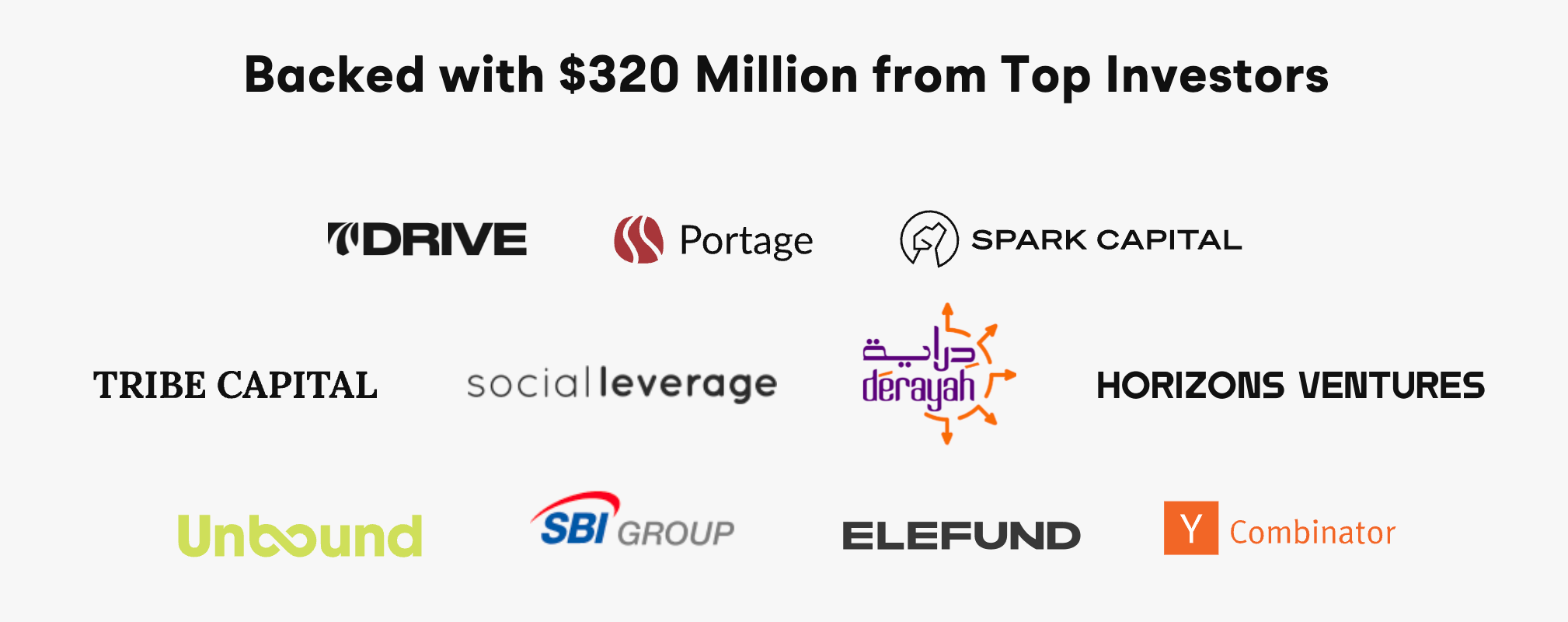
Alpaca was founded in 2015 in California, with former Lehman Brothers employee and serial entrepreneur Yoshi Yokokawa as CEO and engineer Hitoshi Harada as CPO. The company operates with a globally distributed remote team of over 250 employees across 25 countries. Alpaca initially focused on financial databases and machine learning, building technology to process large market datasets for predictions. Its early product was a trading API for quantitative traders. As it expanded, Alpaca evolved from a simple interface provider into a comprehensive financial infrastructure platform supporting stocks, ETFs, options, and cryptocurrencies, while also offering market data, securities lending, high-yield cash accounts, and 24/5 US equities trading. According to FundBet, since 2019 Alpaca has raised over $320 million from investors including Y Combinator, Spark Capital, Portage Ventures, Tribe Capital, and SBI Group. Today, it serves hundreds of financial institutions and fintech companies across more than 40 countries and has helped open over 7 million brokerage accounts.

The API-First “Brokerage-as-a-Service” Model
Unlike traditional brokerages that serve end investors directly, Alpaca’s core customers are developers, fintech firms, and other broker-dealers. Its Broker API enables partners to quickly assemble a full suite of securities services, including account opening, KYC, account management, order execution, clearing, settlement, and market data. This “Brokerage-as-a-Service” approach means that platforms like Binance, Bitget, Gate, and Ondo only need to focus on traffic and users, while all the complex backend connections to the real-world securities market are handled by Alpaca.
Why the Crypto World Prefers Alpaca
The US compliant financial market is not short of brokers — thousands of registered firms, including giants like Charles Schwab, Interactive Brokers, and Fidelity, dwarf Alpaca in brand and assets. Yet when the stock tokenization wave emerged, it was this barely-teenaged company that took the lead. The core reason is that Alpaca was never a traditional broker. Its product design revolves entirely around APIs, perfectly aligning with crypto platforms’ need to embed securities trading into their own ecosystems. Moreover, Alpaca was one of the earliest US licensed broker-dealers to proactively embrace digital assets and the tokenization narrative, actively exploring the intersection of securities markets and blockchain long before it became a hot trend.

First-mover advantage and industry alignment are the twin pillars of Alpaca’s 94% market share. As more CeFi and DeFi players adopt Alpaca’s infrastructure, network effects are strengthening its moat: more platforms lead to more accounts and trading volume, enabling Alpaca to refine its products and infrastructure, which in turn attracts the next wave of adopters — a virtuous cycle. Stock tokenization is an unstoppable trend, and while it’s uncertain how many future Binances or Ondos will emerge, the one selling the “shovels” to all the miners — Alpaca — may well be the biggest winner of this race.