

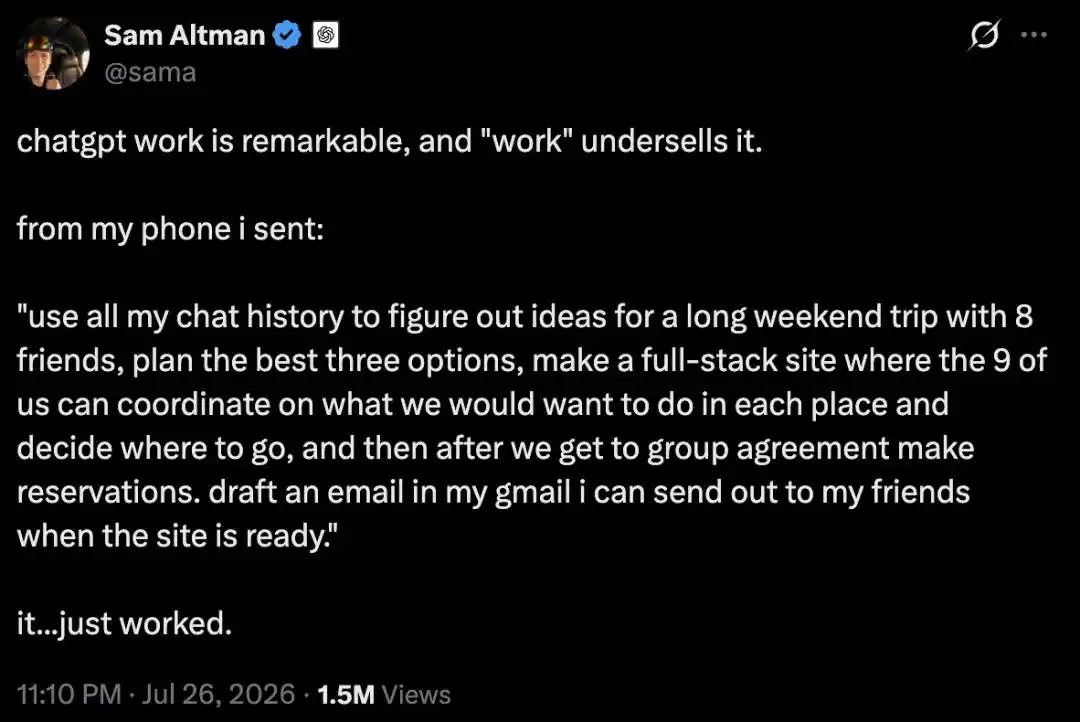
OpenAI CEO Sam Altman said late on July 26 that ChatGPT Work is “really good,” and that the word “Work” makes the product sound smaller than it is.
In a post on X, Altman said he had just used ChatGPT on his phone to arrange a long-weekend trip for himself and eight friends. His prompt asked the system to use his full chat history, come up with ideas for the group, produce the best three options, build a full-stack website where all nine people could discuss what they wanted to do and decide where to go, move on to booking once the group reached agreement, and draft an email in his Gmail account so he could send it once the site was ready.
Altman said it worked end to end.
Tibo Sottiaux, who leads Codex and Work, reposted Altman’s message. He said ChatGPT now handles around 20 tasks a day for him, including negotiating internet service costs, canceling unwanted subscription emails and hunting for product discounts. None of those jobs are directly about office work, but all of them fit inside what Work can do.
That is also why Sottiaux had joked on X a few days earlier that ChatGPT Work might need a different name: “ChatGPT HelpMeWithEverything.” OpenAI President Greg Brockman reposted that message and said ChatGPT is increasingly becoming a user’s personal AGI.
Less than a month after launch, three OpenAI executives have now made versions of the same point. The product is aimed at more than work tasks.
One prompt, five different jobs
Broken down step by step, Altman’s request covered five separate tasks.
- Search his past chats for preferences and clues.
- Create three trip plans.
- Build a full-stack website where nine people could discuss and make a decision.
- Proceed to booking after the group reached consensus.
- Draft an email in Gmail for Altman to send to friends.
That sequence runs from memory retrieval to planning, website generation, group coordination and finally a send-ready draft email. In the article’s framing, a single instruction from a phone now covers work that used to sit across several tools and several stages.
Those five steps also cut across three broad categories of capability: searching memory, creating an interactive website from scratch, and entering a mail workflow to prepare an outbound message.
From giving answers to finishing tasks
A year ago, asking AI to help plan a trip for nine people would likely have produced a guide or a list of suggestions. The article argues that the shift now is execution. ChatGPT can generate a website that all nine participants can open, react to and use to revise plans.
The feature behind that step is called Sites, which entered public testing together with ChatGPT Work. OpenAI describes Sites as a way to turn outputs or ideas into interactive sites and web applications that can be shared through a URL with a team or a broader audience. The examples listed in the article include live dashboards, project trackers, launch schedules, prototypes, internal portals and interactive reports.
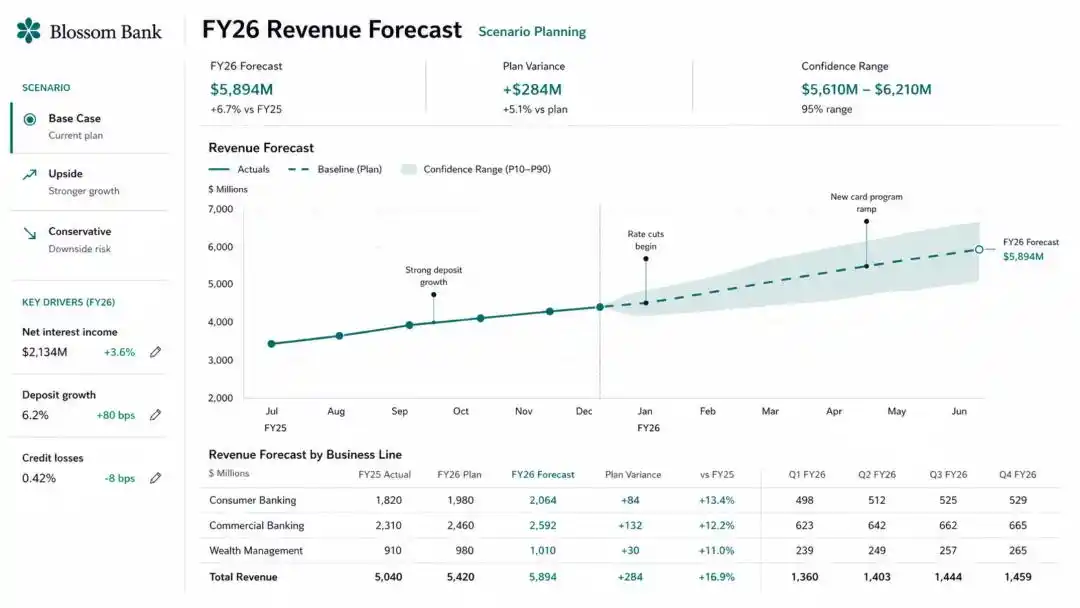
The page is not fixed once it is generated. If the underlying data changes, ChatGPT can return and update the content automatically. One official demo cited in the piece showed an interactive revenue forecast dashboard that refreshes when source data changes.

Engineers have been able to turn prompts into shareable applications for some time. The barrier for ordinary users has been the chain of work around writing code, deployment and domain setup. The article’s argument is that AI is flattening those hurdles.
What powers ChatGPT Work
OpenAI launched ChatGPT Work on July 9 as an agent product focused on tasks that take time, require several steps and need a finished deliverable. For more complex projects, it can break work into smaller stages and keep running for hours if needed.
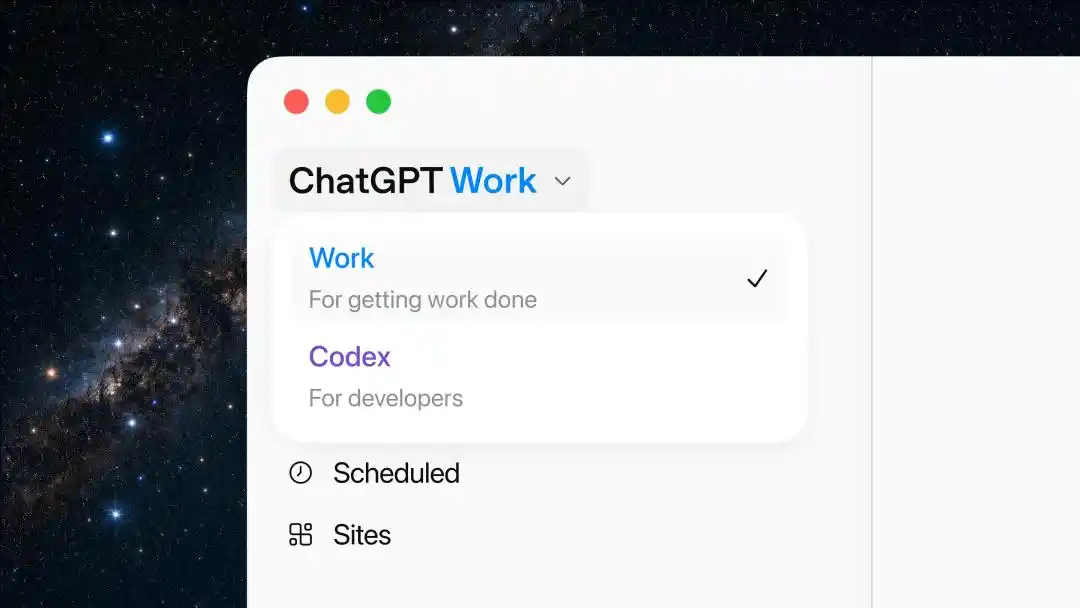
In the ChatGPT desktop menu, Work appears alongside Codex, Scheduled and Sites.
The stack is built on Codex technology and powered by GPT-5.6, which was released the same day. The update also included several other capabilities:
- Plugins, which connect ChatGPT to outside systems such as Gmail, calendars, Google Drive and Slack. Users can also call a specific app in a prompt with an @ mention.
- Sites, which handles website creation and supports things like live dashboards, project trackers and interactive reports.
- Scheduled Tasks, which can run repeatedly on a timetable or under trigger-based conditions.
- An automated review function, which checks critical actions before they happen so sensitive information is not sent out by mistake.
The plugin directory shown in the report includes Google Drive, Gmail, Teams, Slack and Salesforce.

OpenAI said Codex now has more than 5 million weekly users. More than 1 million of them are using it for things other than coding, according to the article. Codex started as a coding agent for developers, and OpenAI has taken that as evidence that the underlying capabilities can support a much wider task range.
The company’s internal adoption is also cited. The report says nearly 100% of OpenAI teams, including finance and sales, are using Work and Codex.
Household chores and personal admin are part of the pitch
After ChatGPT Work launched, TechRadar’s Graham Barlow handed over the pile of personal tasks he least wanted to deal with. After a week of use, he said the results were better than expected.
For a wedding anniversary dinner booking, ChatGPT Work returned three solid options. That was the easiest case.
For holiday planning, Barlow entered dates, budget and family requirements. The system looked up destinations, compared flights and accommodation, prepared a cost sheet, drafted an itinerary and kept a separate checklist of what had and had not been booked, updating it as progress changed. It also checked Gmail for existing reservations.
What Barlow found most useful was visibility. He could see what the system was doing, which sources it was using and how each step was being handled.
For home renovation, it compared quotes, reviewed drawings and product specifications, laid out timelines and kept track of decisions that were still pending.
Barlow said one of the most useful features was planning the following week for the whole family. That depends on Scheduled Tasks.
The mobile interface for scheduled tasks can run repeatedly on a plan or keep watching for changes. In the past, ChatGPT had a simple limitation: if the user did not ask again, it stopped. The article says that has changed. It can now run on a schedule and keep monitoring a situation over time.
Once his calendar and email were connected, Barlow set a task to generate the family plan every Sunday night and alert him if anything changed during the week. School events for his children were the easiest things to miss, he said, but if the school had sent an email, the system would catch them.
After trying the setup across several tasks, Barlow’s conclusion was that an ordinary personal matter can be complicated enough to justify an agent. He also saw a broader use case: letting ChatGPT Work watch a task from beginning to end, whether it is related to work or not.
The phone is becoming the remote control
Across Altman’s example, the article says he only had to do three things: describe the goal, review the options and approve critical actions. Those are judgment calls. Execution was handed to ChatGPT.
OpenAI’s own demos show ChatGPT Work on desktop and mobile connected to Google Calendar, Slack and Gmail.
The piece also lays out two limits on the execution side.
The first is what the system can actually read. Altman wrote “use my full chat history,” but that was a user request, not proof that the system literally reads every past exchange. OpenAI’s public description of Memory has been that it draws useful context from chats, files and connected apps. The company has not promised to read through a user’s entire history line by line, and users can turn Memory off.
What Work can access, when it asks for confirmation and whether it needs approval before taking action are also settings controlled by the user and workspace administrators. It does not automatically gain access to every account.
The second limit is what the system can do by itself. Altman asked ChatGPT Work to draft an email. He wanted a draft, and the final review and send step still belonged to him.
OpenAI’s own sample prompt for email in the Work product materials follows the same pattern: find messages that need replies, summarize each one, draft responses and keep them unsent until a person reviews them. The company’s launch materials also say critical actions involving connected tools require approval before execution.
One other detail matters here: Altman sent the instruction from a phone. In the article’s reading, that changes the role of the handset. It is becoming the remote control for the agent.
Work runs in the cloud on both web and mobile, with sessions synced across devices. A user can start a task while traveling, review a draft on the move, check progress between meetings and then continue the same task from the web interface back at a desk.
Barlow’s reading is that ChatGPT is turning into a place where a project can keep moving at any time, and that project may have little to do with work. Brockman put the ambition more directly: ChatGPT is becoming your personal AGI.
The article ends with a harder constraint. Even if the model is smart enough and compute is available, some steps still cannot be skipped. Authorization, payments and personal data remain decisions that require a person to sign off.