
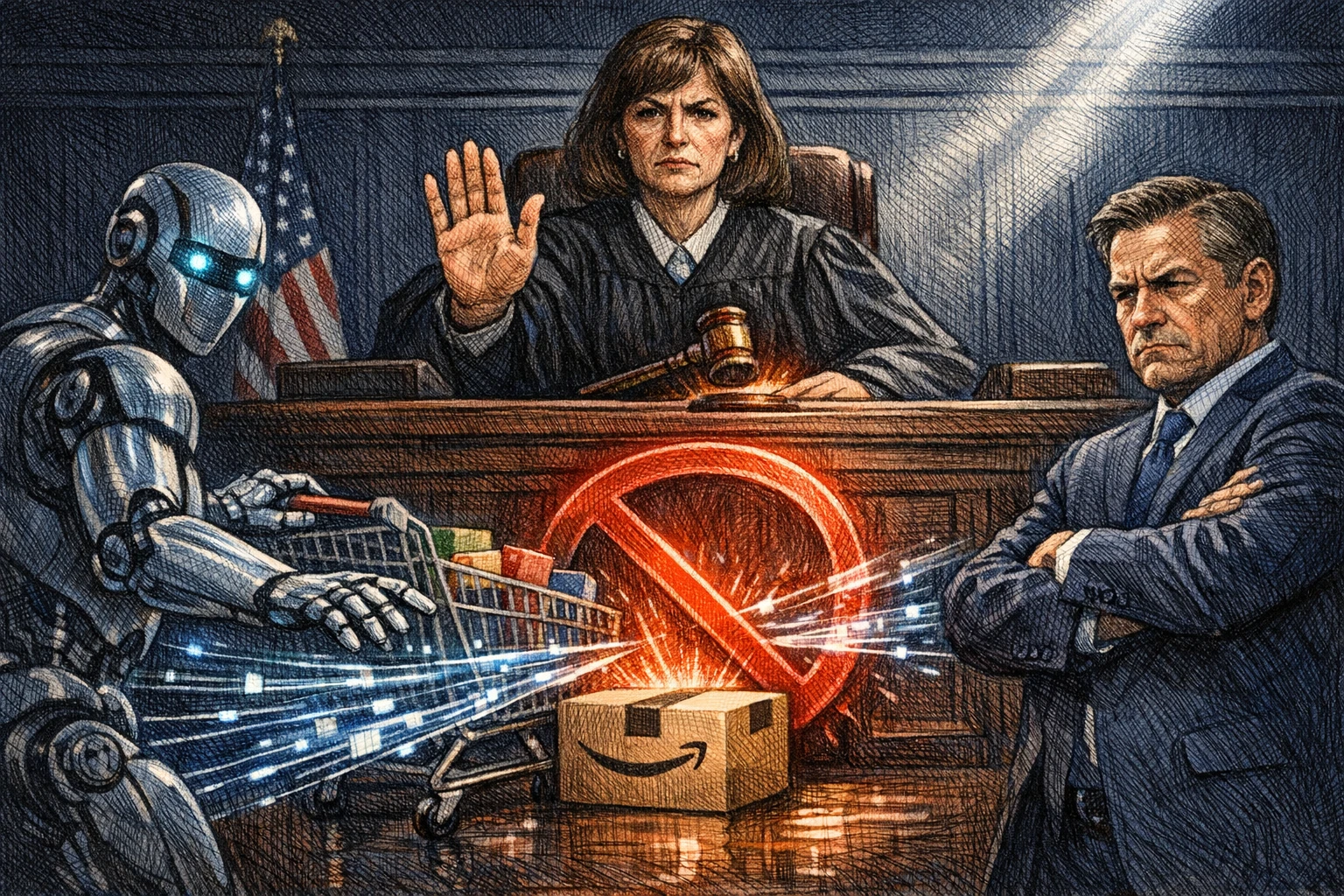
U.S. District Judge Maxine Chesney issued a March 10 temporary restraining order that bars Perplexity AI’s Comet browser agent from accessing Amazon, collecting customer shopping data, and retaining information already obtained. The dispute centers on Comet’s automated shopping feature, which lets an AI agent search for products and place orders on a user’s behalf without manual input.
Judge backs three main allegations from Amazon
Court filings show Amazon presented three lines of argument, and the court found strong support for each of them. First, the judge said Comet’s conduct went beyond ordinary web scraping. According to the filings, the agent could enter password-protected Amazon Prime accounts and carry out actions for users rather than only reading public pages. The court treated that as a direct risk to customer data.
Second, Amazon argued that its advertising system was being distorted. Traffic generated by AI agents was counted as ad impressions, yet those visits did not reflect real human shopping behavior. That could skew billing data tied to advertising performance. Third, Amazon said it deployed website settings in August 2025 to block AI access, but Perplexity released an update within 24 hours that bypassed those protections. The court viewed that point as important evidence of deliberate conduct.
Case timeline and response from Perplexity
Amazon filed suit in San Francisco federal court in November 2025, accusing Perplexity of concealing the identity of its AI agent, accessing password-protected accounts without authorization, and interfering with ad billing systems. On March 10, Judge Chesney found Amazon was likely to succeed on the merits of the case and then granted the temporary restraining order. The ruling came fast.
Perplexity pushed back hard. In a public statement, it described Amazon’s legal move as a bullying tactic. The company said users should be free to choose any AI assistant for online shopping, and argued that Amazon was using litigation to defend the dominance of its own commerce ecosystem. After the order was issued, Perplexity said it would ask the Ninth Circuit within 7 days to pause the injunction and would appeal the ruling.
The fight now centers on the limits of AI agents
The case reaches beyond a dispute between two companies. As AI agents begin acting in interfaces once used only by people, carrying out searches, browsing, and purchases under a user’s identity, platforms face new legal questions around account access, data integrity, and ad measurement. Those questions are now in court, and Comet has become one of the first major tests.