
American Express National Bank processed about $13 billion in suspected trade-based money laundering, or TBML, between June 2014 and May 2025, according to findings from the Office of the Comptroller of the Currency.
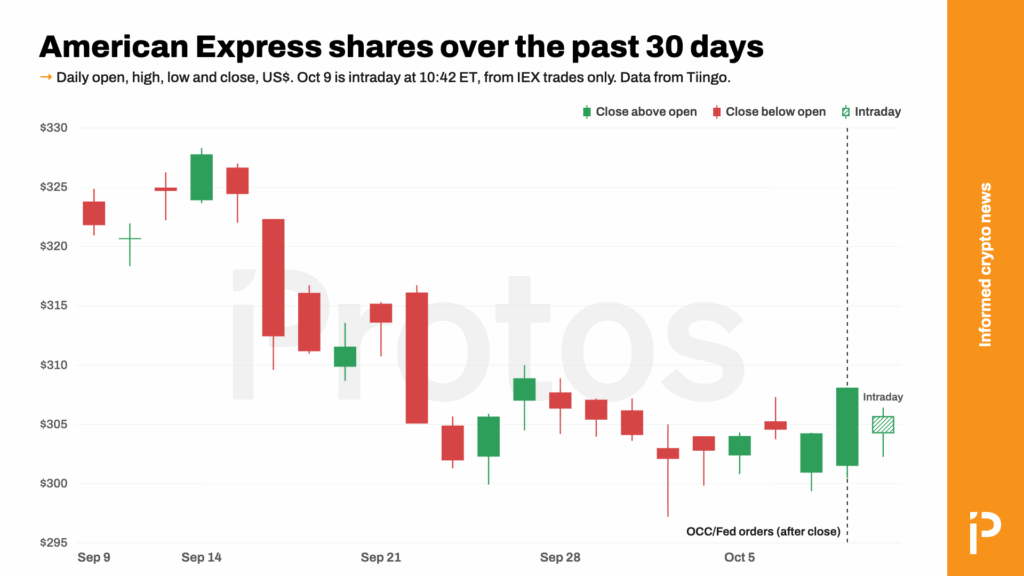
The OCC said it has reached a consent order with American Express National Bank that will require the company to pay $350 million for failing to maintain an effective Bank Secrecy Act, or BSA, and anti-money laundering, or AML, program.
American Express was also the subject of a separate Federal Reserve enforcement action tied to similar failures to meet BSA and AML requirements.
OCC says the conduct ran from 2014 to 2025
The OCC consent order alleges that the conduct ran from about June 2014 through May 2025. During that period, the bank processed roughly $13 billion in suspected TBML activity, including a mix of suspicious card charges and repayments tied to those charges. In certain cases, the activity moved through accounts associated with bank insiders.
TBML is a form of money laundering built around the manipulation of trade transactions. Manipulated invoices are one example used to make illicit funds appear legitimate. In this case, the issue appears to be connected to how American Express credit cards were used.
Federal Reserve order restricts rehiring of certain former personnel
The Federal Reserve enforcement action says American Express may not directly or indirectly retain any individual as an officer, employee, agent, consultant, or contractor of the company, or of any subsidiary or affiliate, if that person meets all of the conditions laid out in the order based on the firm’s investigative record compiled from 2024 to the present.
- The person participated in the misconduct underlying the order.
- The person was subjected to formal disciplinary action through the firm’s internal disciplinary or performance reviews in connection with that misconduct.
- The person either separated from the firm or had employment legally terminated in connection with that misconduct.
The restriction applies to individuals tied to the conduct described in the order who were later separated from the company or terminated.
Company says guidance for 2026 and 2027 is unchanged
In an 8-K filing with the US Securities and Exchange Commission, American Express said that “a portion of the civil money penalty was reserved for in prior periods and it does not impact the full-year 2026 guidance.” The filing also said the matter “is not anticipated to affect the company’s 2027 guidance.”
Penalty is sizable, though not the OCC’s largest
Protos said the penalty is not the largest in OCC history, but still stands as a substantial enforcement action. The report placed it near the $450 million order issued against TD Bank in 2024.