


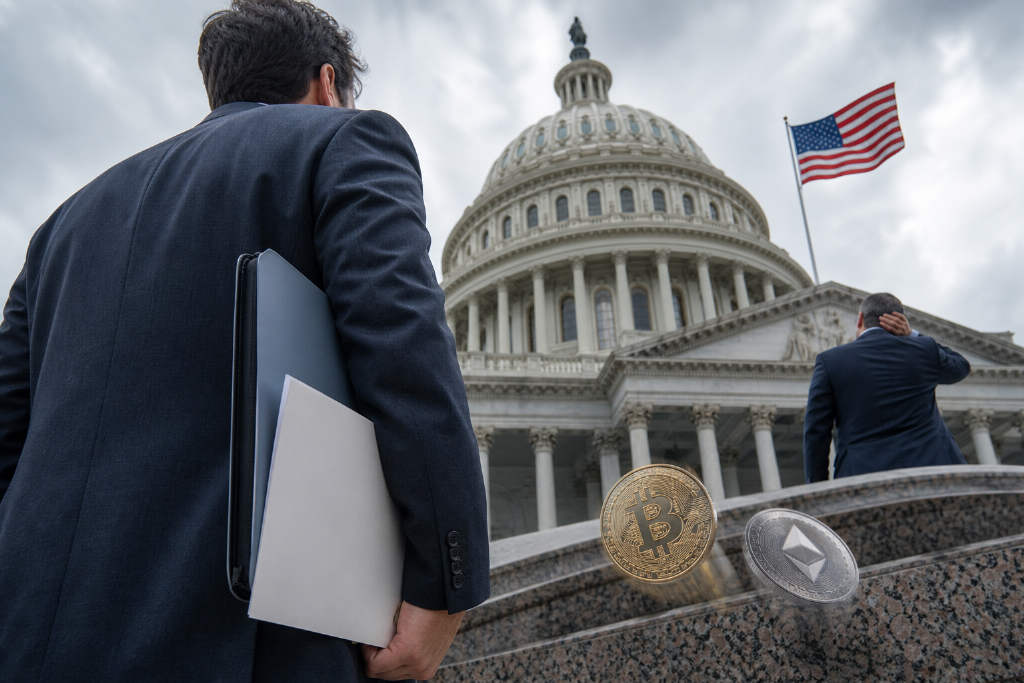
Most Americans see cryptocurrency as a poor fit for workplace retirement plans, according to a new survey from the National Institute on Retirement Security, released as US policymakers continue to open the door wider to alternative assets in 401(k) accounts.
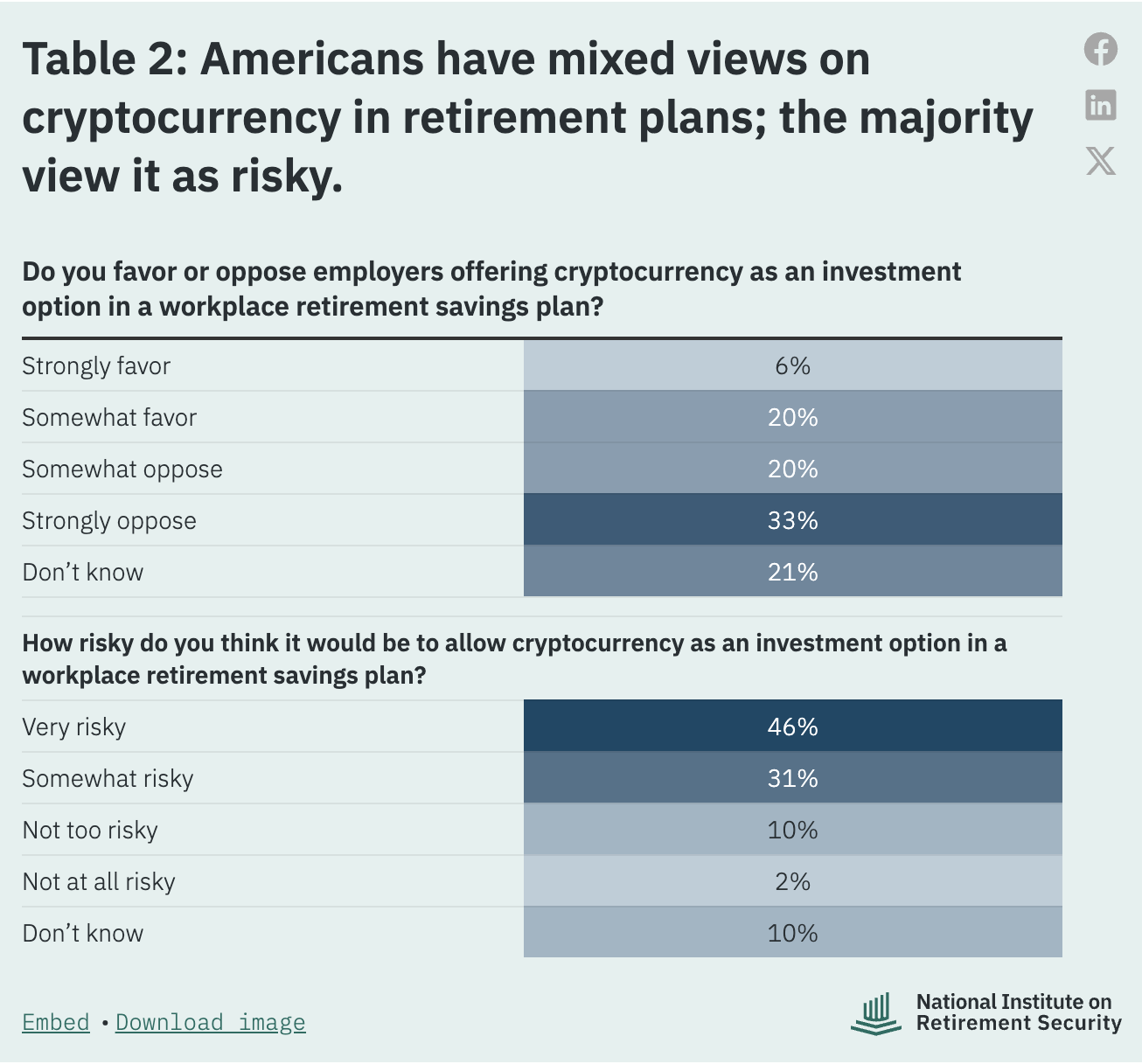
The survey found that 77% of Americans view crypto in workplace retirement plans as risky. Within that group, 46% said it is very risky. Another 53% said they oppose employers offering crypto as an investment option.
Retirement concerns remain elevated
The results landed against a backdrop of rising concern over retirement security in the United States. According to the survey, 80% of respondents said the country is facing a retirement crisis, up from 67% in 2020. Another 61% said they are concerned about whether they will achieve financial security in retirement.
Cost pressures also showed up clearly in the findings. Some 68% said it is becoming harder to prepare for retirement, while 77% said debt prevents them from saving enough.
Greenwald Research conducted the survey between Oct. 24 and Nov. 14, 2025. It included 1,203 Americans age 25 and older, and the results were weighted by age, gender and income.
Washington is moving to expand access to alternative assets in 401(k) plans
Even with broad public skepticism toward crypto as a retirement investment, the Trump administration and federal regulators have been moving to broaden access to alternative assets in retirement accounts. That has pushed crypto and other nontraditional investments deeper into the debate over retirement savings.
In May 2025, the US Department of Labor rescinded guidance that had urged 401(k) plan fiduciaries to use “extreme care” when considering cryptocurrency investments. After that change, the department returned to a neutral stance that neither endorsed nor discouraged crypto in retirement plan investment menus.
On Aug. 7, 2025, President Donald Trump signed an executive order aimed at expanding access to alternative assets in defined-contribution retirement plans, including investment vehicles that hold digital assets. The order also directed the Labor Department and the US Securities and Exchange Commission to consider regulatory changes that would facilitate access.
A few days later, the Labor Department rescinded separate 2021 guidance that had discouraged 401(k) fiduciaries from considering alternative assets. The department said investment decisions should instead be evaluated under a neutral, principles-based approach.
Later, in March 2026, the Labor Department proposed rules describing how 401(k) fiduciaries could include alternative assets in investment lineups. The proposal included safe harbors intended to reduce litigation risks, while also requiring fiduciaries to consider fees, liquidity, valuation and performance.
Lawmakers have pushed back
The proposal has drawn criticism from lawmakers. According to the report, Sens. Bernie Sanders and Elizabeth Warren, along with Rep. Bobby Scott, urged the Labor Department in June to withdraw it. They cited crypto’s volatility and what they described as insufficient investor safeguards.