
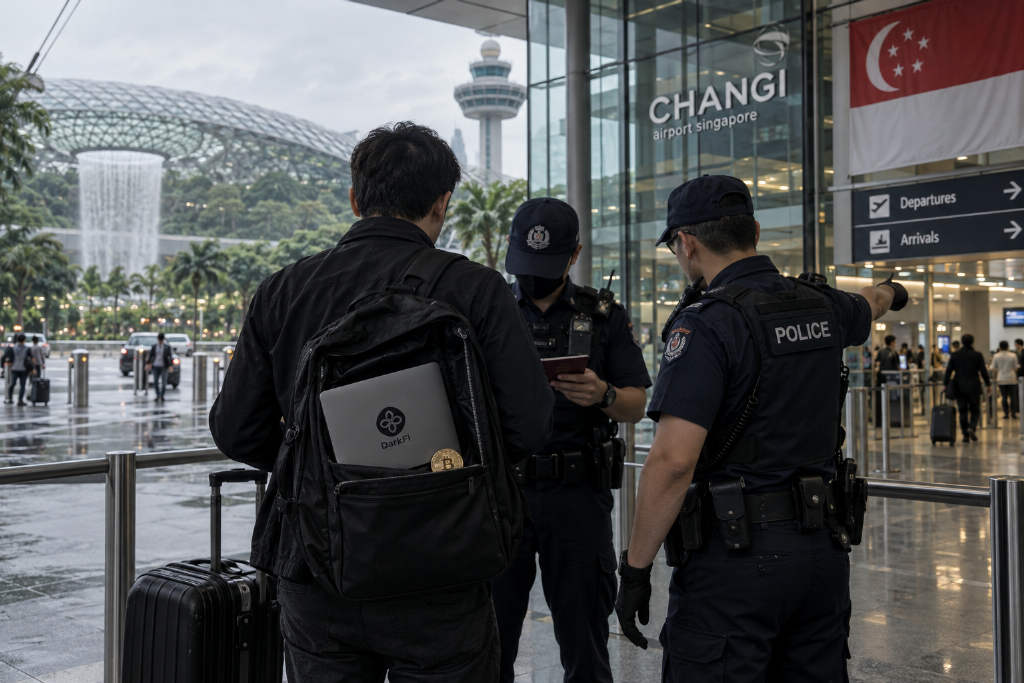
Amir Taaki, an early Bitcoin contributor and prominent crypto-anarchist, said he was deported from Singapore after being questioned by police about his work.
Writing on X on Tuesday, Taaki said Singaporean police questioned him for six hours before removing him from the country. He said the questioning centered on "what I work on."
Taaki, a British-Iranian programmer and one of Bitcoin’s earliest contributors, said he has run into trouble with some countries since spending time in Syria years ago fighting with the Kurdish People’s Protection Units.
In his post, Taaki wrote: "Just got questioned for 6 hours by glow police then deported from Singapore. Everything about what I work on. The extralegal glow regime charge my friends with fake things like money laundering. But they have nothing on me so they strike from the shadow. Weak coward tactics.…"
Taaki has made major contributions to Bitcoin privacy over the years and is now working on a crypto privacy protocol called DarkFi. In the same thread, he added: "The extralegal glow regime charge my friends with fake things like money laundering. But they have nothing on me so they strike from the shadow. Weak coward tactics. Face me bitch."
He also said that in the past year he had been deported from Argentina and Mexico, and detained in Serbia and Japan.
Taaki said that each time this happens, he asks why, but authorities tell him it is only a random check. He added that officials never give reasons for why he is being detained or questioned.
"I am on a list but I am not able to find any info about which country has sanctioned me," he wrote.
Bitcoin Magazine said Taaki, who has contributed to the publication, first ran into trouble with British authorities after traveling to Syria in 2016 to fight against the Islamic State group.
In a 2017 BBC interview, Taaki said he spent three and a half months fighting with the Kurdish People’s Protection Units before helping with community projects in the country.
Taaki is known for writing the first implementations of CoinJoin and stealth addresses, creating libbitcoin, founding the UK’s first Bitcoin exchange, and authoring BIP 0001, which established the Bitcoin Improvement Proposal process.
The report was written by Mathew Di Salvo and first appeared in Bitcoin Magazine.