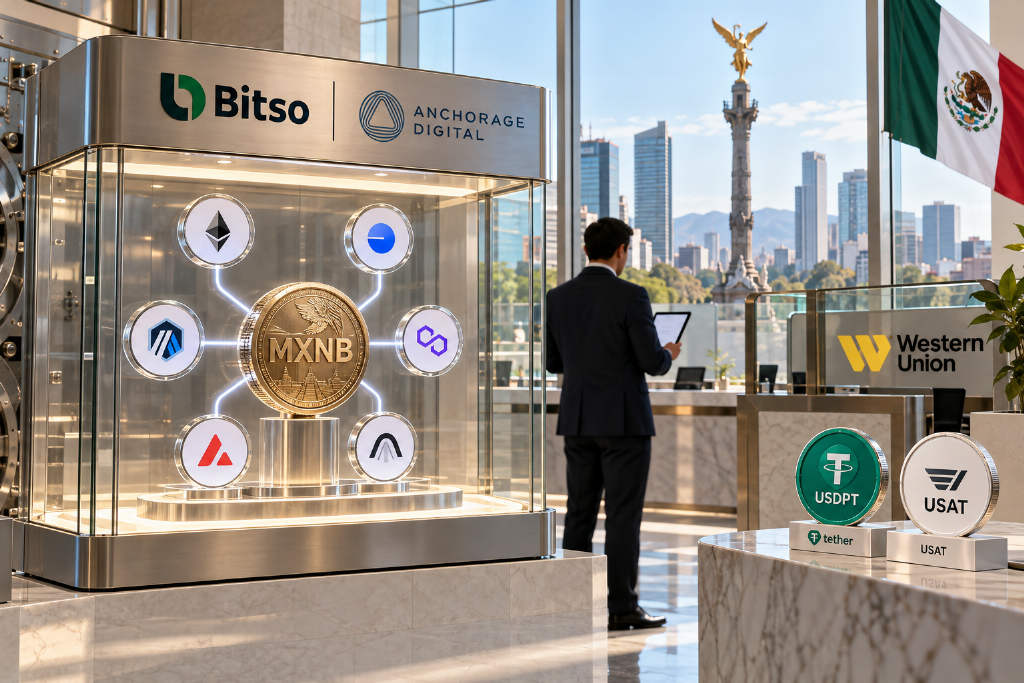
Anchorage Digital Bank, a federally regulated digital asset bank, has expanded its partnership with Bitso to provide custody for MXNB across six blockchains: Arbitrum, Base, Ethereum, Polygon, Avalanche, and Arc. The move adds multi-chain custody support for MXNB through Anchorage’s regulated banking platform.
Bitso also said its infrastructure has already processed 15% of transaction volume in the U.S.-Mexico remittance corridor, highlighting the scale of its payments activity tied to cross-border transfers.
At the same time, Bitso listed two dollar-denominated stablecoins, USDPT and USAT, issued by Western Union and Tether, respectively. According to the company, users in Mexico can buy and sell USDPT directly with pesos through the Bitso app. Western Union agents operating Bitso Business accounts can also convert USDPT into other supported currencies.
The report was cited by Bitcoin.com News.
Anchorage Digital Bank, a federally regulated digital asset bank, has expanded its partnership with Bitso to provide custody for MXNB across six blockchains: Arbitrum, Base, Ethereum, Polygon, Avalanche, and Arc.
Bitso said its infrastructure has processed 15% of transaction volume in the U.S.-Mexico remittance corridor.
Bitso has also listed the dollar stablecoins USDPT and USAT, issued by Western Union and Tether, respectively. Users in Mexico can buy and sell USDPT directly with pesos through the Bitso app. Western Union agents operating Bitso Business accounts can also convert USDPT into other supported currencies.
The report cited Bitcoin.com News as the source.
This article was originally published by Bit.Fan. For more cryptocurrency news and market insights, visit www.bit.fan. Disclaimer:
The market information, project data, and third-party content displayed on this platform are for industry information sharing only and do not constitute any form of investment advice or return commitment.
Cryptocurrency trading carries high risks. Users should fully assess their risk tolerance and make independent decisions. All profits, losses, and legal responsibilities are borne by the users themselves.