



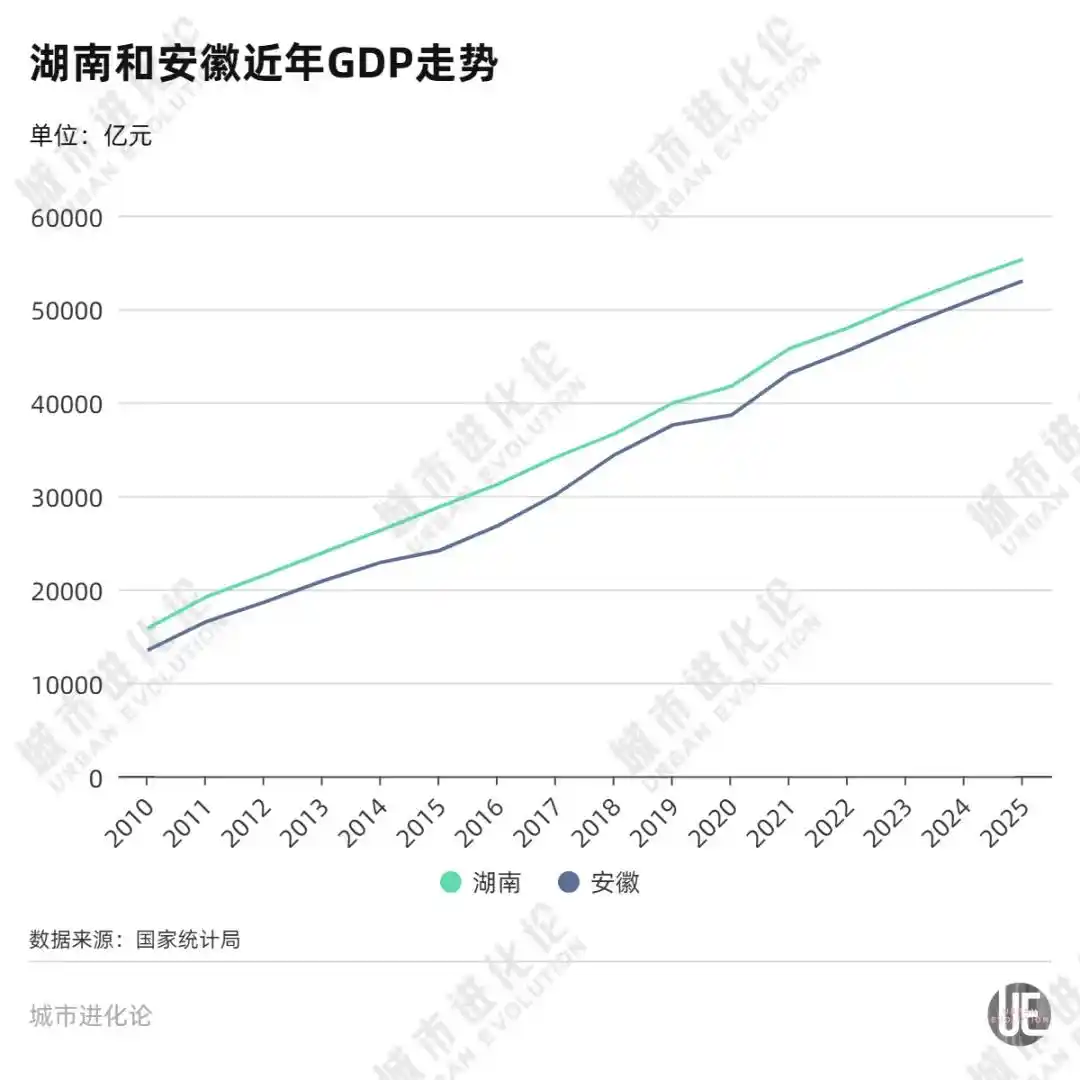
Anhui has overtaken Hunan in first-half GDP, a shift that stands out in this year’s midyear scorecard for China’s major provincial economies. Anhui posted 5.6% growth in the first six months and moved into the country’s top 10 by economic size, while Hunan grew 2.7% and came under pressure in the rankings.
The report traces that reversal to a split in industrial momentum. Anhui has used technology and high-end manufacturing to support growth, with industry and trade reinforcing each other. Hunan has been weighed down by the adjustment of traditional industries, while newer sectors have not expanded fast enough to offset the drag from the old ones.
Under pressure from slower growth and a weaker position, Hunan has recently stepped up its policy focus on industrial upgrading. According to the article, one round of provincial research visits spent three straight days at three leading engineering machinery companies in Changsha, stressing the need to speed up the transformation of traditional industries and make fuller use of cluster advantages. Another round focused on future industries including embodied intelligence and quantum technology, with an eye toward building new industrial clusters suited to local conditions.
Both tracks point in the same direction: using technological innovation to strengthen industry and break through the current transition bottleneck. The challenge is that neighboring provinces such as Anhui and Hubei are already moving faster in innovation-led growth, leaving Hunan to find a narrower opening.
How the gap opened
Seen over a longer cycle, the change in positions did not come out of nowhere.
In 2016, Hunan’s GDP passed 3 trillion yuan for the first time, putting it eighth nationwide and close behind Hubei. But the weakness in its industrial structure had already started to show. In 2017, Hunan was overtaken by Fujian and Shanghai and slipped to 10th place, where it stayed for years. Looking back at that period, Hunan officials said industrial development still had clear weak points and described the tension between emerging and traditional sectors as one where the small could not offset the large, the new could not replace the old, and gains could not fully cover declines.
Over the same period, Anhui built up industrial revenue through innovation and turned into a stronger manufacturing base. Its national economic ranking rose from 13th in 2016 to 11th in 2025. The gap between Anhui and Hunan narrowed year by year, shrinking from 442.38 billion yuan in 2016 to 231.92 billion yuan in 2025.
In the first half of this year, Anhui moved ahead by 36.7 billion yuan and entered the top 10 provinces by GDP.
Industry was the decisive factor. Anhui’s industrial value-added rose 12.4% in the first half, keeping a high growth pace. Hunan’s above-scale industrial value-added rose 2.6% over the same period.
The gap in old-versus-new growth engines was even sharper. In Hunan, industrial growth still leaned mainly on traditional sectors. Value-added in high-tech manufacturing and equipment manufacturing rose 4.0% and 2.8%, respectively. In Anhui, the same two measures climbed 44.6% and 22.7%, making advanced manufacturing the clear engine of growth.
Qin Zunwen, vice president of the Chinese Society of Urban Economics and secretary-general of the Yangtze High-end Think Tank Alliance, told City Evolution Theory that the divergence across central China is closely tied to industrial structure. The article says Anhui carried less historical baggage in industry, moved early into sectors such as new-energy vehicles and integrated circuits, and benefited from the patient-capital approach often referred to as the “Hefei model,” which helped industrial clusters take shape. Hubei, after being constrained by the transition away from fuel vehicles, found a replacement engine in emerging sectors such as optoelectronic information.
Hunan, by contrast, has seen traditional strengths such as engineering machinery enter an industry downturn, while newer sectors remain relatively fragmented. That has made the handoff from old to new less effective and left growth under strain from both ends.
Qin said Hunan needs to put more weight on innovation, but not by tearing down old pillars before new ones are ready. Engineering machinery remains the province’s industrial “rice bowl,” in his words as cited by the article, and should be stabilized, consolidated, and upgraded. At the same time, high-tech industries need to reach scale quickly so that traditional and emerging sectors can develop in better balance.
That view closely matches Hunan’s latest moves. From Aug. 4 to Aug. 6, the province’s Communist Party leadership spent three consecutive days researching three major engineering machinery companies in Changsha. At nearly the same time, provincial government leaders focused on embodied intelligence, quantum technology, and other future industries in the city. On Aug. 7, a meeting of the Hunan provincial Party standing committee made clear that the province would keep its attention firmly on industries, projects, and companies.
For Hunan, the report says, the province has entered a stage where traditional industrial upgrading and emerging-industry cultivation have to climb at the same time.
Reworking the engineering machinery base
Engineering machinery remains Hunan’s most competitive industrial calling card and a stabilizer for industrial growth.
The article says Hunan’s engineering machinery industry has ranked first nationwide in scale for 15 consecutive years and has produced five companies that made the global top 50 engineering machinery list, led by Sany Heavy Industry. But since 2021, the fading of the traditional infrastructure boom has pushed the sector into a period of stock competition, making pure scale expansion harder to sustain. Hunan now needs a second growth curve for the industry.
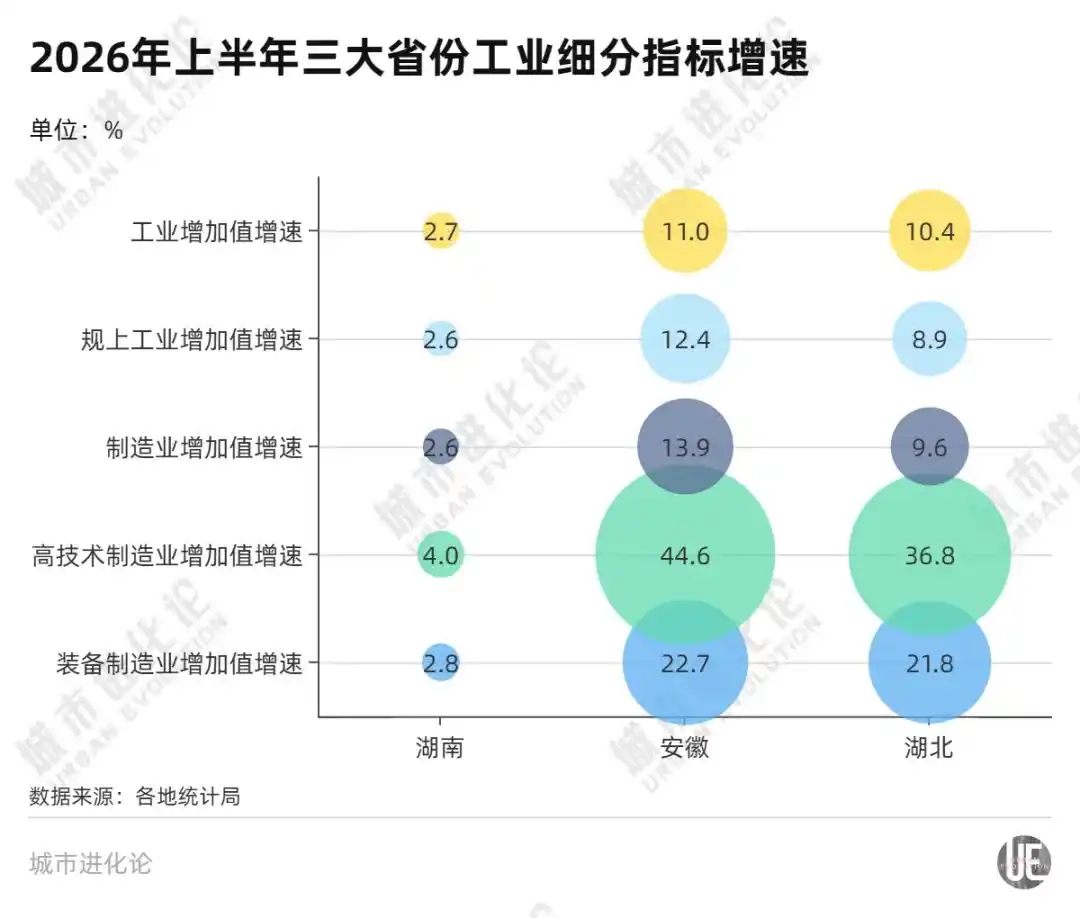
Image source: Hunan Daily
Qin argues that as AI spreads globally and embodied intelligence develops faster, Hunan’s engineering machinery industry should tie itself more closely to artificial intelligence. In practical terms, that would mean extending the digital and intelligent capabilities of the three leading companies across the broader supply chain, while also broadening product boundaries from traditional machinery into areas such as intelligent robots, mining equipment, and energy storage equipment.
That policy direction was visible in the latest research visits. During inspections of Sany Group, Zoomlion, and Sunward Intelligent, one phrase kept coming up: artificial intelligence.
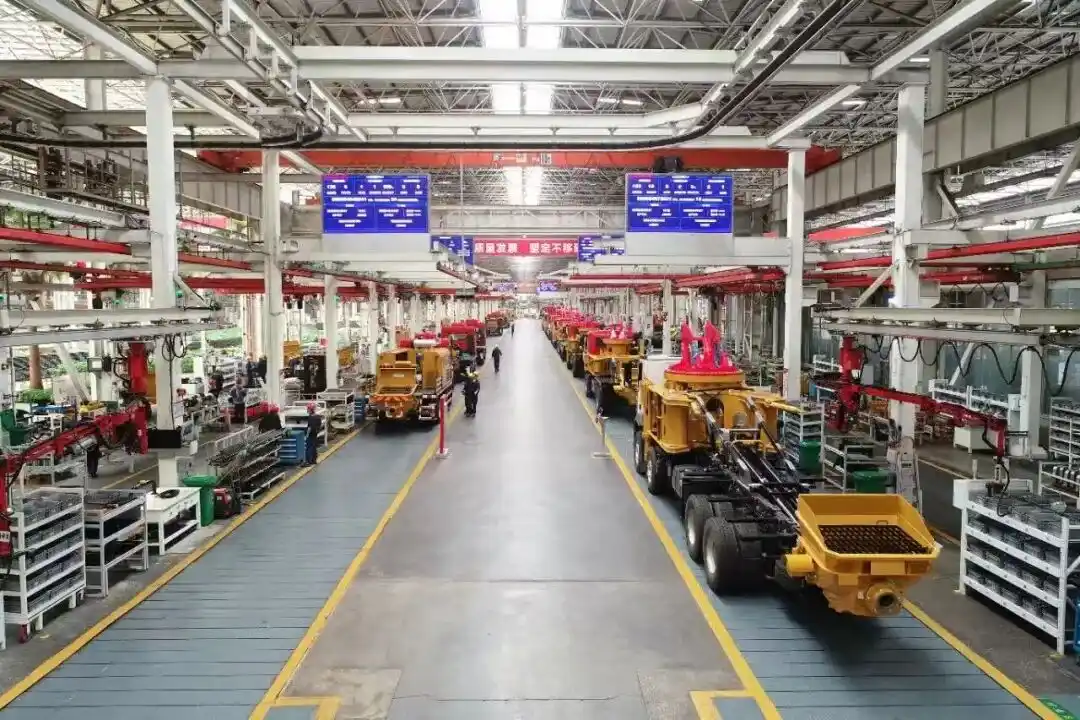
At a Sany heavy truck workshop in Changsha, industrial robots and autonomous transport vehicles work in coordination, with one truck rolling off the line every five minutes on average. In June this year, 883 Sany electric heavy trucks were shipped overseas from the site, which the article says set a record for a single export batch of Chinese new-energy heavy trucks.
Hunan officials stressed the need to accelerate the transformation and upgrading of the engineering machinery industry, seize the opening created by AI, and use technological innovation to breathe new life into traditional sectors.
Changsha, long known as a capital of engineering machinery, has already moved to raise its bet. On Aug. 10, an executive meeting of the Changsha municipal government said the city would treat physical AI as a core track, focus on embodied intelligence and related areas, and move faster in building a model city for integrating AI with manufacturing.
Still, turning around an industry in a downturn is difficult for any one company acting alone. Hunan’s answer, according to the article, is to push companies toward cluster-based cooperation, strengthen coordination across the engineering machinery supply chain, and encourage firms to develop in groups rather than in isolation.
Qin said the industry had previously seen some destructive competition. Joint research, shared common technologies, and the formation of实体-style collaborative organizations, as described in the Chinese source, could cut duplicate investment and build stronger combined capacity.
Beyond company-level efforts, Hunan may also get a new opening in cross-regional innovation. The article notes that the National Manufacturing Innovation Center for High-end Engineering Machinery has been approved and will be jointly built by Changsha and Xuzhou.
Qin said the development of Wuhan’s optoelectronics industry offers a useful precedent: it depended not only on local growth, but also on the entry of China Information and Communication Technologies Group and the later concentration of industry resources from around the country. In his view, national-level support matters greatly for local industry, and Changsha should use this opening to carry out joint technical research with Xuzhou and pursue major breakthroughs.
Research strength is not the same as industrial conversion
The economic gap among central Chinese provinces may show up in short-term industrial growth rates, but the article argues that the deeper issue is the difference in how quickly they cultivate new productive forces.
Anhui and Hubei have grown quickly in large part because of newer industries. In the first half, emerging sectors led by electronic information and automobiles contributed more than 70% of Anhui’s above-scale industrial growth. In Hubei, value-added in high-tech manufacturing rose 36.8%, and its share of above-scale industry increased from 17.4% last year to 24.8%.
As Hunan Daily put it, “our traditional advantage industries are in deep adjustment, while the ‘fish’ others carefully raised have already grown up.” The article uses that line to underline the contrast: integrated circuits in Anhui and optoelectronic information in Hubei have become part of national strategic capacity, while Hunan’s new growth drivers have yet to fully take shape.
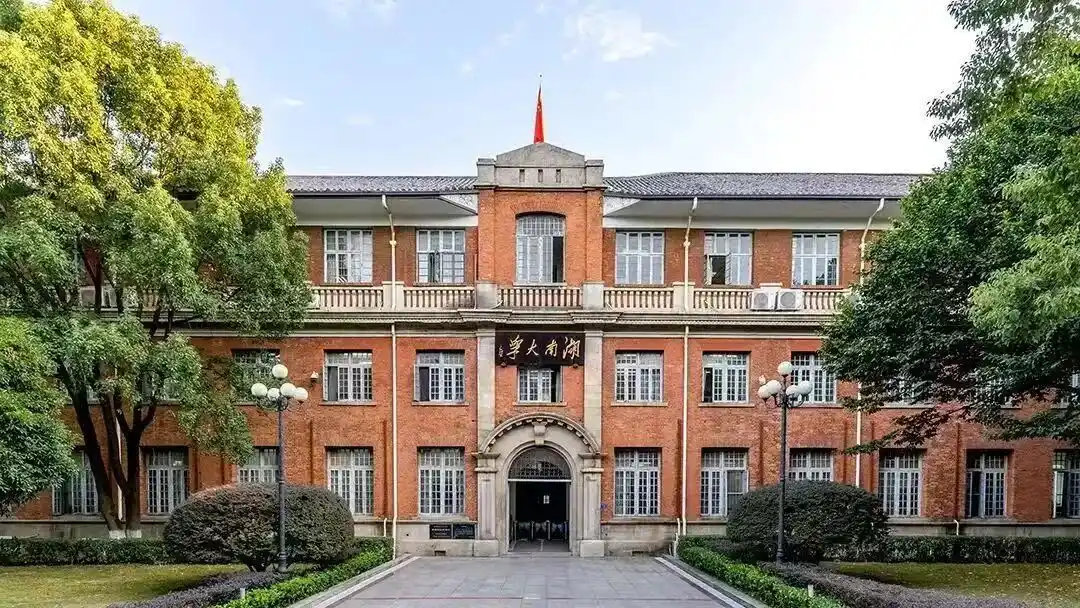
Hunan is not short of education and research resources. It has three Project 985 universities, the highest number in central China. In 2024, the intensity of R&D spending in the province rose to 2.57%, ranking ninth nationwide and second in central China behind Anhui.
Yet that academic base has not fully translated into industrial competitiveness. The mismatch of “strong research, weaker industry” has become one of the sharpest tensions in Hunan’s transition.
From July 28 to July 31, the Hunan Provincial Committee of the Chinese People’s Political Consultative Conference carried out a science and technology innovation research trip in Hubei. After joining the trip, Bei Bing, head of the Hunan Vision Economic Development Research Institute, said Hunan has abundant academic resources but suffers from structural weaknesses in the “middle link” between the laboratory and the production line, causing many results to bloom inside the province but generate industrial value elsewhere.
Local media reports cited in the article offer a concrete example. Hunan is a major base for nonferrous metals, but large volumes of copper ingots and aluminum ingots are shipped out, while the higher value-added stages of deep processing remain in other provinces. The gap, in the article’s phrasing, is not in the mines but in the industrial chain.
Changsha, as the province’s main carrier of innovation resources, reflects the issue most clearly. In newer sectors, the city has not produced an industry giant comparable to Hefei’s ChangXin Memory Technologies or Wuhan’s Yangtze Memory Technologies. That has prompted a market joke cited in the piece: others have “six little dragons”; does Changsha have only “six little crayfish”?
Where Hunan is trying to place its next bets
Hunan has not ignored the problem. Under its latest policy arrangement, the province plans to cultivate future-industry clusters tailored to local conditions, focusing on four directions: artificial intelligence, quantum technology, life engineering, and frontier materials.
These tracks were not newly improvised. In Hunan’s outline for the 15th Five-Year Plan period, artificial intelligence was tasked with becoming “independently controllable,” life engineering was aimed at “industrialization,” quantum technology at “engineering,” and frontier materials at “marketization.”
On Aug. 7, in the Xiangjiang New Area of Hunan, Zhongke Huisi Embodied Intelligence (Hunan) Co., Ltd., incubated by the Institute of Automation under the Chinese Academy of Sciences, released three dexterous-hand products. The article describes that launch as an important move in Hunan’s attempt to accelerate on the embodied-intelligence track.
Qin said Hunan’s innovation efforts show a path dependence similar to what has happened in industry, with too much weight still placed on traditional sectors. For Changsha, he argued, the city should learn from Hefei and Wuhan’s willingness to spend years concentrating on a few industries and make its own new-track layout more visible.
There is also a regional dimension. Referring to the multi-city innovation pattern seen in Anhui and Hubei, the article argues that Hunan should better convert Changsha’s research resources into support for manufacturing across the province and strengthen the spillover effect on industrial centers such as Yueyang, Zhuzhou, and Xiangtan, so that innovation can contribute to growth on a broader geographic scale.
The original article was published on the WeChat account City Evolution Theory and written by Liu Xuqiang. Its core argument is that Anhui’s move ahead of Hunan is not just a ranking change. It is a visible result of differences in industrial upgrading, innovation conversion, and the speed at which new growth engines are built.