TRON said in its latest weekly industry report that stronger-than-expected U.S. inflation data, resilient consumer demand and higher oil prices tied to tensions in the Middle East left global markets dealing with a mix of rebounding inflation, economic resilience and pressure on risk assets. The report also took a detailed look at Newton, a chain abstraction infrastructure project aimed at improving the Web3 experience for mainstream users.
Macro backdrop: inflation rebounds as markets reassess rate expectations
According to the report, U.S. CPI for September rose 3.7% year over year and 0.6% month over month. PPI rose 1.3% on a monthly basis, while retail sales increased 0.8% from the previous month. TRON said the figures showed that higher energy prices were pushing inflation pressure back up even as consumer demand remained resilient.
The report said geopolitical tension in the Middle East lifted international oil prices and added to concerns about stagflation risk. In equities, the technology sector saw a clear pullback. The Nasdaq fell about 4.48% for the week, the S&P 500 lost 1.95%, and the Dow Jones Industrial Average rose 0.67%, with capital rotating out of high-valuation tech names and into energy and defensive sectors.
Even with inflation coming in above expectations, the U.S. 10-year Treasury yield fell back to about 5.09%. TRON said that pointed to market concern not only about inflation, but also about the growth outlook.
For next week, the report said markets are likely to keep trading around sticky inflation, the Federal Reserve’s rate path and geopolitical risk. TRON flagged comments from Fed officials, U.S. state employment data due on Oct. 20, the University of Michigan consumer sentiment reading due on Oct. 23, and moves in oil prices and Treasury yields as the main items to watch.
TRON expects U.S. equities to remain volatile, with growth and technology shares still facing valuation pressure. If oil prices keep rising, inflation expectations could move higher and weigh on global risk appetite. If energy prices ease and rate expectations stabilize, the market could see a phase of repair.
Crypto market: BTC tests the $80,000 area while ETH and altcoins lag
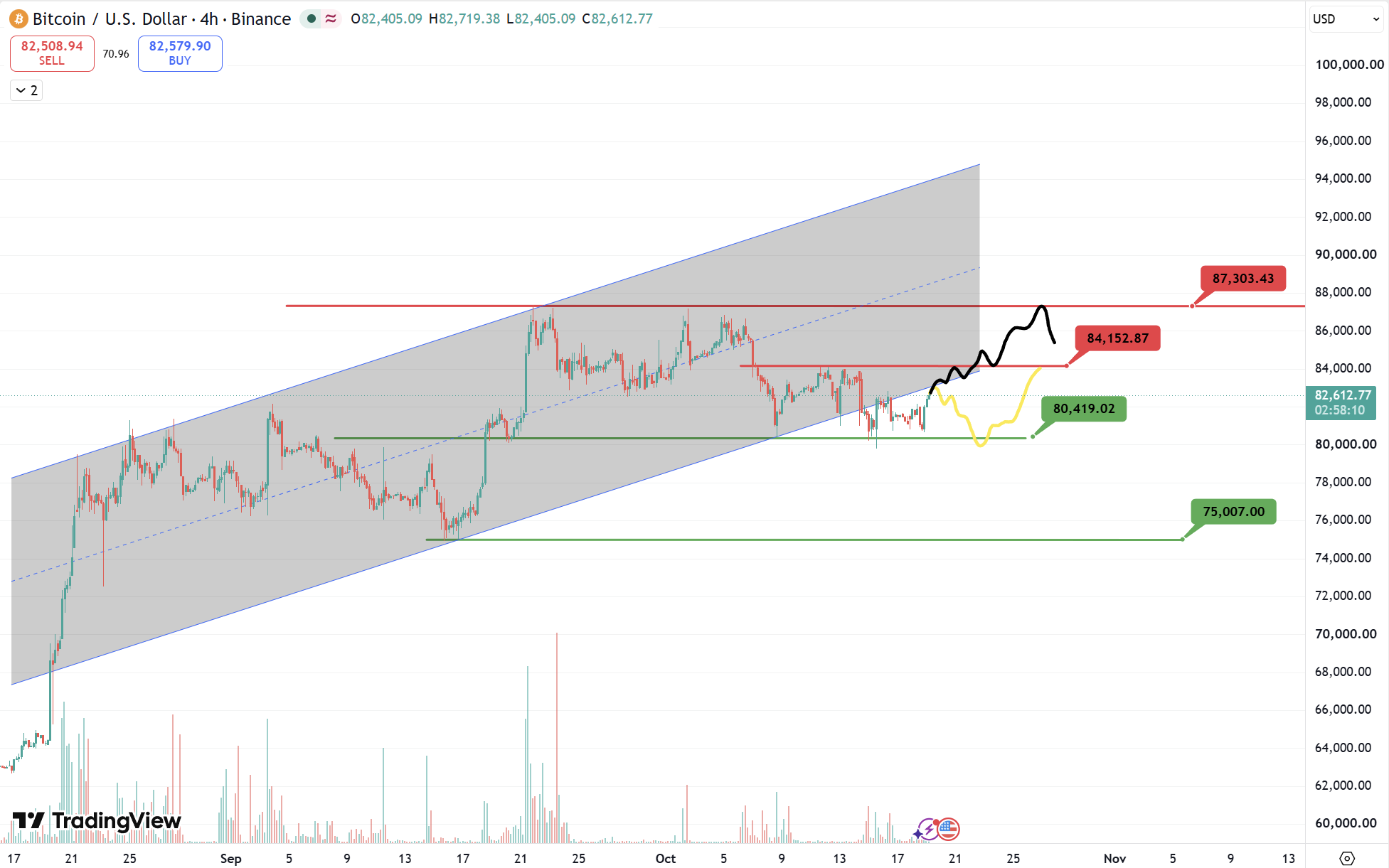
TRON said the crypto market extended its pullback this week, with the main tension still coming from high-rate expectations and capital outflows. Bitcoin briefly fell below $82,000 and tested the area around $80,000. Ether posted a steeper decline than Bitcoin. Total crypto market capitalization fell about 2% to 3% during the week, while Bitcoin dominance rose to about 59.5%, a sign that capital was concentrating further in BTC and that risk appetite for altcoins remained weak.
Spot ETF flows in the U.S. continued to weigh on sentiment. The report said spot Bitcoin ETFs saw cumulative net outflows of about $228 million from Oct. 12 to Oct. 16, while spot Ether ETFs recorded net outflows of about $320 million. The early-week decline also triggered large-scale long liquidations. On Oct. 12, total market liquidations over 24 hours briefly exceeded $770 million.
TRON said the week’s decline was not driven by a single bearish factor. Instead, it pointed to expectations for further Fed tightening, elevated Treasury yields, continued ETF outflows and leverage reduction as the combined forces pressuring the market. In that setup, ETH and most altcoins were notably weaker than BTC.
Looking ahead, the report expects a weak and choppy market while traders wait for macro and fund-flow signals to confirm direction again. TRON described the area around $80,000 as a key dividing line between bulls and bears. It said Bitcoin could be in a position to rebound first if long-end Treasury yields fall and spot BTC ETFs return to sustained net inflows after the recent leverage washout. Before those signals appear, however, the basis for a lasting rally remains limited.
Structurally, TRON expects a defensive pattern to continue, with BTC stronger than ETH and large-cap tokens stronger than smaller altcoins. The report said there is still no clear capital base for an altcoin season. It also highlighted the approach of the Federal Reserve meeting on Oct. 27-28 as a source of shifting rate expectations. In TRON’s view, next week is more likely to feature repeated trading around the $80,000 area before a direction is chosen, rather than the start of a one-way move.
Sector themes: RWA, stablecoins, DeFi, privacy and cross-chain security
TRON grouped this week’s industry themes into RWA, stablecoins and payments, DeFi, prediction markets plus privacy, AI x Crypto, and cross-chain security.
- In RWA, the report said institutionalization continued. Multiliquid raised $8 million, Fission completed a $10 million Series A, and Spout Finance secured $2 million in strategic financing while exploring the use of tokenized U.S. equities as collateral to borrow USDC. On-chain RWA AUM has reached about $34.6 billion.
- In stablecoins and payments, Western Union’s Solana stablecoin USDPT went live on Bitso in Mexico. USDC was listed as the European Union’s first "significant e-money token," though total stablecoin market capitalization edged down during the week.
- In DeFi, NEAR launched a SOL yield product through Kamino Vault using a strategy from Gauntlet.
- In prediction markets, StarkWare launched OffMarket to provide a privacy channel for Polymarket trading.
- In AI x Crypto, DATA Network, the project that pivoted from Story Protocol, received a $30 million strategic investment from the Sui Foundation. TRON said infrastructure around AI data rights, payments and agents continued to heat up.
- In security and cross-chain infrastructure, Autheo suffered a loss of about $1.7 million after a trusted Hyperlane relayer key was exploited, and THEO fell more than 90%, exposing single-trust risks in cross-chain bridge design once again.
Project focus: Newton Protocol and its funding background
In its section on potential projects of the week, TRON focused on Newton Protocol. The report said the project has raised a total of $86 million, with Paypal, 1k(x) and Northzone leading the financing and Cherubic and Volt among the participating investors. TRON described it as a chain abstraction Web3 experience infrastructure layer built for mainstream users.
According to the report, Newton Protocol is a decentralized on-chain transaction authorization policy engine built on EigenLayer AVS. It is designed to execute transaction rules directly in smart contracts, including spending limits, sanctions screening, fraud protection and compliance rule management.
TRON said Newton functions as a policy engine for defining, verifying and enforcing rules. Developers can encode rules such as spending controls, sanctions checks and anti-fraud mechanisms directly into smart contracts, with on-chain verification used to make sure those rules are enforced.
Core components: Policy, Intent, Task and Attestation
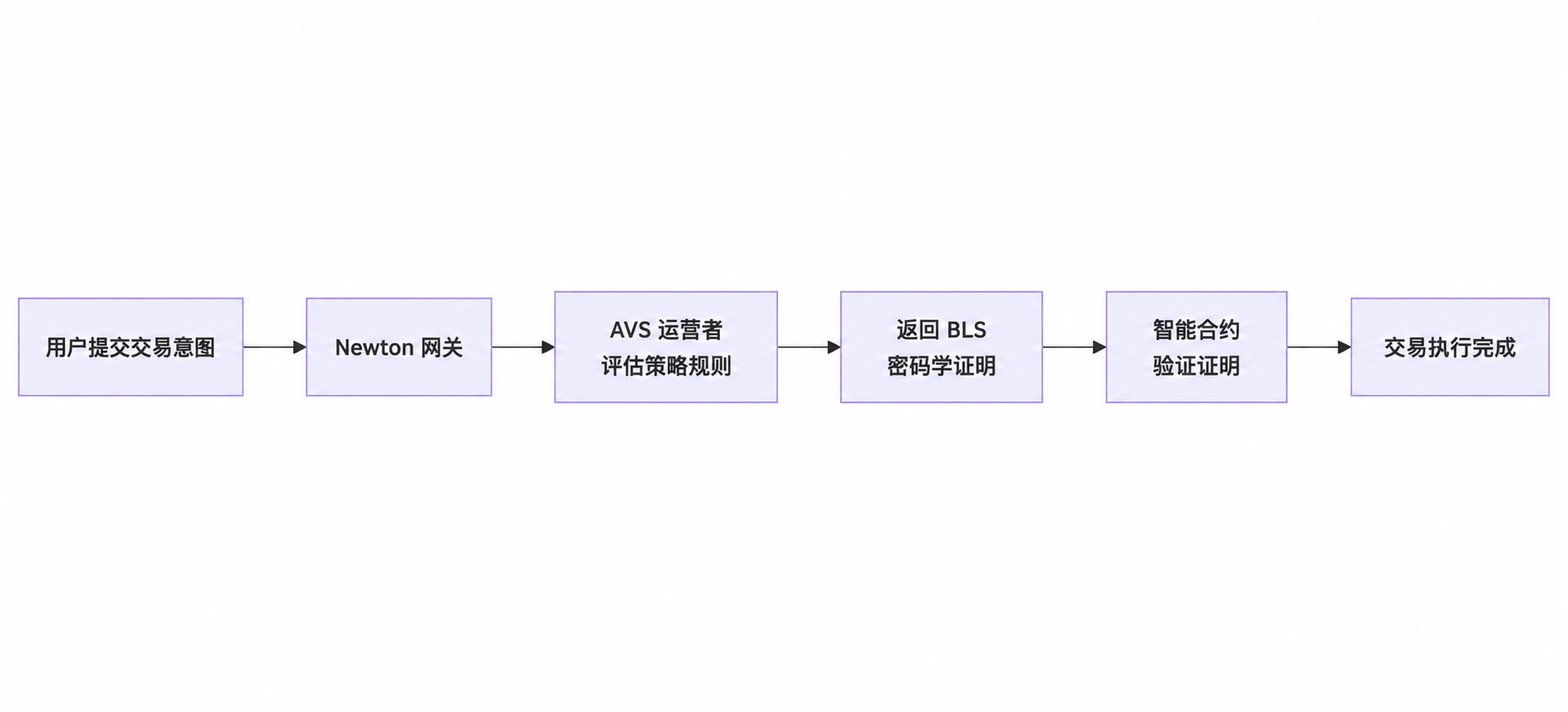
TRON described Newton as a policy engine for on-chain transaction authorization built on EigenLayer’s Actively Validated Service model. The workflow starts with a user defining a policy that specifies when a transaction should be allowed. When a user submits an Intent, Newton’s decentralized operator network evaluates it against that policy and returns a cryptographic attestation, which a smart contract verifies before execution.
The report laid out several core concepts:
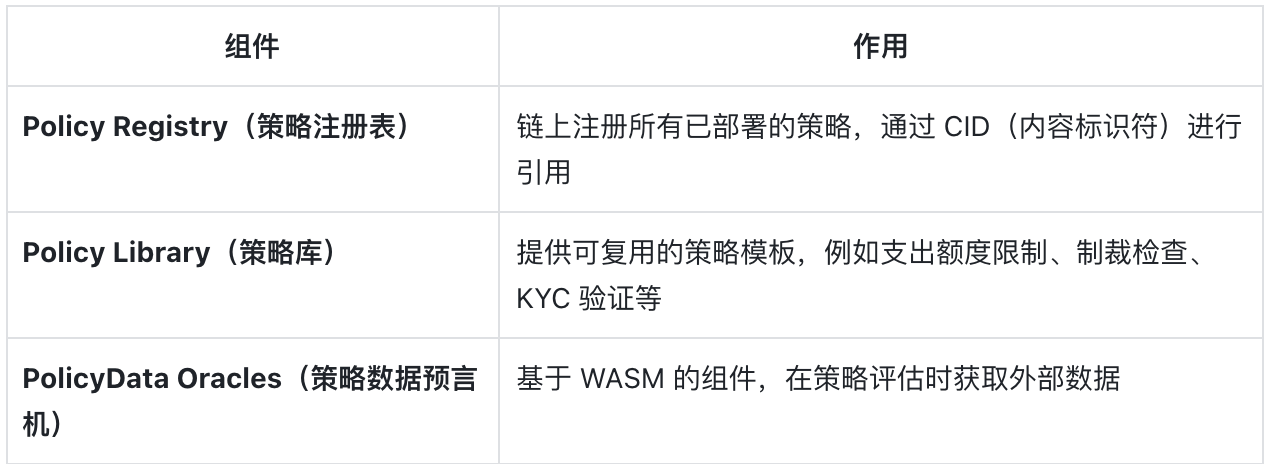
- Policy: a Rego program that defines the conditions an Intent must satisfy to be approved. Policies are stored on IPFS and referenced by CID, and can be reused by multiple PolicyClient contracts. A policy can draw on two kinds of data sources: data.params, which are configuration parameters set by the PolicyClient owner, such as spending limits and allowlists; and data.wasm, which comes from the PolicyData WASM oracle at runtime, such as token prices and KYC status.
- Intent: a proposed transaction request submitted to the policy evaluation system. It includes standard EVM transaction fields. Users need to construct the corresponding Intent when calling simulateTask or submitEvaluationRequest through the SDK.
- Task: the basic evaluation unit in Newton, combining an Intent with a corresponding Policy. Each Task is judged either compliant or non-compliant, and users can query its status through the RPC API or Newton Explorer.
- Attestation: a cryptographic proof based on aggregated BLS signatures showing that Newton operators evaluated a given Policy and approved or rejected an Intent. It includes a taskId, policyId, evaluation result and expiration block.
- PolicyClient: a smart contract that verifies an Attestation before a transaction is executed. Developers can integrate Newton by inheriting NewtonPolicyClient and calling _validateAttestation() or _validateAttestationDirect() in a function modifier.
- PolicyData: a WASM component used to fetch or compute external data during policy evaluation. Its output is exposed to Rego policies as data.wasm. Use cases include token pricing, sanctions list checks and KYC verification.
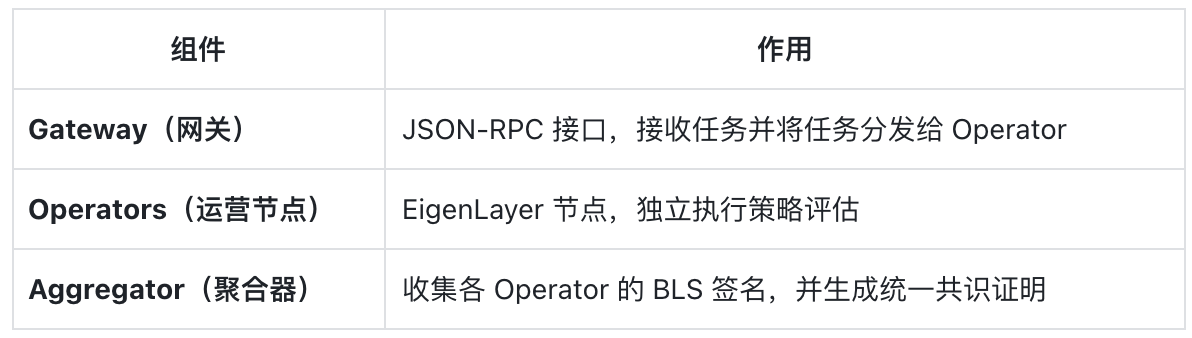
- Operator: an EigenLayer node registered to the Newton AVS. Operators independently evaluate Tasks, perform policy checks and, once quorum is reached, aggregate multiple BLS signatures into a single consensus proof.
- Gateway: a JSON-RPC 2.0 interface service that receives tasks and coordinates operator evaluation. All SDK and CLI interactions go through the Gateway.
Three-layer architecture and data flow
TRON said Newton uses a three-layer architecture that separates policy definition, policy evaluation and policy enforcement. The report said this modular design allows each layer to evolve independently while preserving overall security.
Policy layer
The policy layer defines the rules in the system and how they are configured. Developers write Rego policies and WASM oracles, upload them to IPFS through newton-cli, and deploy PolicyData and Policy contracts on-chain. Users then deploy a PolicyClient contract and set parameters such as thresholds, allowlists and expiration times.
Compute and consensus layer
The compute layer handles off-chain policy evaluation through the Newton AVS operator network. When a Task is submitted, the Gateway receives the Intent and identifies the target Policy. Available operators fetch PolicyData by running the WASM oracle. Each operator then evaluates the Rego policy independently and signs the result with a BLS key. An aggregator produces a consensus proof once quorum is reached.
Verification and execution layer
The verification layer handles on-chain proof verification and transaction execution. Only transactions that pass Newton policy checks and receive a valid Attestation can proceed.
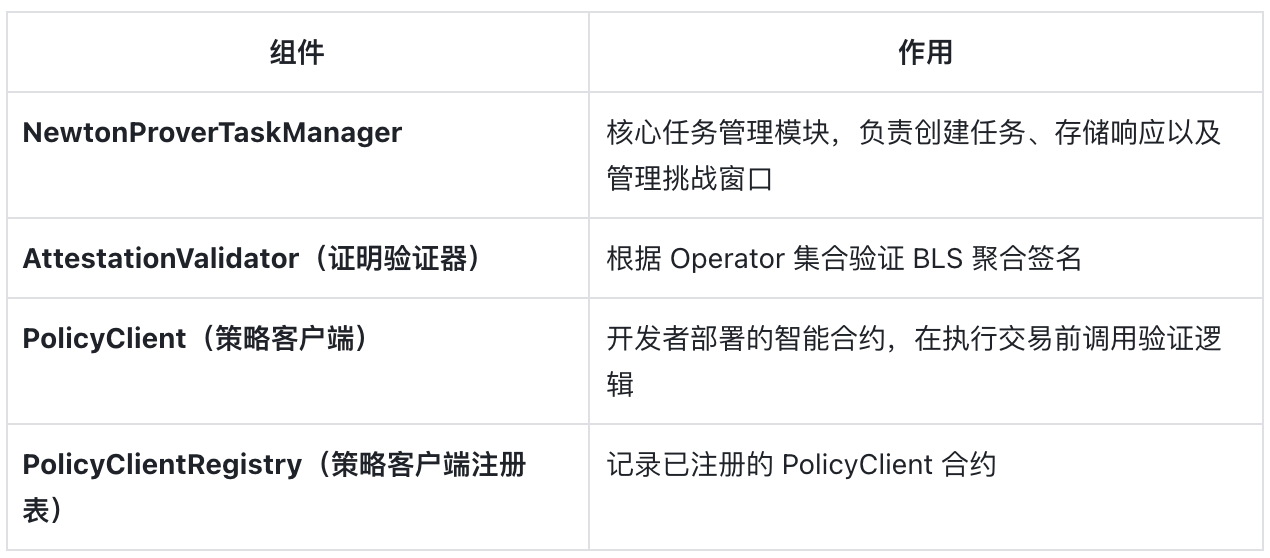
TRON also outlined the full data flow: a caller sends an Intent and a PolicyClient address to the Gateway; the Gateway creates a Task and binds the Intent to the relevant Policy; operators run the PolicyData WASM oracle to fetch external data; they evaluate the Rego policy using the Intent, oracle data and parameters; each operator signs the result with its BLS key; the aggregator collects and combines the signatures into a consensus proof; the caller receives the Attestation; the PolicyClient verifies it through the AttestationValidator; and if verification succeeds, the protected transaction executes.
Privacy layer: HPKE, threshold decryption and dual-signature authorization
On privacy, TRON said Newton combines HPKE encryption, secure envelopes and confidential policy evaluation to support privacy-preserving on-chain transactions for institutional and enterprise use cases while keeping compliance verifiable.
The report said Newton’s privacy layer allows end users to submit encrypted sensitive data, including personally identifiable information, credentials and financial records. Operators jointly decrypt the required data during policy evaluation through threshold decryption, while the sensitive information itself never appears on-chain.
TRON said many policy-enforcement scenarios require access to sensitive inputs such as identity documents, API keys, compliance records and private business parameters. Newton’s privacy layer is designed around four capabilities:
- end-to-end encryption using HPKE, with X25519 key exchange and ChaCha20-Poly1305 encryption;
- threshold decryption through a t-of-n key-share model, so no single operator holds the full decryption key and data can only be recovered when the required number of operators cooperate;
- zero on-chain exposure, with only hashes and commitments recorded on-chain rather than plaintext data;
- dual-signature authorization, requiring signatures from both the end user and the dApp before operators can decrypt sensitive data.
TRON summarized the integration flow in three steps. First, the client retrieves the system threshold public key through newt_getPrivacyPublicKey and encrypts the sensitive data. Second, the encrypted envelope is uploaded to the Gateway, which returns a reference ID. Third, a Task containing that reference ID is created, and operators decrypt the required data through threshold decryption during policy evaluation.
The report added that Newton uses the HPKE standard defined in RFC 9180. In base mode, data is encrypted to the system’s threshold X25519 public key. That key is generated through interactive distributed key generation among the operator set, and no single operator holds the full private key. Sender authentication is handled separately through an Ed25519 signature over the serialized encrypted envelope.
For threshold decryption, Newton uses interactive DKG, specifically FROST DKG / Pedersen VSS, to distribute the HPKE private key across multiple operators. During task evaluation, each operator computes a partial decryption share using its DKG key share. Operators exchange decryption shares through encrypted NATS messages, then reconstruct the plaintext locally using the t-of-n share model. The reconstructed plaintext is used for policy evaluation and BLS signature generation.
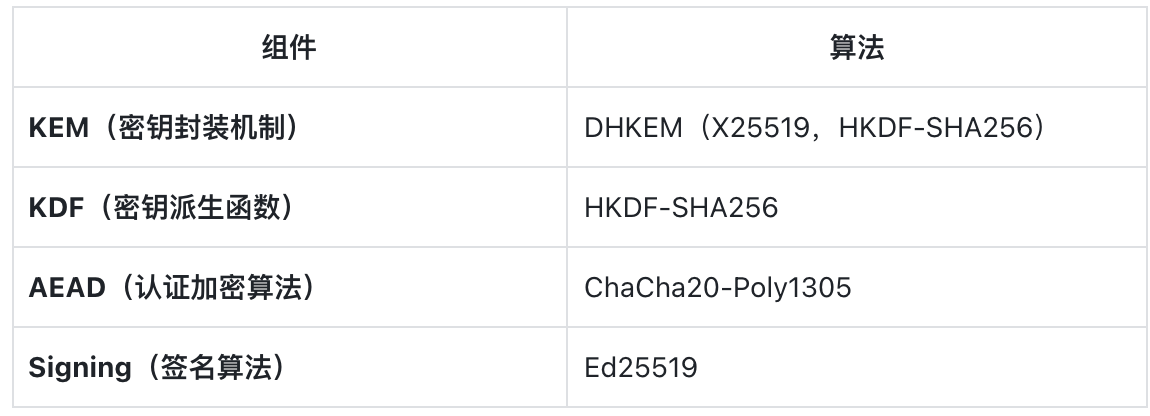
TRON said the threshold key pair is cryptographically independent from the operators’ ECDSA and BLS keys. As a result, even if a signing key is exposed, the decryption shares are not exposed, and an attacker cannot gain decryption capability through an operator signing key. The combined public key is stored on-chain and can be retrieved through a single contract call to getThresholdPublicKey() or through the newt_getPrivacyPublicKey RPC method. The DKG process only runs when the operator set changes, not for every Task.
Consensus, security and multichain support
In the section on consensus and security, TRON said Newton uses BLS signature aggregation and restaked ETH through EigenLayer to provide both cryptographic and economic security for policy evaluation.
The report said Newton uses a two-phase Prepare-Commit consensus process to handle differences that can arise when operators independently fetch real-time sensitive data, such as price data from external APIs. Because those values can differ slightly across operators, the two-phase process is designed to make sure all operators ultimately sign the same message.
- In the Prepare phase, the Gateway sends data-fetch requests to operators through newt_fetchPolicyData. Each operator independently retrieves external data and returns an unsigned response.
- In the consensus computation step, the Gateway aggregates the returned data, calculates the median as the consensus value and checks whether the values fall within the tolerance range, which defaults to 10%.
- In the Commit phase, the Gateway broadcasts the confirmed consensus data through newt_evaluateAndSign. Operators then evaluate the policy using the same data and sign the result with their BLS keys.
- In the aggregation phase, the Gateway collects the BLS signatures and combines them into a final proof once quorum is reached.
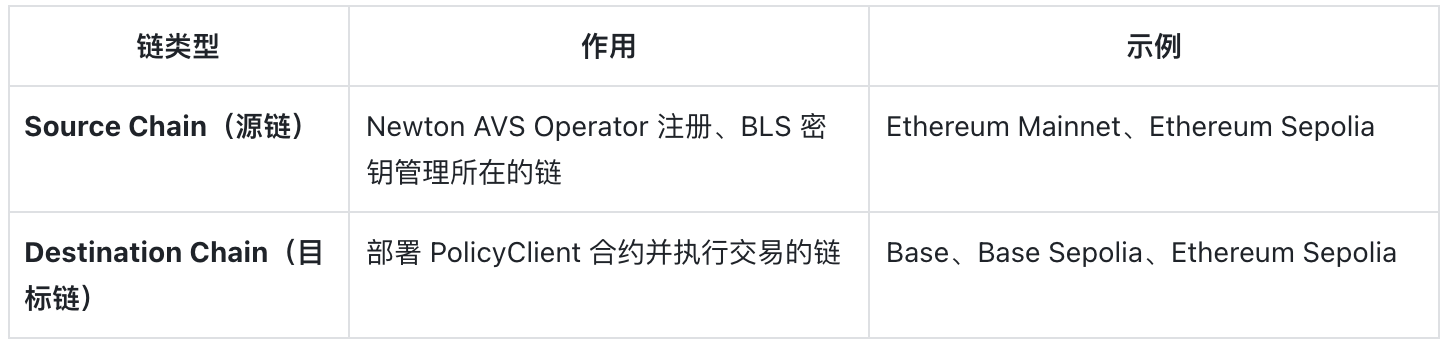
On multichain support, TRON said Newton supports cross-chain policy verification across Ethereum, Layer2 networks and other destination chains. AVS operators run on Ethereum as the source chain, while PolicyClient contracts can be deployed on destination chains such as Base and Base Sepolia.
The source chain provides the core security base, including operator registration, staking management and slashing. Destination chains consume Attestations through lightweight verifier contracts and validate them using cached operator state.
The execution flow has four steps: a caller submits a task to the Gateway and sets the destination chain_id in the Intent; operators evaluate the task using Newton AVS infrastructure on the source chain; the aggregated BLS signature is encoded as a BN254 certificate for destination-chain verification; and the PolicyClient on the destination chain verifies the proof through BN254CertificateVerifier before the transaction proceeds.
TRON’s assessment: programmable authorization is the strength, complexity is the challenge
In its assessment, TRON said Newton’s strength lies in building a decentralized on-chain transaction authorization policy engine on top of EigenLayer AVS. Through policies, an operator network, attestations and smart-contract verification, the system turns static signature-based authorization into a programmable and verifiable transaction permission framework.
The report said the protocol supports spending limits, KYC/AML, sanctions screening, anti-fraud rules and AI agent transaction management. Combined with HPKE encryption, threshold decryption, aggregated BLS signatures and cross-chain verification, it is positioned as on-chain execution infrastructure for institutions and enterprises that need privacy, security and compliance at the same time.
TRON also pointed to the drawbacks. The system architecture includes Rego policies, WASM oracles, AVS operators, cross-chain proofs and privacy computation, which raises the development and integration threshold. The report added that the protocol’s value depends heavily on adoption by enterprises, DeFi applications and AI agent ecosystems, and that its stability, operating costs and fit across different regulatory environments still need to be tested in large-scale commercial settings.
Macro review and next week’s data points
In its macro review, TRON said the biggest shift this week was not a sudden weakening in the economy, but a clear rise in U.S. reflation risk. The report repeated that September CPI rose to 3.7% year over year, PPI reached 1.3% month over month, and import prices climbed sharply, showing simultaneous price pressure at the consumer, producer and input levels.
TRON said the macro trading logic has therefore shifted toward reassessing how much room the Federal Reserve has to ease. If employment and PMI remain resilient, the combination of acceptable growth and elevated inflation will continue to limit the pace of rate cuts.
For next week, the report said the U.S. data calendar is lighter than it was this week, with initial jobless claims and the October PMI as the main releases to watch. If PMI remains strong, employment does not deteriorate materially and inflation stays high, the macro backdrop will tilt further toward a "higher for longer" rate environment. TRON said that will be the key macro theme for U.S. equities, gold, the dollar and crypto next week.
Policy watch: CFTC, MAS and FSB developments
TRON also reviewed three regulatory developments in the U.S., Singapore and the international policy arena.
United States: CFTC advances rulemaking on crypto asset transactions and markets
The report said the U.S. Federal Register on Oct. 13 published the Commodity Futures Trading Commission’s advance notice of proposed rulemaking on Regulation Crypto Asset Transactions and Regulation Crypto Asset Markets. The documents cover crypto asset transactions and markets under Section 2(c)(2)(D) of the Commodity Exchange Act and are intended to gather public comment as groundwork for rules better tailored to the crypto market.
TRON said the move shows U.S. crypto regulation continuing to advance through agency rulemaking procedures, with a focus on clarifying regulatory requirements for crypto trading activity and related markets. It also noted that the filing is still part of an early consultation process and does not mean the rules have been formally adopted or taken effect.
Singapore: consultation on stablecoin legislation closed this week
TRON said the Monetary Authority of Singapore set Oct. 16 as the deadline for public comments on amendments to the Payment Services Act first released on Sept. 1. The consultation is intended to implement the regulatory framework for single-currency stablecoins and covers reserve and value-stability mechanisms, capital requirements, redemption at par, disclosures, joint issuance across jurisdictions and recognition of offshore stablecoins.
The report added that MAS also proposed banning interest payments on regulated stablecoins and requiring issuers to conduct stress tests and prepare recovery and orderly wind-down plans. TRON said the consultation deadline marks the start of the policy evaluation stage rather than the formal effective date of new rules. In its view, qualifying stablecoins could eventually gain a clearer regulatory identity and serve cross-border settlement and tokenized financial markets.
International policy: FSB releases paper on cross-border stablecoin risks
TRON said the Financial Stability Board on Oct. 12 released a paper titled Global Stablecoin Arrangements: Cross-border Vulnerabilities and Financial Stability Monitoring. The document summarizes for the G20 the cross-border financial stability risks that global stablecoin arrangements may create. It focuses on organizational structures, the transmission of risk across institutions and jurisdictions, and the data indicators and data-source limits regulators face when monitoring stablecoin activity.
TRON said that as stablecoins circulate and are used more widely across borders, a single national regulator may struggle to identify all risks on its own. In that context, the FSB paper highlights the importance of cross-border regulatory coordination and data monitoring. The report also noted that the paper is a product of international policy research and coordination, not a binding law that takes direct effect in member jurisdictions.
The report ended with a risk reminder, saying the market carries risk and the material does not constitute investment advice. TRON said readers should consider whether any opinions, views or conclusions in the report fit their own circumstances and bear responsibility for any investment decisions made on that basis.