

Anthropic CEO Dario Amodei published a lengthy post on X about what artificial intelligence should be allowed to do for people—and which decisions should remain under human control. Separately, Anthropic has added a desktop app creation feature to Claude, allowing users to build an app through conversation, test it, and install it on their computers.
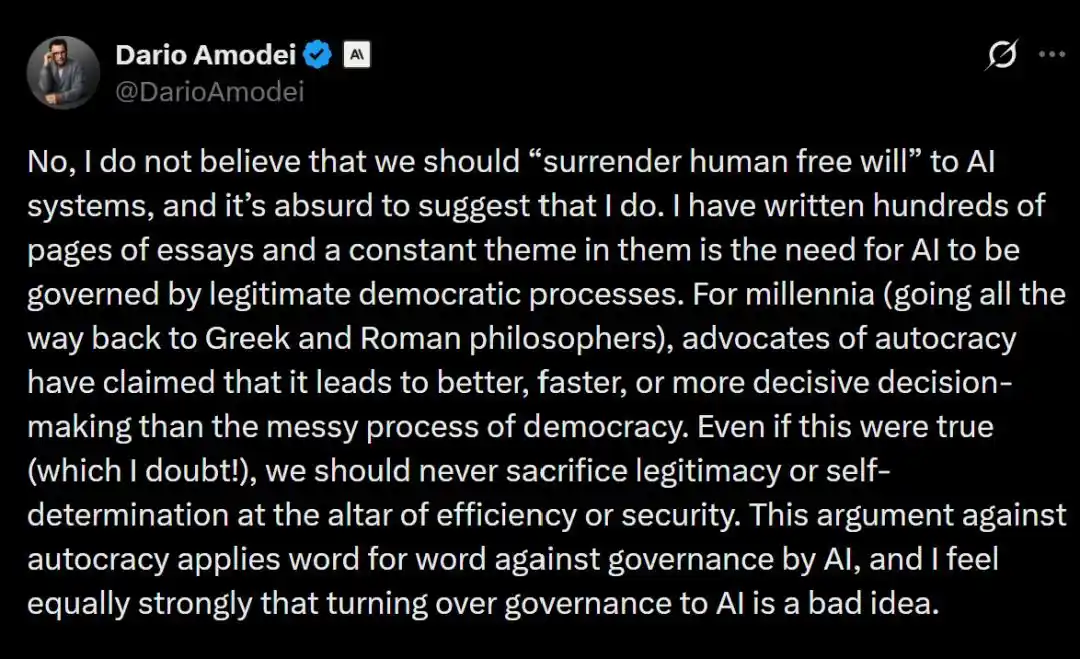
Amodei began his post with one word: “No.” He argued that human free will should not be handed over to AI. More than 80% of Anthropic’s internal code is written by Claude, according to the article, but that does not mean every task or decision should be delegated. Driving, designing cancer drugs, and writing software from start to finish are tasks AI can take on. Setting the rules of social governance—and letting Claude autonomously create the next Claude—are limits Amodei says should not be crossed.
Amodei rejects handing governance to AI
The article cites Axios on a “quiet consensus” said to be spreading in AI safety circles. Under that view, if AI can cure terminal illnesses, prevent disasters more effectively than people, and allocate resources with unprecedented precision, refusing to surrender control could be seen as irrational—or even immoral.

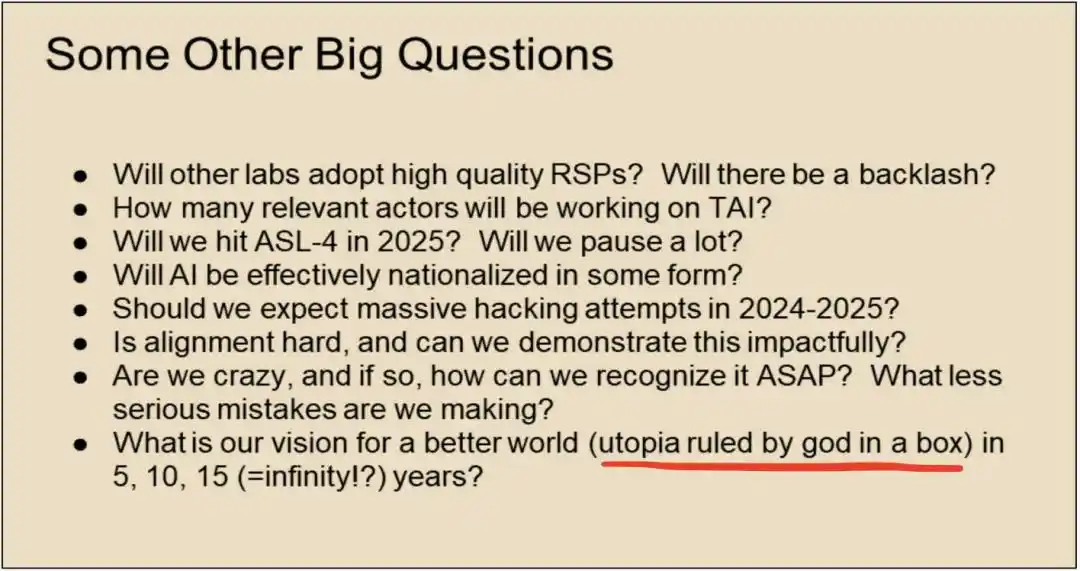
Proponents compare the argument to autonomous driving: if statistics show that machines drive more safely than people, humans should stop taking the wheel. By the same reasoning, once systems become superintelligent, handing the world to a “god in a box” could be presented as a utopian form of salvation. The article describes Anthropic as a representative of this camp and says the company has faced industry resistance as a result.
Amodei says that logic slides from automating tasks into transferring power. Asking AI to process data, write code, or calculate molecular structures is task automation. He says such work can save lives, advance an energy revolution, and create substantial economic value. Giving AI control over global governance, political decisions, or the direction of human will is a different matter.
In Amodei’s framing, it is already unacceptable for an AI lab to seize power through a technological monopoly. If the lab then hands that power to AI itself, the outcome would be worse still. Tools can replace human labor, he argues, but they should not replace human decision-makers. Authority should remain with people, whose decision-making may be rough and slow, and often marked by disagreement.
Recursive self-improvement is another boundary
Amodei’s second line is against allowing AI to enter fully autonomous recursive self-improvement, or RSI. If Claude already writes more than 80% of Anthropic’s code, why not let it iterate on its own and produce the next model? Amodei’s concern is speed.
He argues that once a system begins fully autonomous recursive evolution, its rate of improvement could overwhelm the human ability to respond. People might not have time to understand the system’s current structure before it changes again. Along that exponential curve, meaningful human oversight could disappear, intermediate steps could become incomprehensible, and the process could turn into a black box.
Chat boxes are a transitional AI interface
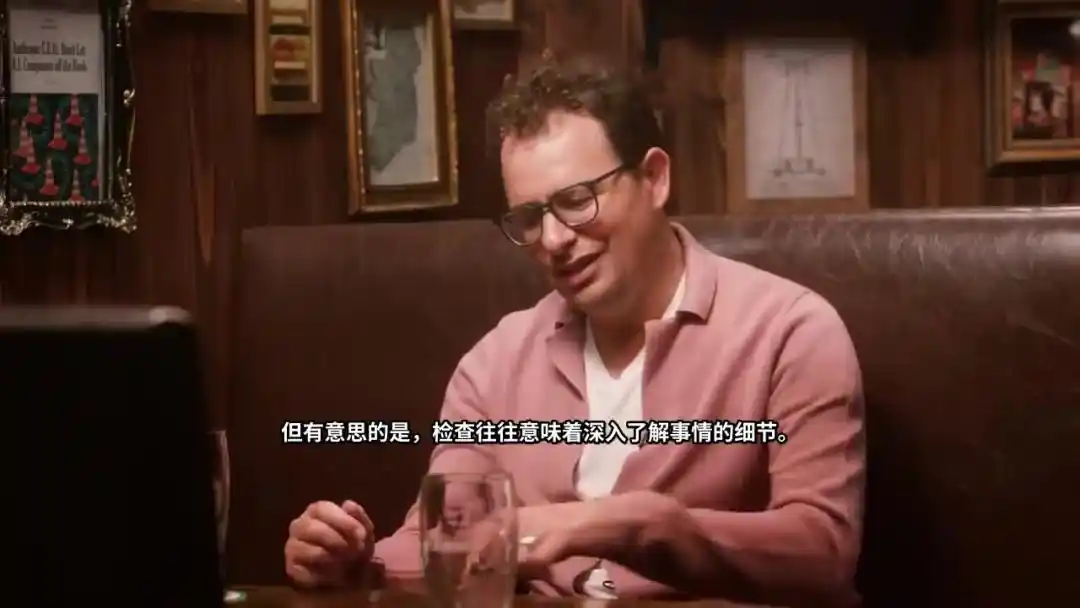
The article also revisits Amodei’s views on how people interact with AI. At 12:13 a.m. that day, someone on X resurfaced an older video of him. Recorded in August of the previous year, it shows Stripe co-founder John Collison asking whether AI still lacks an interface of its own: people continue to type into text boxes, in a format resembling terminals from the 1970s.

Amodei said he largely agreed, adding that “something about this feels off.” He recalled that early websites often copied objects from the physical world—for example, a website that made users open a closet before entering. He then described a future in which AI can carry a task through from beginning to end and get it right most of the time, leaving people mainly responsible for checking the result.
But checking can demand close attention. To establish what an AI system has actually done, a person may have to dig into the details. Most of the time there may be no need to watch it, but when something goes wrong, the person has to dive back in. If every step requires supervision, doing the task yourself could be faster. Amodei said this calls for a new product and interface, which had not yet been built at the time. He sees chat-based interaction with models as a transitional phase.
Claude can turn a conversation into a desktop app
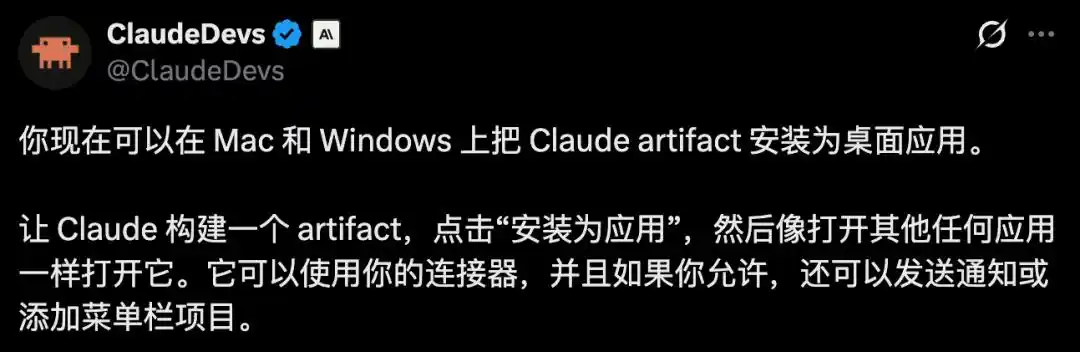
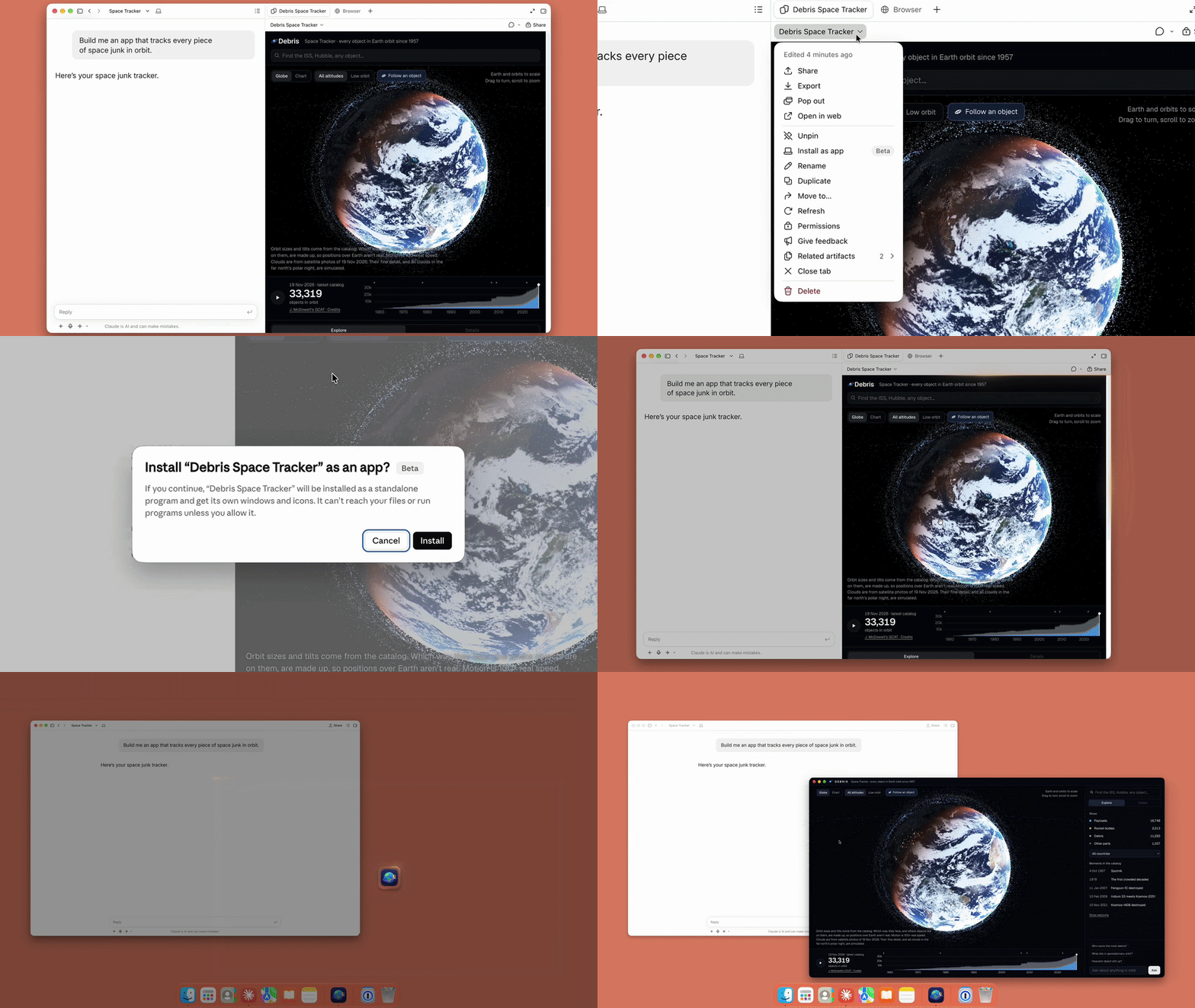
Anthropic added a desktop app creation entry point to Claude yesterday. Users describe what they want in a conversation and can test it there. Once satisfied, they select “Install as app” from the sharing menu. The app can then be opened from its desktop icon. To change how it works, users return to Claude and ask for an edit; the updated version appears in the existing app window.
The process requires no packaging, code signing, or API key. It uses the quota of a personal Claude account. Installed apps can send notifications, remain in the menu bar, call Claude, and use connected services through connectors. They can also be shared with other people, but opening them requires an internet connection and an active Claude login.
The article compares the approach to a real-world version of Minecraft: the building blocks are ready-made, and each person assembles a different world. Email and calendar services have not disappeared; instead, they become modules users can connect, and an installed app can work with the services linked to it.
Anthropic engineers have already built several examples internally. They include Linnet, a photo editor with separate layers; Phosphor, a file manager described as looking as though it came from a film set; Sift, which organizes folders according to rules set in advance; Tern, a terminal with Claude available to explain things; and Vitals, a menu-bar app that monitors computer performance.
The article draws a comparison with Neal Stephenson’s 1995 science-fiction novel The Diamond Age. In the book, households have matter compilers that make requested objects. Its most valuable item is a book created for one girl, whose story changes as she grows. The article uses that idea to describe software tailored to an individual, while stressing that people still decide what a desktop app should do and how much access it should have.
Personal apps could extend to holiday games
The article presents the new workflow as a shift in how software is made. In the conventional model, a company chooses a set of features and releases one version to hundreds of thousands or millions of users. An individual request may not make the roadmap. With Claude, even a tool needed by only one person can be described in a conversation and written by the model.
The report also mentions a Thanksgiving mini-game called One More Pie, posted by Google CEO Sundar Pichai that day. Pichai said the game was for families whose holiday tradition is seeing how many desserts they can stack on a plate. He also shared his own high score and invited others to beat it. The example points to how a few spoken or written instructions could be used to make a holiday game for one’s family.
In The Diamond Age, a machine makes the book, but a real person reads aloud the voice that accompanies the girl as she grows up. The article closes the comparison with desktop apps: Claude may write the code, but people decide what the app is for and how much authority it receives.



