

Anthropic on July 14 launched Claude for Teachers, giving verified K-12 educators across the United States free access to Claude’s advanced capabilities, a teaching skills library, and tools connected to all 50 state standards and a set of research-validated curriculum materials.
The product is aimed at a specific stretch of a teacher’s day: reviewing what students understood, adjusting the next lesson, preparing differentiated materials, and sorting through classroom data before the next school morning begins.
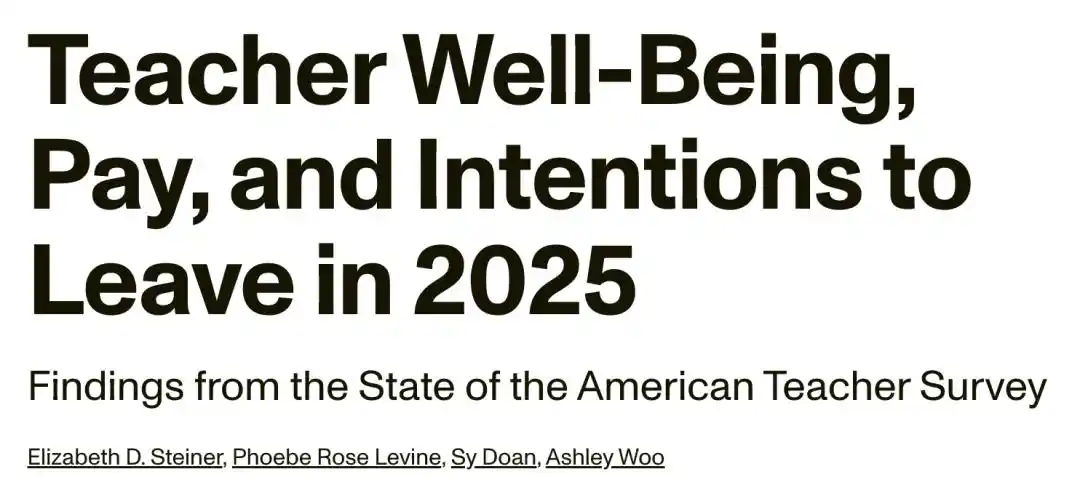
The source article points to RAND’s 2025 State of the American Teacher survey, which found that U.S. K-12 public school teachers work 49 hours a week on average, 10 hours above their contracted time. Lesson planning, teaching, grading, paperwork, and meetings often spill into nights and weekends.
Anthropic is trying to address a problem teachers have run into with AI-generated materials over the past few years: the output may look polished, yet still miss the grade level, skip a key step in the curriculum, or fail to match the instructional approach tied to the school’s chosen materials. As the source article notes, citing Forbes, alignment should happen before a teacher receives the material, not after.
Built around Learning Commons and all 50 state standards
Claude for Teachers is designed to move that alignment step upstream. It connects to a system called Learning Commons, giving it access to academic standards from all 50 states, along with finer-grained skill targets under each standard and the usual sequence in which students learn them.
For lesson planning, Anthropic says Claude can generate materials that are already aligned to a teacher’s state standards and organized around the right learning progression. Drew Bent, Anthropic’s education lead, gave one example in the source article: if a teacher asks Claude to explain how to construct a linear function, the system first pulls the relevant standards, identifies the mistakes students most often make in that area, and then builds the lesson around those trouble spots.
The point is to cut out the extra time teachers usually spend checking whether a generated lesson actually matches local standards.
Three core jobs: planning, differentiation, and analysis
Anthropic groups Claude for Teachers into three main capabilities.
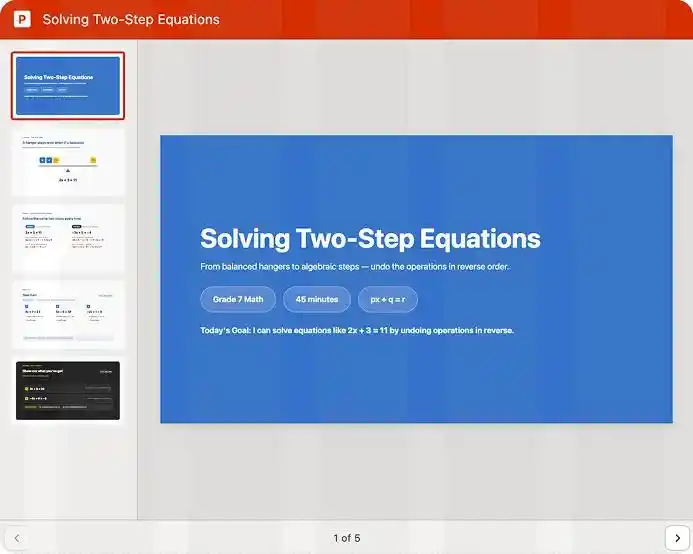
The first is standards-aligned planning. Based on a teacher’s state standards and the expected learning sequence, Claude can assemble a lesson plan and student materials for a class session.
The second is differentiation. In classrooms where students are working at very different levels, Claude can revise a lesson into tiered versions. Students who need more support can get sentence starters and scaffolding, students ready for more can receive added challenge, and students who are not native English speakers can get language transition support layered into the same lesson.
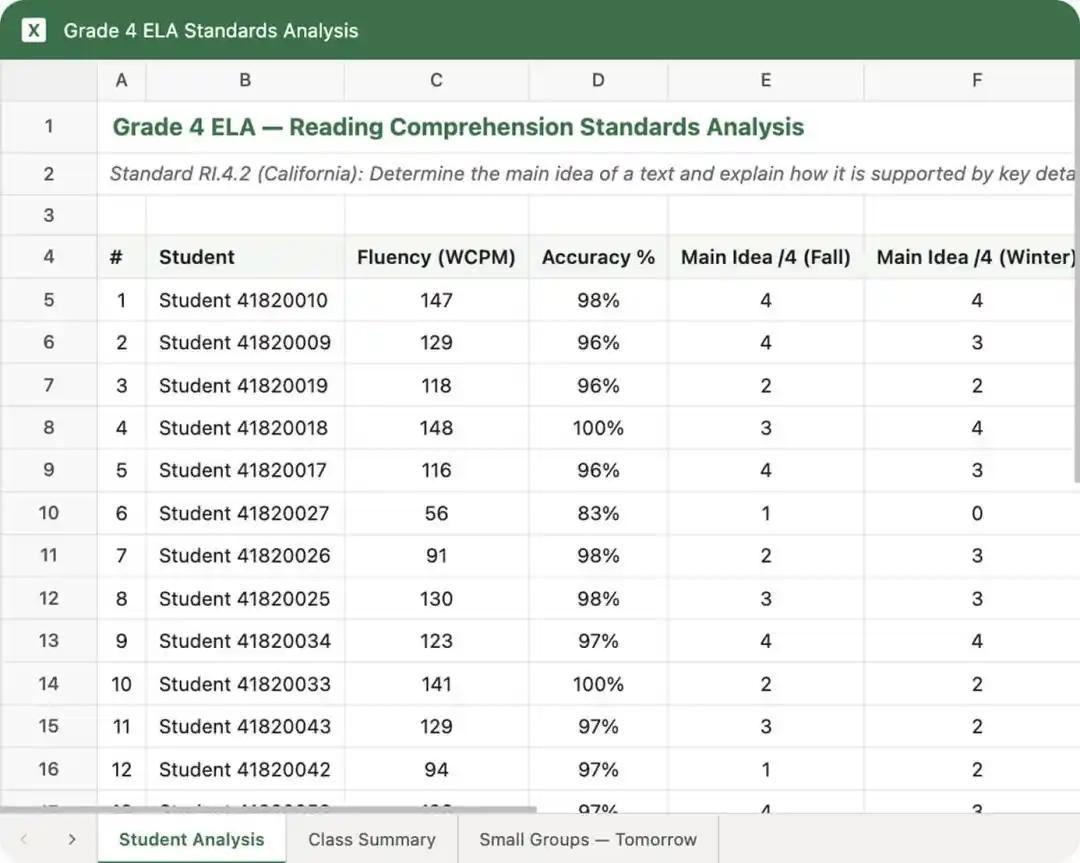
The third is data analysis. Teachers can feed in rosters, diagnostic scores, attendance records, and classroom notes, and Claude can help map where each student stands, who is falling behind, and which concepts the whole class has not yet mastered. The source article says teachers decide whether to share data and what data to share, and that submitted data does not go into model training.
Nine K-12 connectors inside the workflow
Beyond those functions, Claude for Teachers includes nine K-12 ecosystem connectors. The tools named in the source material include ASSISTments, Canva, Brisk, Diffit, MagicSchool, and TeachFX.
ASSISTments can generate standards-aligned math problems with automatic scoring, while Canva can turn teaching materials into classroom-ready designs. Anthropic’s approach is to string together tools teachers already know inside one workflow within Claude rather than leave them scattered across separate apps.
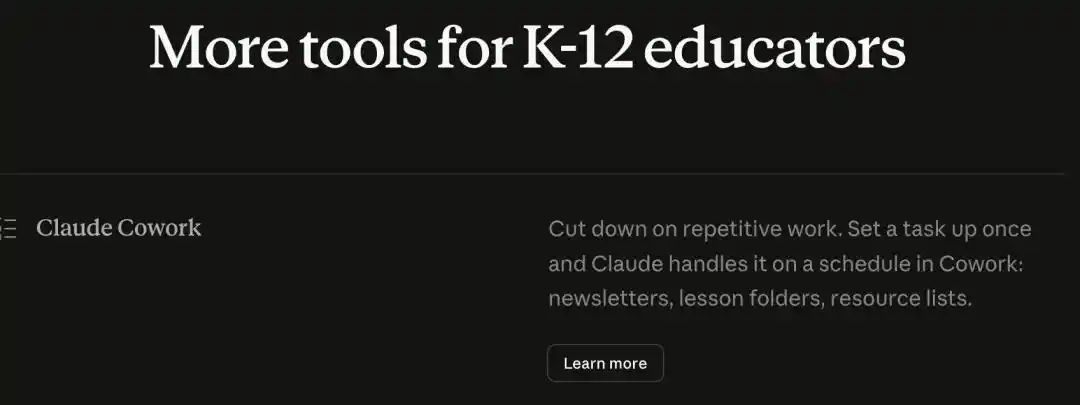
The launch also brings in Claude Code and Cowork. In the source article’s framing, that shifts Claude away from a simple prompt-and-response tool and toward one that can keep a task moving on its own, including recurring work set to run on a daily schedule. A teacher can hand over a repetitive task once, then have it run every school day after that.
Students do not get direct access
Even if students are presented as the eventual beneficiaries, Anthropic is drawing a hard boundary around who actually uses the product.
Claude is only available to users age 18 and older, according to the source article. That means most K-12 students do not have accounts. Whether they benefit depends on how effectively teachers translate the output into classroom practice.
Anthropic’s positioning is direct: Claude for Teachers is a tool for teachers. It is not meant to replace teachers, and it is not meant to be put directly in front of students.
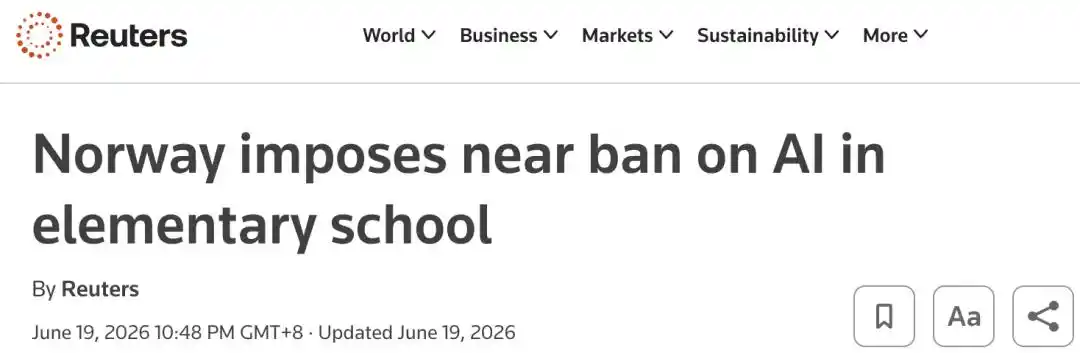
The caution reflects a broader debate around student-facing AI, including cheating, cognitive offloading, and whether young learners should use generative AI at all. As one example, the source article cites Norway’s move to impose an almost complete ban on generative AI for students in grades 1 through 7 during class time. Reuters reported that Prime Minister Jonas Gahr Støre announced the measure on June 19, with the rule set to take effect in late August for the new school year.
Anthropic is pitching relief, compliance, and trust
Anthropic says Claude is meant to handle repetitive jobs such as reviewing exit tickets and adjusting the next day’s lesson plan, not to automatically grade every assignment on a daily basis. Automatic scoring, in the source article’s account, is limited to practice problems. The company’s stated aim is to reduce teacher workload and give that recovered time back to instruction and to the parts of teaching that cannot be automated.
This is not Anthropic’s first move in education. The source article says the company had already brought Claude into higher education systems in the U.S. and expanded student ambassador and AI club efforts before moving further down into the K-12 teacher market.
Alongside the launch, Anthropic also opened up its teaching skills set and paired it with an AI literacy course for K-12 teachers. In the article’s framing, teachers are the point of entry into schools and districts, which helps explain the company’s decision to offer the product for free.
The competitive backdrop is familiar. Eight months earlier, OpenAI released ChatGPT for Teachers, also free for U.S. K-12 teachers through 2027 and also in partnership with the American Federation of Teachers, or AFT, according to the source material.
Still, the article argues that intelligence alone will not decide who wins in education. Trust is central. Anthropic is leaning on messages such as “data not used for training,” FERPA compliance, dedicated K-12 data processing terms, and a privacy Gold Standard built with AFT. The source article also notes that AFT President Randi Weingarten publicly backed the effort.
Skepticism remains. The source article lists concerns about student data privacy, over-automation in education, and the long-running criticism that Silicon Valley executives often send their own children to schools with limited technology use. Some commenters also point to Norway’s near-ban for grades 1 through 7 as the more cautious path.
The article ends on a question larger than this launch: if AI becomes as common as air by the time this generation grows up, what happens to students who are taught through AI-assisted instruction but do not really get to use AI themselves? Claude for Teachers, at least for now, does not try to answer that.