

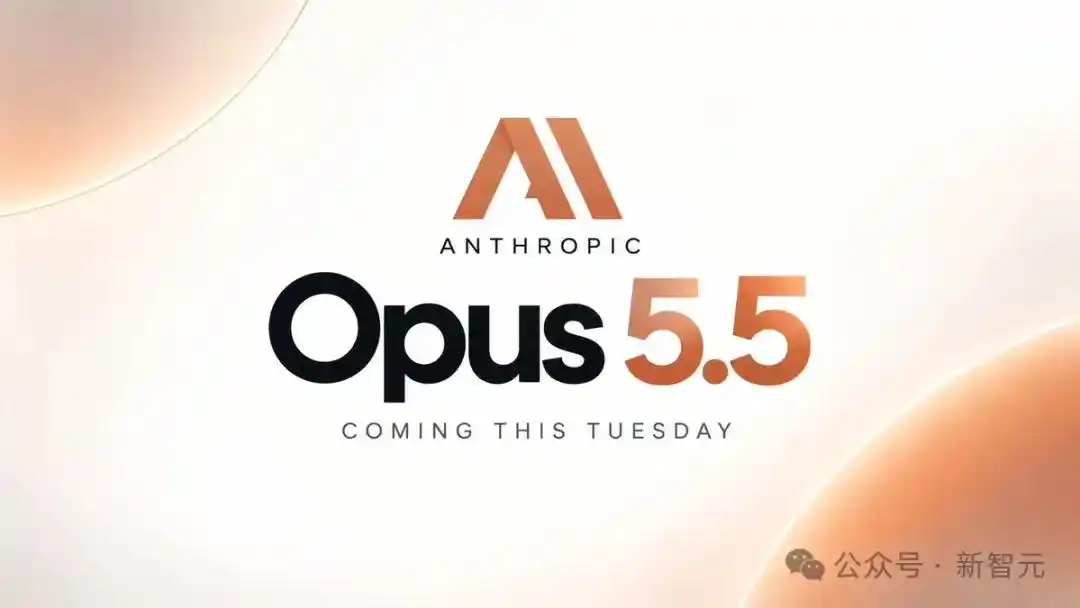
Anthropic appears to be testing Claude Opus 5.5, jumping past the version a lot of developers thought would come first: Claude Opus 5.2. The first public hint cited by the source came from developer Lyra, who said a model carrying the codename "claude-wafer-eap" had entered private testing and might ship as soon as Tuesday.

The same burst of posts also said Claude Fable 5.2 was making its way through testing. Put together, that points to Anthropic pushing updates on two tracks at once: Opus aimed more at higher-end infrastructure, and Fable leaning harder into creative generation and front-end work.
Opus 5.5 appears in testing after a brief 5.2 checkpoint
The source says the market had been waiting for Opus 5.2. But the newest leak skips right to Opus 5.5. Lyra also said 5.5 could beat gpt-6-sol.
Here’s the sequence laid out in the source: Claude Opus 5 was officially released on July 24. After that, a 5.2 checkpoint showed up briefly in testing, and now the trail points to 5.5. Short version: the article treats that jump as a sign Anthropic is not taking the usual step-by-step version path this time.

And the timing stands out. The source places these leaks in the same week that GPT-6 Sol and Gemini 4 Pro are reportedly in gray testing, with Anthropic trying to grab attention through a version leap, cheaper pricing, and an early leak cycle.
Tester feedback centers on 3D generation, coding, and long-horizon planning
Developer feedback collected in the source keeps circling back to the same areas: 3D generation, front-end interaction, code output, and harder planning tasks.
A tester identified as Harshith said, "Opus 5.5 absolutely crushed it this round, better than both the earlier Fable 5.1 and Astra." In plain English, he was giving it a very strong endorsement and saying Opus 5.5 came out clearly ahead of both Fable 5.1 and Astra. He then used the model to generate a 3D model of a Waymo self-driving vehicle. The source says the output even reproduced details such as the Jaguar badge and the lidar sensor mounted on top.
That same test came with a token usage snapshot: about 1.4k input tokens, 532k output tokens, 41.2M cache reads, and 1.7M cache writes. The source also says the run cost half as much as Opus 5.

Another developer, Veee, used Opus 5.5 to build a web-based 3D car viewer with Three.js. The source says the rendering quality and the interaction design both looked solid.
In a separate test, Opus 5.5 produced a 3D interactive WALL-E console in one pass. The article says the result showed strong execution in UI layout, mechanical rigging, and faithfulness to the original IP.
Beyond those examples, several testers quoted by the source said the new checkpoint opened up a clear gap over the current Opus 5 in problem-solving instinct, deep code refactoring, and long multi-step planning.
Leaked API pricing points to lower costs than Opus 5
The Opus 5.5 reports were paired with an unconfirmed API pricing sheet.

- $4 per million input tokens
- $20 per million output tokens
- $0.2 per million cache read tokens
- $5 per million cache write tokens
For comparison, the source lists current Opus 5 pricing at $5 per million input tokens and $25 per million output tokens. So on that basis, Opus 5.5 input and output pricing would both be 20% lower.
The source puts extra weight on cache pricing, especially the $0.2 per million token figure for cache reads, arguing that it would sharply cut the cost of building long-context autonomous agent systems.
Fable 5.2 is also being tested, with creative and front-end use cases in focus
Outside the Opus line, Claude Fable 5.2 also showed up in developer testing. Pankaj Kumar said Anthropic seemed to be quietly switching 5.1 over to 5.2, and said he had access to the early test.
His take was that Fable 5.2 had reached parity with Astra in 3D generation and might even be moving past it. He also said the model could infer user intent without needing highly detailed prompts.
In one example, Pankaj Kumar used Fable 5.2 to build a 3D cliffside villa scene. The source says the output handled lighting, material reflections, and atmosphere well. It also says Fable 5.2 could generate a complete mini-game directly with Three.js, while showing better front-end taste than earlier generations in color choices, typography, and layout.
Another demo mentioned in the article produced a detailed exploded-view rendering, showing layered optical modules, transparent parts, internal hardware, and lighting details. The source describes the final composition as unexpectedly polished.
Developer Chetaslua ran a different sort of test. According to the source, Fable 5.2 created a "miniature world" using native JavaScript alone, with no reference assets, no MCP plugins, and no concept sketches. The Claude mascot in that example was also rendered entirely through code.
The article also points to a similar community test in which Fable 5.2 generated a complete small JavaScript system in one pass, including dozens of different head models, facial micro-expressions, dynamic effects, control panels, and interaction logic.

Anthropic, OpenAI, and Google are all moving in the same week
The source puts all of this inside a wider competitive fight involving Anthropic, OpenAI, and Google. It says OpenAI’s GPT-6 Astra pushed the ceiling higher for scientific reasoning and AI capability, but token-level reasoning costs were high. That, according to the article, is why developers have been watching gpt-6-sol in the API more closely.
On Anthropic, the article points to the contrast around CEO Dario Amodei. It says he called for the industry to slow down in a long essay last week, yet the company now seems to be preparing Opus 5.5 after dropping the 5.2 path.
On Google, the source says Gemini 3.5 Pro was canceled internally because progress fell short and even lagged behind Flash. So Gemini 4 Pro became the main focus. In Arena testing, the article says 4 Pro appeared under the codename "gemini-3.8-flash" and posted dominant metrics. Logan Kilpatrick was also quoted as saying Gemini 4 would be Google’s largest pretraining project to date, with the goal of putting Google back on top.
IPO pressure is part of the backdrop in the source narrative
The source also says that, two days earlier, foreign media had reported Anthropic needed to launch a major model before its IPO in order to stabilize market confidence. Against that backdrop, the article reads the simultaneous arrival of Opus 5.5 and Fable 5.2 as a concentrated push during a narrow window.

Its closing argument is blunt: Anthropic’s latest push is aimed not just at GPT-6, but at its own IPO pressure too. In that reading, the version jump, lower pricing, and early leak cycle all form part of a bid to win back developer attention and budget before OpenAI’s developer conference.
Anthropic has not officially confirmed Opus 5.5, Fable 5.2, or the pricing figures cited here. Right now, the information in the source rests on developer testing, social media posts, and the outside reporting referenced in the article.
The reference link cited in the source is Lyra’s X post: https://x.com/lyraxana/status/2101668658711798083?s=20.