



Anthropic engineering manager Felix Rieseberg said the company removed traditional coding tests from its hiring process this month, arguing that classic programming interviews are becoming less effective at identifying strong engineers.
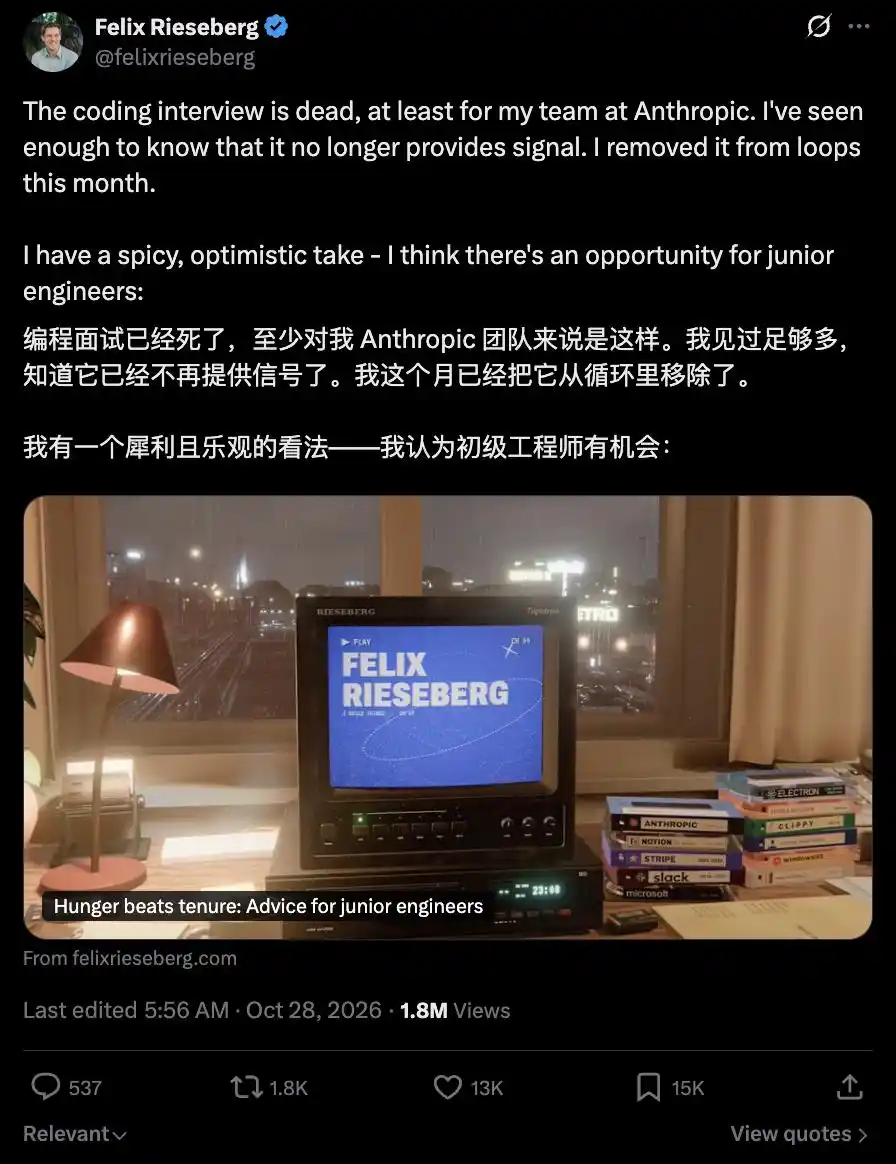
Rieseberg made the case in an essay titled Hunger Beats Tenure: Advice for Junior Engineers. His view is that performance on timed coding exercises is no longer as closely tied to on-the-job output as it once was. One reason, he wrote, is that Claude has become highly capable at programming, while the people who deliver meaningful results inside teams are not always the ones who perform best on interview puzzles.
Three points behind the change
Rieseberg's argument centers on three ideas.
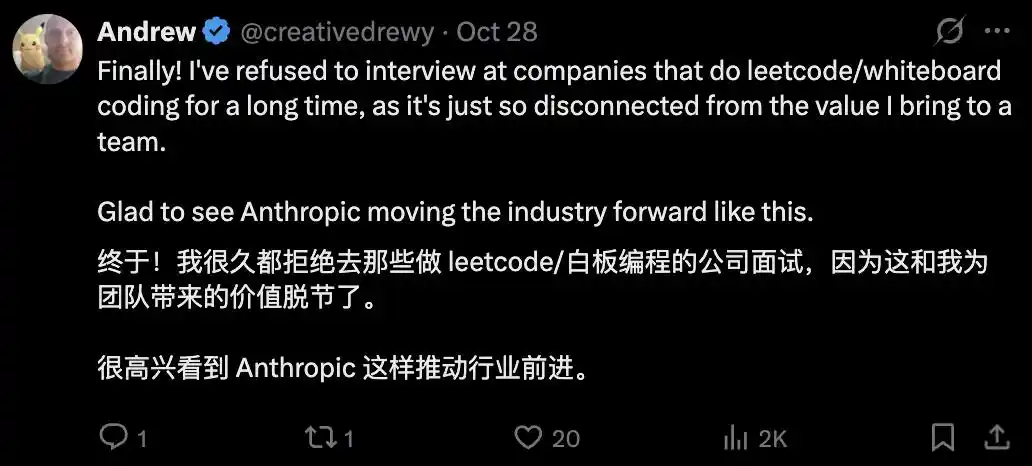
First, coding tests are losing their value as a screening tool. In his telling, traditional programming exercises no longer provide a reliable read on talent, especially now that AI coding tools are part of everyday development work.
Second, junior engineers may no longer need to wait as long to build credibility. Skills such as learning frameworks, gaining implementation experience, and turning ideas into products used to take much longer to accumulate. With AI handling part of the execution layer, less experienced engineers can move faster. Rieseberg said Anthropic has already seen newer hires outperform older programmers with stronger coding fundamentals and more years on the job.
Third, people without tenure or influence can put a working product in front of others before trying to win support. His advice is to find a business-relevant problem, use AI to build a prototype, and let the work speak for itself instead of repeatedly pitching an idea in the abstract.

An internal example at Anthropic
To illustrate the point, Rieseberg pointed to two relatively new Anthropic engineers, Anthony Morris and Alice Zhao. He said they built a prototype for a Claude Code graphical interface over a single weekend, and that the first public version went live about eight days later.
For Rieseberg, the example shows how younger engineers can use AI tools to turn ideas into visible output quickly and use that output to create opportunities.
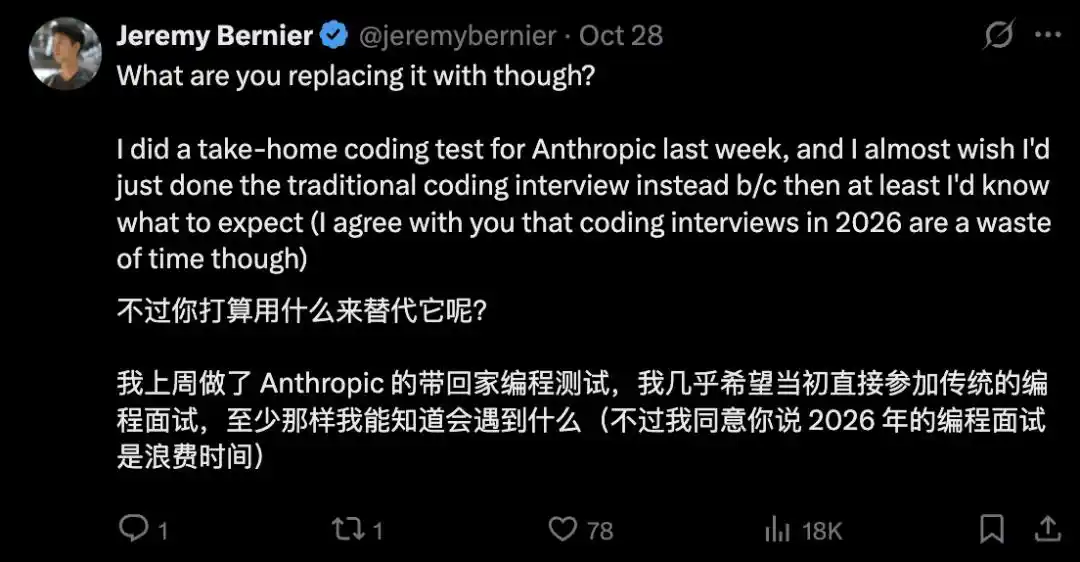
The next question: what replaces the old test
The reaction has not been purely celebratory. Once the old filter is removed, the obvious question is what comes next.
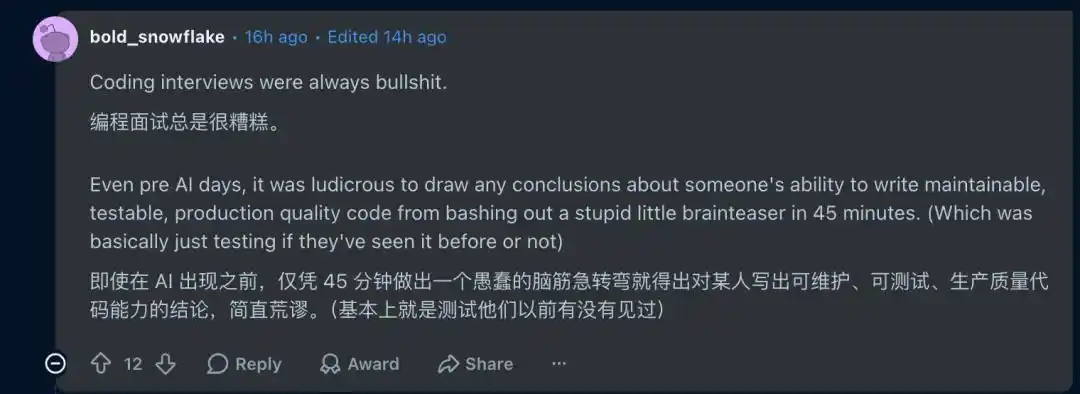
Some developers have long been frustrated with conventional coding interviews. The article cited Reddit user bold_snowflake, who argued that solving a programming puzzle in 45 minutes says little about whether someone can write maintainable, testable code that is ready for production. In many cases, the exercise mainly reveals whether the candidate has seen the problem before.
Still, removing puzzle-style interviews does not automatically produce a better system. Rieseberg acknowledged that he has not fully figured out how to interview people who are especially good at getting work done with AI. That admission has become a focal point in the discussion. If hiring shifts toward judging portfolios, taste, or instinct, some developers worry the process could become even less transparent.
Running software is not the whole story
Another concern is whether a prototype-first approach simply moves more burden onto applicants. Some commenters questioned whether candidates will now be expected to spend nights and weekends building demos after already working full days elsewhere.
Others argued that a working demo does not necessarily prove the person behind it is dependable. The article cited Reddit user oguzhan431, who said he has more than six years of Android development experience and recently used AI to build a PDF editor. The project was completed, but he also ran into repeated rewrites and unnecessary complexity along the way.
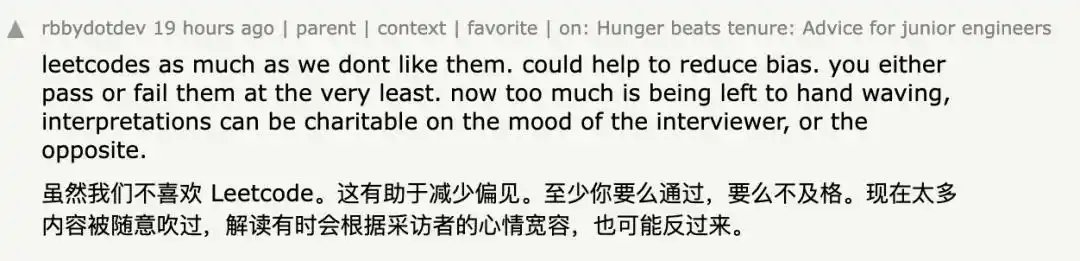
His preference is for interviews that examine the process rather than just the final artifact: which AI-generated approaches were accepted, which were rejected, how bugs were tracked down, and how the exported PDF was verified to actually work. Questions like those may reveal engineering judgment more clearly than a polished demo alone.
From LeetCode to AI-assisted proof of skill
The article also included a personal example from late 2024. A job seeker returning from a well-known university in Europe struggled in interviews with several major Chinese tech companies because of LeetCode-style rounds. According to that account, he did not want to memorize problems he felt were disconnected from real work, and repeatedly failed at that stage.
It also looked back at 2024, when Cursor was described as the strongest coding tool available at the time, though it mainly helped by completing code with the Tab key. Back then, LeetCode was still close to mandatory for many AI- and robotics-related roles, and there was no broad sense that AI would so quickly lower or redraw the barrier.
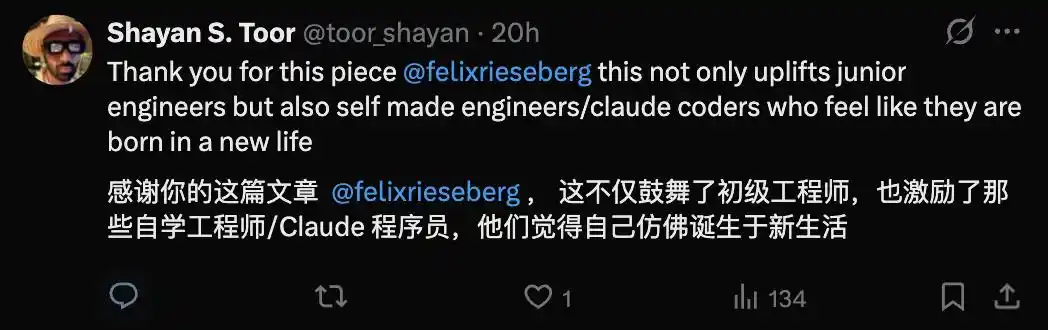
Roughly a little over a year later, the standard for proving programming ability is already shifting. The debate is no longer only about whether time spent grinding LeetCode was wasted, or whether interviews should better reflect real work. It is also about a harder question: once a developer has a powerful AI assistant, how should that person prove their own skill, and prove that the skill is useful.
The referenced source article was published on Felix Rieseberg's website under the title Hunger Beats Tenure: Advice for Junior Engineers.