
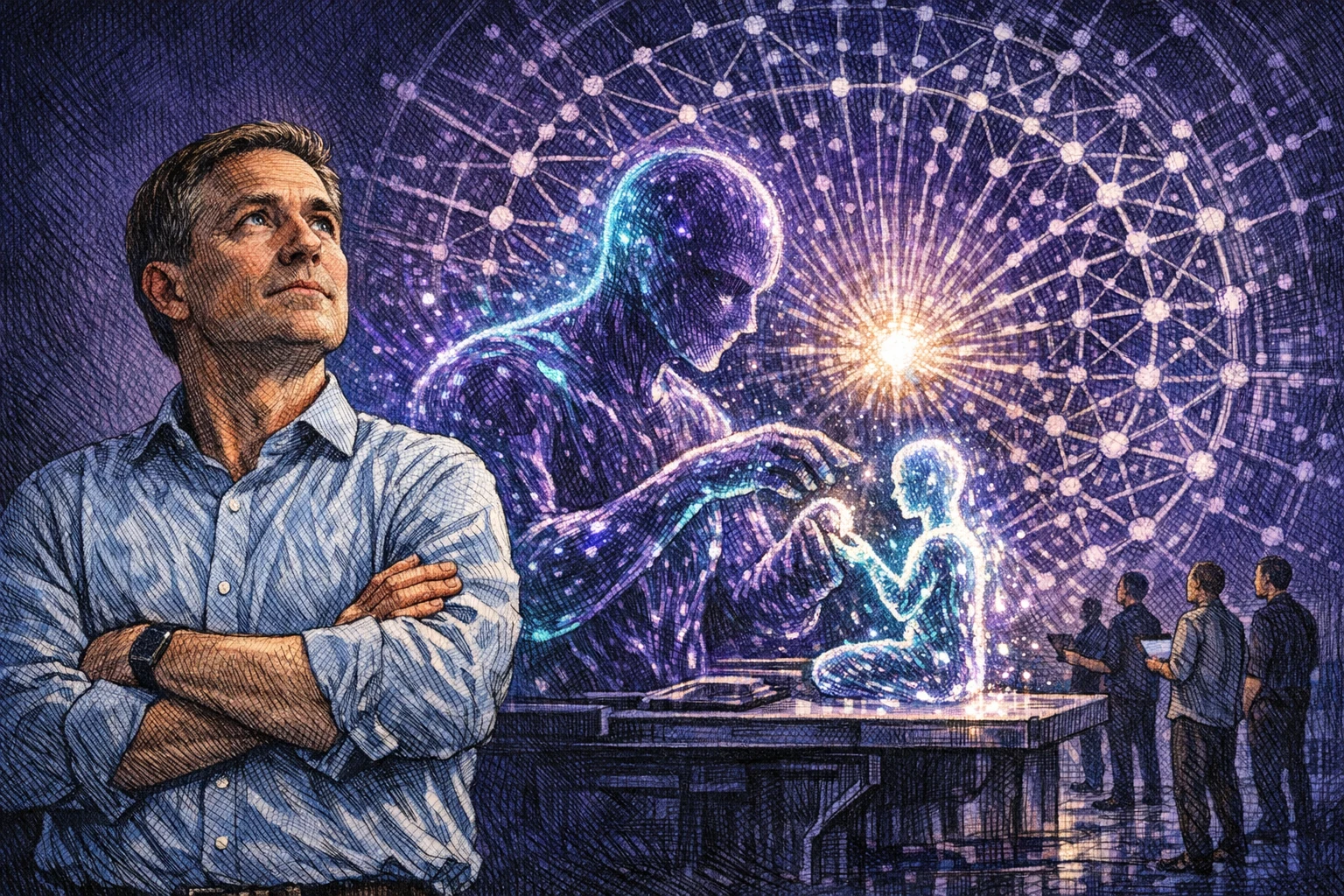
Anthropic engineers now spend their days watching Claude write code and glancing over it. According to Fortune, the company's AI-generated code share is between 70% and 90%, with top engineers hitting 100%.
Engineers Stop Coding, So What Do They Do?
Boris Cherny, creator of Claude Code, predicted the title "software engineer" will start disappearing in 2026. "It's going to be painful for a lot of people," he added bluntly. If even Anthropic's own engineers aren't coding, what are they doing?
The answer: they are training the next generation of AI. And the tool they use is Claude itself. In other words, Claude uses its own generated code to help shape the next Claude. This loop sounds like sci-fi, but it's now Anthropic's daily workflow.
CEO Dario Amodei: 'Not Sure How Much Time Left'
CEO Dario Amodei admitted publicly that he no longer codes. Then he said: "This loop is closing extremely fast. I'm not sure how much time we have left." The optimistic read: AI accelerates evolution, moving to a new productivity tier. The pessimistic read: nobody knows if or when this acceleration will brake.
Anthropic also predicts AI models will be able to replace software engineers within 6 to 12 months — a window from mid-2026 to early 2027.
The Logic and Concern of AI Training AI
"AI training AI" isn't new — synthetic data, RLHF, and model distillation all have self-referential structures. But Anthropic's case differs: AI isn't just generating training data; it's making engineering decisions — what features to build, how to implement them, how to fix bugs.
Humans have shifted from "decision-makers" to "reviewers," but the reviewing standard remains human judgment. The problem: when AI's output speed and complexity far exceed human review capacity, how much meaning does that "glance" still have?
No one has an answer yet. Dario says he's not sure how much time is left. Boris says it will be painful. Anthropic's numbers say 70% to 90%. All precise, but none explain "what happens next."