
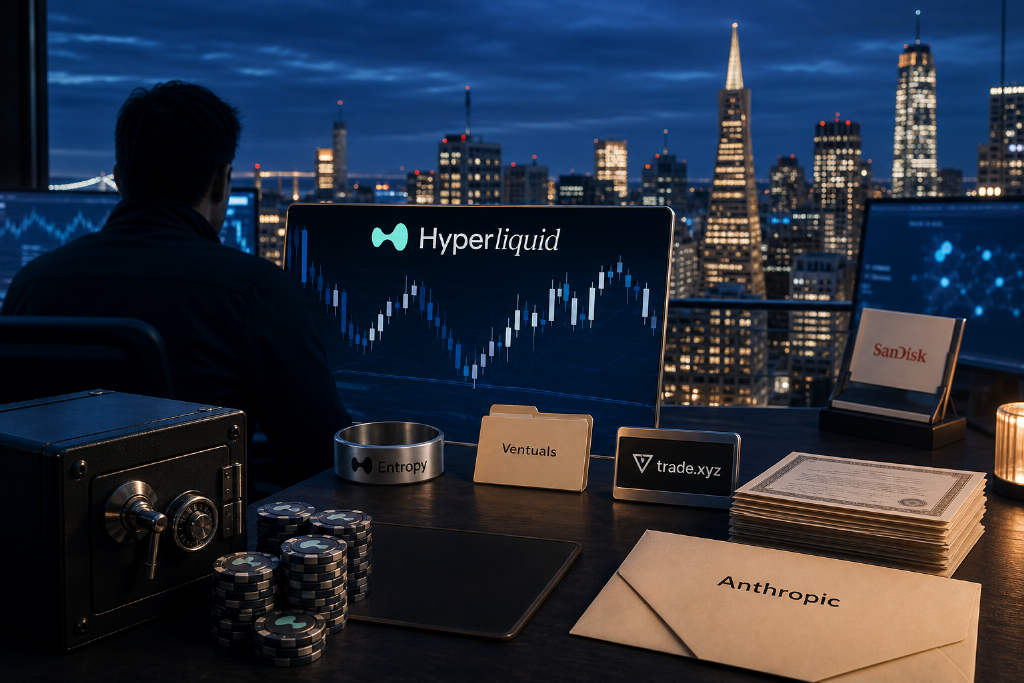
Demand for Anthropic private shares has become a real-world test case for Hyperliquid’s market for pre-IPO perpetual contracts.

Jesse Leimgruber, co-founder of AI hardware company OpenHome, also owns equity in Anthropic. A few months ago, he said on X that he might be interested in selling some of those shares. The response was so intense that he built a dedicated CRM system to keep track of inbound buyers. According to the report, hundreds or even thousands of people reached out, many with cash ready to wire immediately.
One “very well-known growth fund” offered a price that implied a $1.05 trillion valuation for Anthropic. A large venture capital firm also said it could offer him a general partner title if he were willing to pledge his Anthropic shares as collateral. Leimgruber later said that without those shares, the GP title would not exist at all.
The scramble did not stop there. One banker offered an early Anthropic employee a $4.8 million home in Marin County in exchange for a small portion of shares. Another investor listed a 14-acre estate on LinkedIn, implying a company valuation above $800 billion.
A secondary-market matching firm said some shareholders were bidding for stock at a $1.15 trillion valuation. The head of Rainmaker Securities said the market had no sellers at all, only an extreme imbalance between supply and demand.
Leimgruber also said he had used Ventuals to gauge what his shares might be worth. Ventuals was previously an order book on Hyperliquid where traders could take leveraged positions on Anthropic’s valuation.
It is not known what he ultimately did with his stake. He may have sold part of it, all of it, or none of it. Private equity transactions usually stay undisclosed, so public information shows only that he was an interested seller.
Ventuals later shut down, its founding team joined Phantom, and trade.xyz pulled in nearly all the liquidity on the HIP-3 protocol.

Anthropic, in the author’s framing, appears likely to become one of the most sought-after public listings when it eventually goes public. Retail investors, though, still have little direct access to private equity. Unless they qualify as accredited investors, the path is mostly closed, and that qualification comes with a steep wealth threshold.
That is where Hyperliquid’s HIP-3 protocol enters the discussion. Ventuals used to live there, and Entropy is now one of the projects taking its place. The central question is whether Entropy really tells a better story than Ventuals, and whether it is structurally better.
HIP-3 and its $40 million gate
On Oct. 13, 2025, Hyperliquid launched HIP-3, allowing anyone to deploy a perpetual DEX on Hyperliquid. The entry requirement was simple but expensive: $40 million.
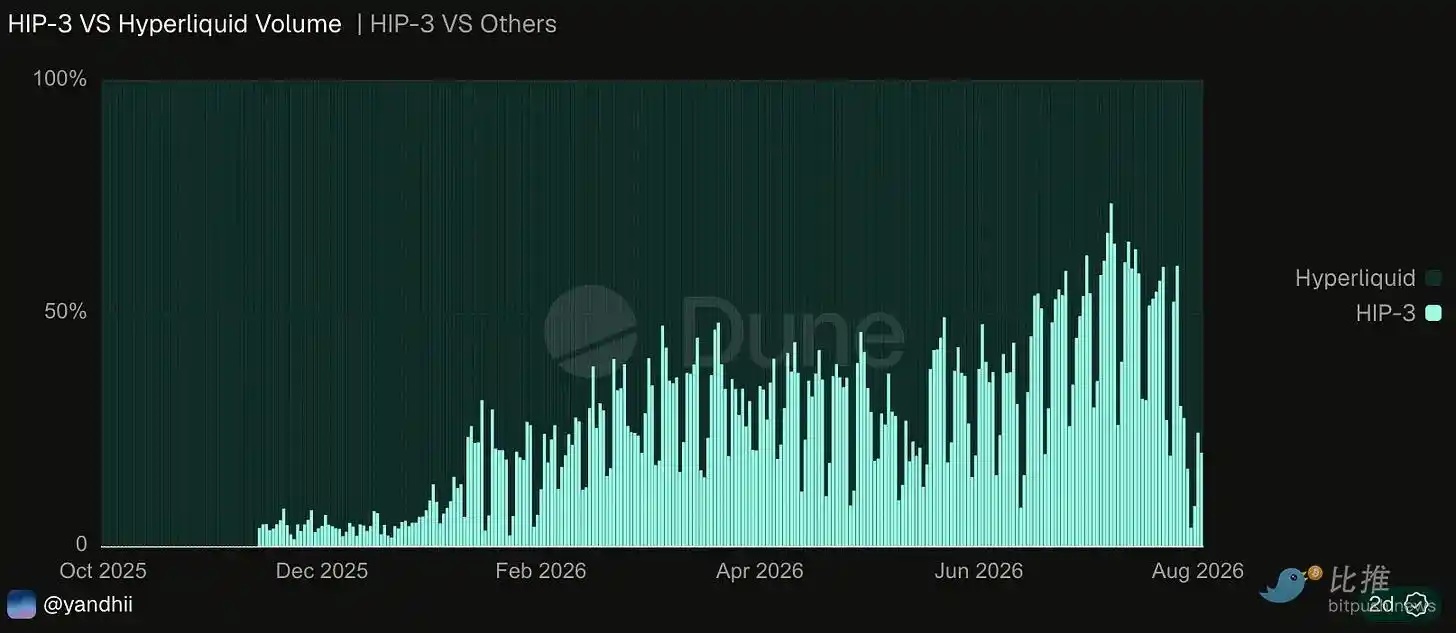
Fees on these markets are set at twice Hyperliquid’s native rate. Deployers keep 50% of that revenue, while Hyperliquid uses the remaining 50% for token buybacks. According to the article, about 30% of Hyperliquid’s perpetual trading volume currently flows through HIP-3 markets.
On Aug. 24, 2026, Entropy met the deployment requirement by locking 500,000 HYPE as collateral. The report values that stake at $40 million and says it was supported by a $14 million funding round led by Ribbit Capital.
Entropy’s ANTH token is quoted by market capitalization, with 1 representing $1 billion, a design choice meant to sidestep uncertainty around total shares outstanding. Under that system, a displayed price of $2,000 implies a $2 trillion valuation.
That exposure is still synthetic. As with other HIP-3 assets, holders do not own Anthropic stock, and Anthropic does not recognize them. What traders hold is a smart-contract entry on Hyperliquid’s ledger that mathematically tracks Anthropic’s implied market value as listed on Entropy. Whether or not Anthropic eventually goes public, the position cannot be converted into actual company shares.

If Anthropic has not listed by Aug. 18, 2028, ANTH will be cash-settled using the 30-day average of its own mark price. Funding will keep running until then. The article says the contract can settle without relying on the accuracy of off-platform data.
Three models on the same rail
Hyperliquid deployers tested two other pricing engines this year for synthetic pre-IPO assets.
The first was Ventuals, which combined blended private-market valuations with prices from its own order book, but did not cap funding rates.
The second was trade.xyz, which ignored external valuations and priced contracts solely from the 30-minute average of its own internal trades. It still accounts for most of HIP-3’s trading volume.
trade.xyz was built by Hyperunit, which launched the first HIP-3 trading pair in October 2025 and reached $1.3 billion in volume within three weeks. As the dominant third-party builder on the platform, Trade.xyz accounts for more than half of Hyperliquid’s monthly total trading volume.
Citing Token Terminal data, the report says trade.xyz uses an oracle that depends strictly on the 30-minute average of its own internal trades. It also enforces a hard cap on funding and converts contracts into standard derivatives when a company goes public.
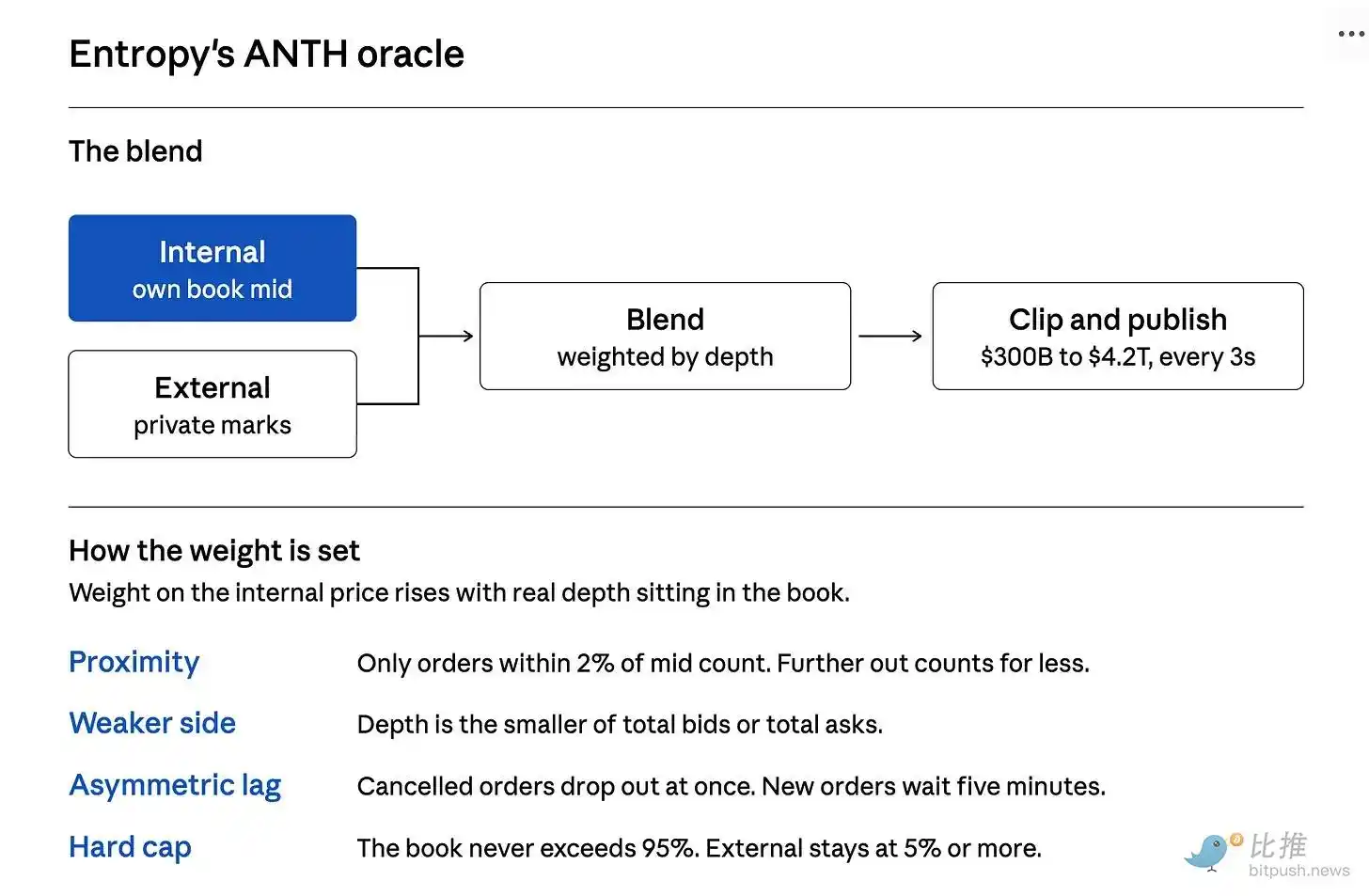
Entropy takes a different route. Its hybrid oracle blends a live order book with private-market valuations. The order-book price can carry as much as 95% of the weighting, but only when liquidity is deep enough. Otherwise, the system falls back to a stale secondary-market mark. Entropy also lists total market capitalization rather than a per-share price.
The report argues that anyone trying to understand how far Entropy can go first needs to understand Ventuals, the first platform to launch a pre-IPO perpetual synthetic market for Anthropic. Its rise was fast. Its failure was just as instructive.

Ventuals: early traction, then structural stress
Alvin Hsia, Emily Hsia, and Aris Samad founded Ventuals in late 2025 with support from Paradigm. They were among the first teams to run pre-IPO perpetuals on HIP-3.
The first hurdle was collateral. The founders did not have 500,000 HYPE on hand, so they created a vault called vHYPE. Users deposited HYPE and received receipt tokens, while the vault used that HYPE to post collateral and paid staking yield throughout the lockup period. In practical terms, traders were funding the exchange they were about to trade on.
Ventuals opened order books for OpenAI, Anthropic, and SpaceX. The first $100 million in volume took 73 days. The next $100 million took only 17 days. By February 2026, total platform volume had crossed $200 million, with more than 11,000 users trading on it.
Hsia later wrote that employees from SpaceX, OpenAI, and Anthropic had told him they were using the order book as a reference point for their own company equity values. Late-stage funds said similar things, and so did Leimgruber. That was the platform at its peak.
Then the mechanics broke down. A SpaceX contract on Ventuals dropped 45% in a single trading day even though nothing had changed at SpaceX itself. Liquidity on the order book vanished, and a small number of trades pushed the price sharply lower. The team later compensated traders, which the article describes as a decent move.
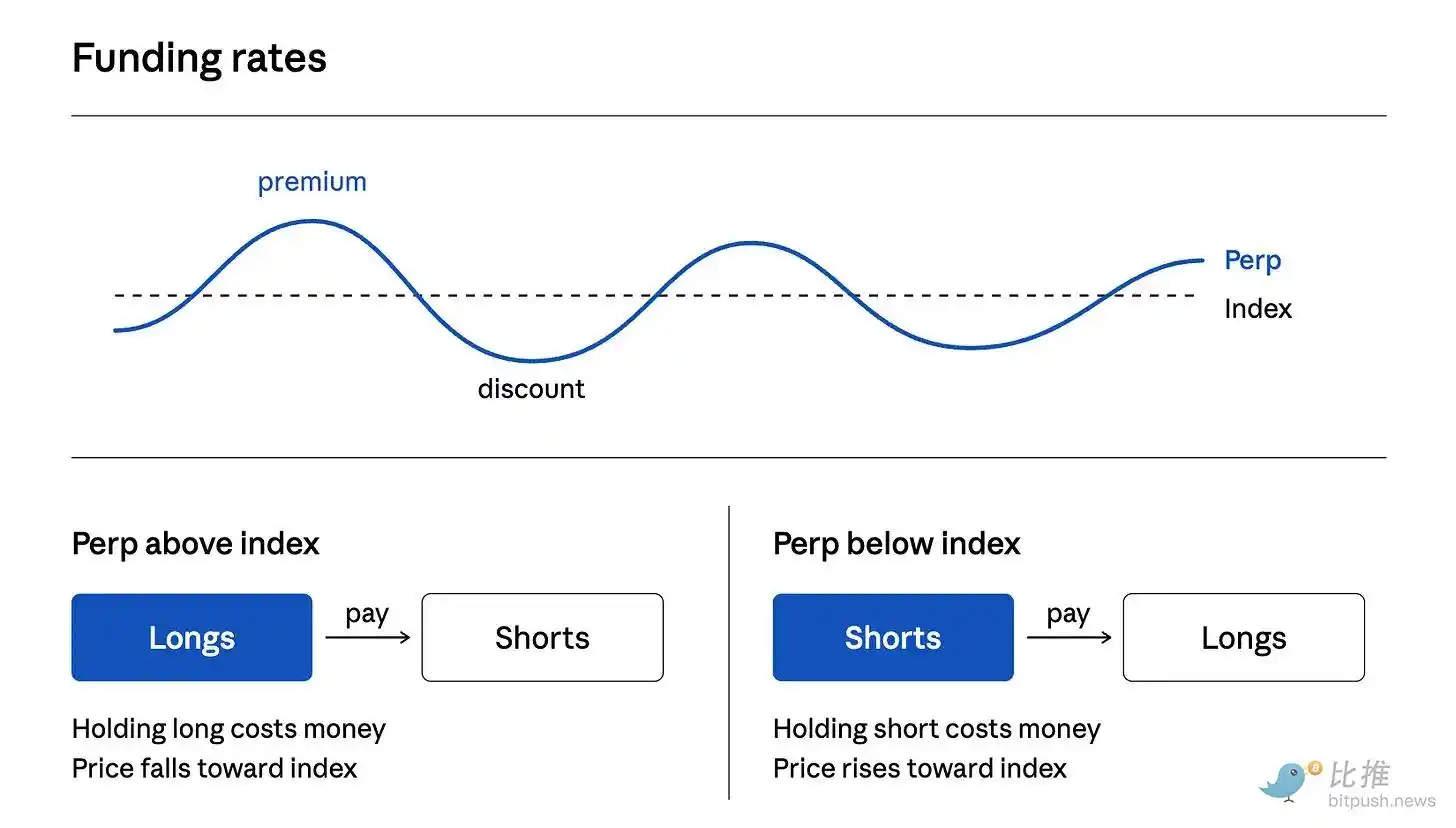
The larger problem was the fee design. Ventuals charged a 15% annualized standard fee so long as the gap between its price and a real-world valuation stayed within 5%. If the deviation widened beyond 5%, the punitive fee escalated exponentially. At one stage, annualized funding on the Anthropic order book reportedly reached 8,700%.
Under normal conditions, traders would buy the undervalued asset and sell the overvalued one to close the gap. Here they could not. Ventuals contracts were purely synthetic and could not be settled with actual Anthropic stock, especially after Anthropic restricted secondary transfers of its shares.
At the same time, depositors who wanted out before the end of a one-year lockup pushed vHYPE to a 20% to 30% discount against standard HYPE. The project was then shut down.
What Entropy fixes, and what it still does not
Entropy sounds very similar to Ventuals at a structural level, so its first task has been to address the exact failure points that surfaced before.
First, it caps annualized funding at around 10%, avoiding the runaway 8,700% cost spiral that helped break Ventuals. Second, it uses a hybrid pricing oracle, leaning on its internal order book only when liquidity is sufficient and otherwise defaulting to private-market valuations. Like Ventuals, it prices Anthropic by total market capitalization rather than by share.
Still, Entropy lacks the cleaner public-listing conversion model that trade.xyz has. If Anthropic is not public by Aug. 18, 2028, ANTH settles in cash using the 30-day average of its own price. If an IPO happens, Entropy says its oracle will switch to a one-hour average of the mark price from the three days before listing, then track the public market.
That leaves a structural mismatch. Hyperliquid cannot convert a market-cap contract into a per-share contract, so ANTH would continue to trade in units of billions of dollars even after an IPO. trade.xyz, by contrast, started with per-share pricing from day one and does not face that issue.
Ribbit Capital’s backing is not a guarantee
One common argument in Entropy’s favor is the quality of the people and capital behind it.
Ribbit Capital used its first fund to invest in Bitcoin and Coinbase’s 2013 Series A. It began backing Robinhood in 2014, including the company’s 2021 rescue financing. Its past investments also include Ripple, Xapo, and Blockstream. Public filings still show positions in HOOD and COIN. More recent crypto bets include Polymarket, Lighter, Tempo, Morpho, Bridge, and the $14 million EntropyIO round that Ribbit led on Aug. 24, 2026.
The article notes that Ribbit has long specialized in businesses that distribute capital: brokerages such as Robinhood, exchanges such as Coinbase, prediction markets such as Polymarket, and on-chain perpetual venues such as Lighter and now Entropy. But a $14 million financing only means Ribbit owns equity in Entropy. It does not remove the risk that posted collateral could still be slashed.
Team members previously worked at Citadel, Optiver, Polymarket, and Millennium. The report explicitly says those resumes do not amount to an absolute guarantee.
SanDisk data and what volume does not tell you
Entropy has also listed SanDisk, or SNDK. Because SanDisk already trades on Nasdaq, every venue can copy the same spot price directly. Within days, SNDK also appeared on trade.xyz, Lighter, Ondo, Variational, and Aster.
Using DefiLlama data, the article says trade.xyz has about $174 million in open interest and $276 million in 24-hour volume on the SNDK contract. Entropy’s SNDK market has about $5.6 million in open interest and $55 million in volume.
High volume paired with persistently low open interest usually points to traders entering and exiting quickly. That behavior is consistent with arbitrage, market making, or automated bots smoothing price differences across venues. Durable directional demand tends to show up as rising open interest, because traders are building positions and holding them.
SNDK can keep its price relatively accurate because bots repeatedly align crypto-market pricing with the live Nasdaq stock price. ANTH cannot do that, because no live stock price exists to copy.
So when activity dries up, ANTH has to rely more heavily on stale private valuations, old fundraising rounds, or market rumors. In the report’s view, Entropy has not changed the core reality that decentralized exchanges are much better at pricing public stocks than they are at pricing private companies before listing.
Kraken testnet traces and the regulated version of HIP-3
On Aug. 19, a deployer called “Kraken HIP-3 test DEX” enabled star gating on the Hyperliquid testnet. Blockworks analyst Shaunda Devens found that it had whitelisted 10 wallets and used three of five new administrative tools: canceling user orders, forcing liquidations, and moving margin out of accounts.
At the same time, the testnet validator registry showed a validator registered as “Kraken Exchange Validator.”
Neither Kraken nor Hyperliquid confirmed ownership of the testnet DEX. Devens said the setup could be genuine, because Kraken’s parent company Payward has already deployed xStocks on HyperCore, and the three tools fit what a regulated institution would typically need. Until someone formally confirms it, though, the report says it should not be treated as an official product.
Entropy explicitly blocks users from tightly regulated jurisdictions, including the United States, the United Kingdom, the European Union, Canada, Australia, and Singapore. If users from those places are ever allowed in, the likely path would be a permissioned, centralized structure. The article says such systems can legally seize assets and run formal risk management, which would be closer to a Kraken-style model.
Traditional stock exchanges such as Nasdaq or the New York Stock Exchange rely on human listing committees to decide which assets can trade. Hyperliquid’s HIP-3 uses a different rule set: no committee approval is required, and anyone who locks up $40 million in staked tokens is automatically allowed to launch a market.
The implied lesson from the possible Kraken testnet activity is that regulated financial firms want this technology, but cannot legally operate in a fully permissionless setting. To satisfy regulatory requirements, they may adopt HIP-3’s blockchain base while hard-coding strict rules, approved-user whitelists, and manual risk desks back into the system.
A market still learning by breaking
From Ventuals to trade.xyz to Entropy, HIP-3 has already produced several distinct models for pre-IPO synthetic exposure. One route leans into private-market marks. Another trusts only internal order books. A third tries to combine both.
If Entropy succeeds, the article says it could help create a new private-equity asset class on Hyperliquid’s rails. If it fails, it becomes another case study for the next builder. Either way, the sector is still in active experimentation, rewriting its own rules one product cycle at a time.