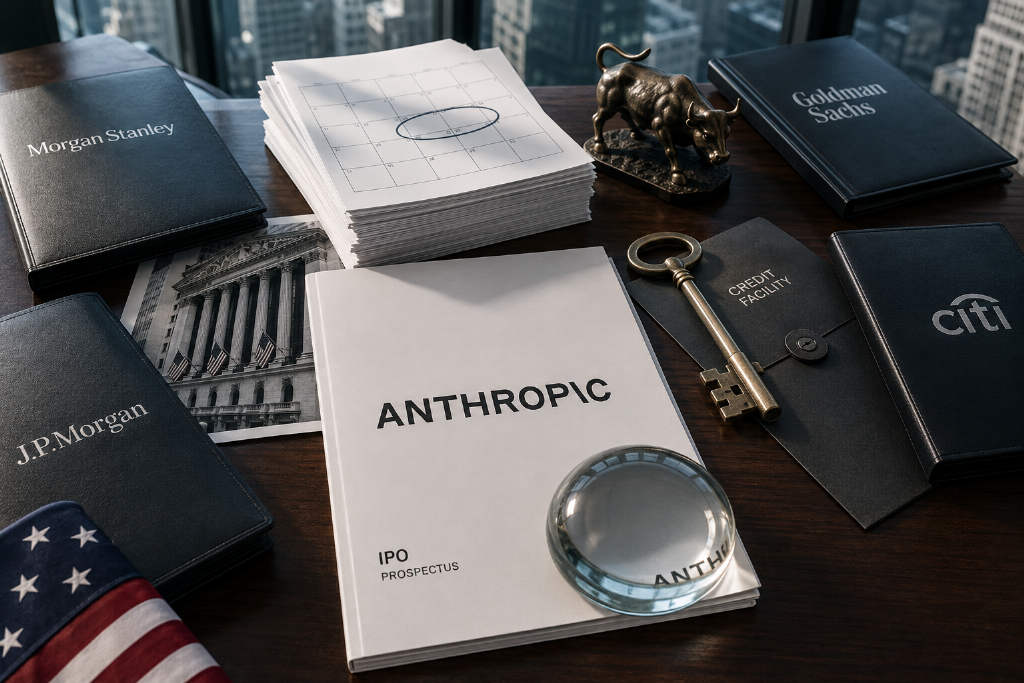
According to Reuters citing sources, Anthropic is adjusting its IPO timeline to mid-October, with a roadshow potentially starting in mid-October and a listing before the US midterm elections in November. The company originally planned to file its IPO prospectus as early as next week, but it is now expected to be delayed to late September. The shift suggests a valuation target of up to roughly $2 trillion, which would make it one of the largest IPOs in history. Anthropic is also finalizing a $15 billion revolving credit facility, with Morgan Stanley, Goldman Sachs, JPMorgan Chase, and Citigroup among the banks involved.
According to Reuters citing sources, AI company Anthropic is adjusting its IPO timeline to mid-October. The roadshow could start as early as mid-October, with a listing planned before the US midterm elections in November. The company had originally planned to file its IPO prospectus as early as next week, but it is now expected to be delayed to late September.
The timeline shift suggests Anthropic could target a valuation of up to roughly $2 trillion, which would make it one of the largest IPOs in history and a key test of the AI sector's growth potential.
Sources said Anthropic is working to close a $15 billion revolving credit facility. Bank analysts involved in the financing are expected to meet with the company before the prospectus is made public. Morgan Stanley, Goldman Sachs, JPMorgan Chase, and Citigroup are among the institutions participating in the IPO preparations. The offering is expected to draw significant market attention and could coincide with potential listings from other AI firms like OpenAI.
This article was originally published by Bit.Fan. For more cryptocurrency news and market insights, visit www.bit.fan. Disclaimer:
The market information, project data, and third-party content displayed on this platform are for industry information sharing only and do not constitute any form of investment advice or return commitment.
Cryptocurrency trading carries high risks. Users should fully assess their risk tolerance and make independent decisions. All profits, losses, and legal responsibilities are borne by the users themselves.