

Author: Capital Flows, macro hedge researcher
Compiled by: TechFlow

Anthropic made its U.S. stock market debut, but the offering broke below its opening price on the first day and fell further in after-hours trading. Capital Flows said the closely watched IPO failed to support risk appetite and instead became a trigger for selling across global risk assets.
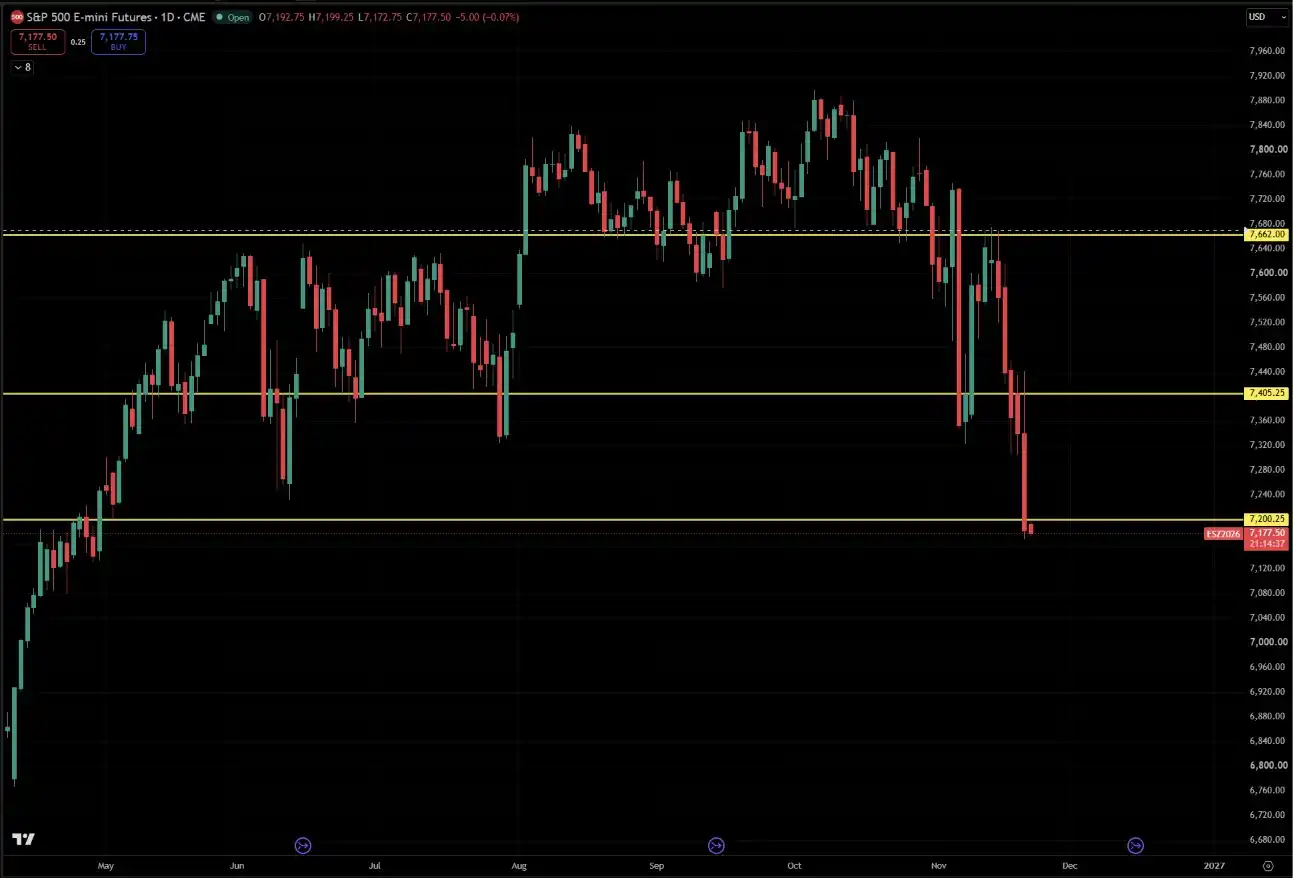
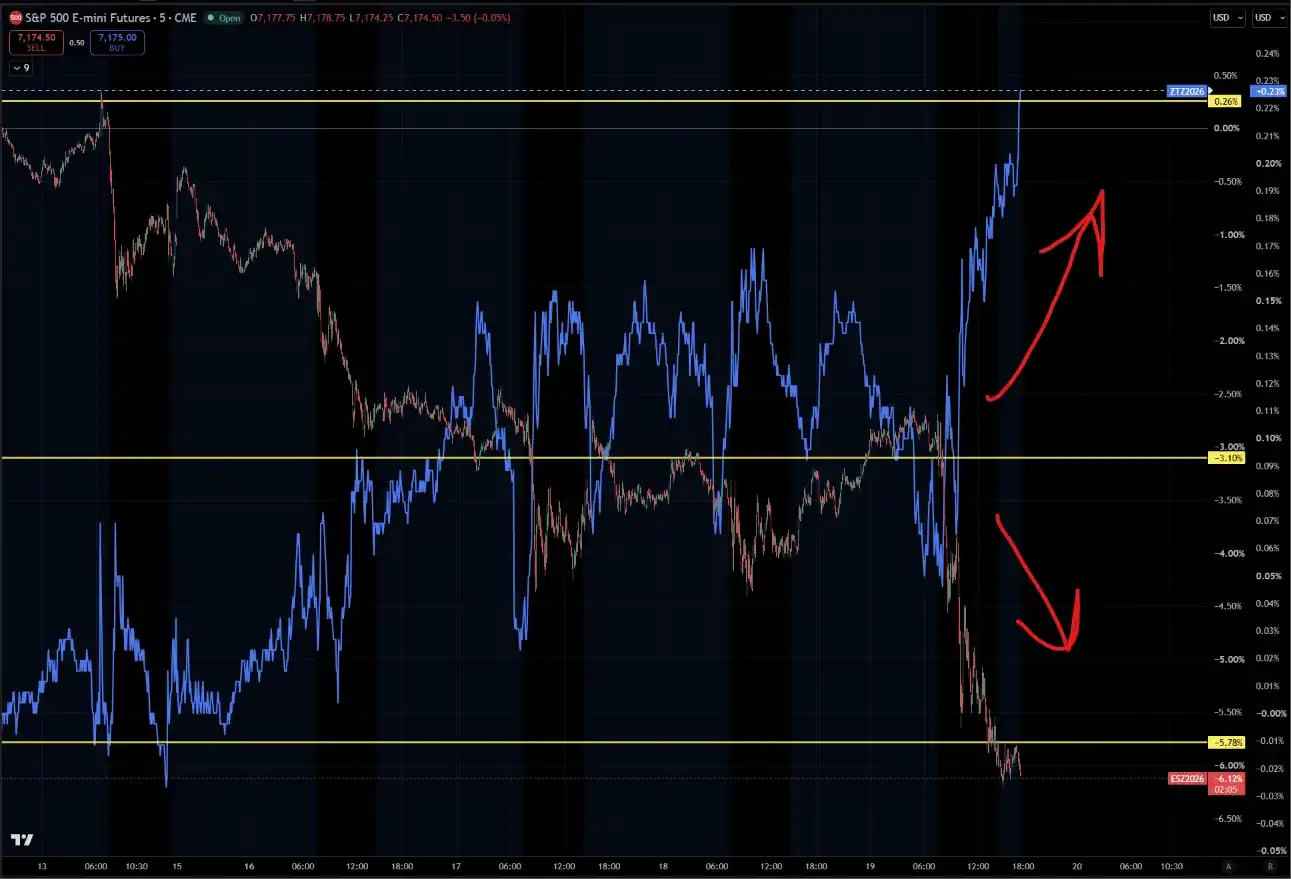
The S&P 500 futures contract, ES, has fallen below 7,400. Capital Flows had identified that level earlier in the week as a key dividing line and said that a break below it would leave the short-term market setup dominated by bears. The firm said the probability of a full recovery before Friday’s close was very low.
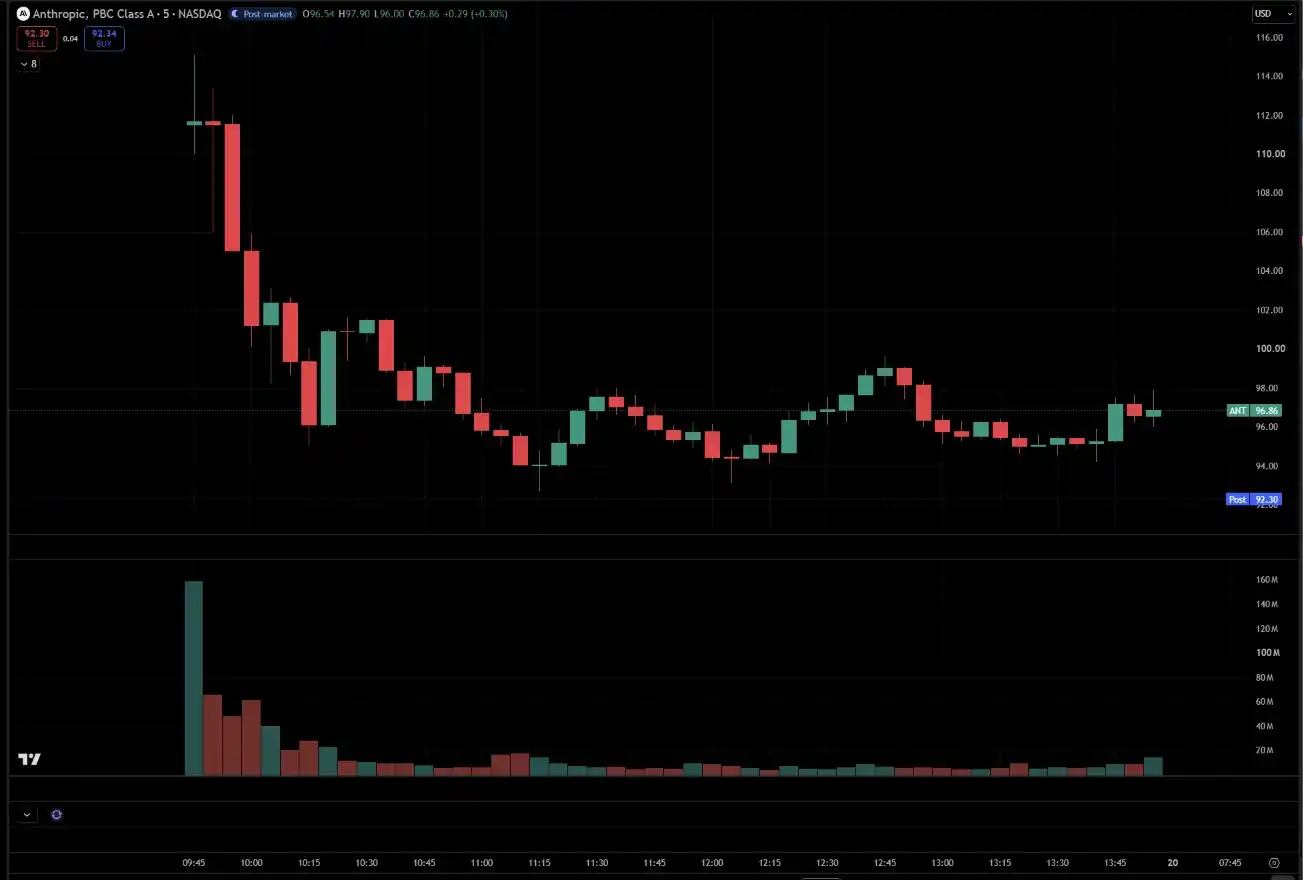
Anthropic breaks below its opening price
Shares trading under the ticker ANT came under heavy selling soon after the open, moving below the opening price before suffering a deeper decline in after-hours trading. Capital Flows said the high-profile IPO had evolved into a trigger for a chain of selling, putting key technical support levels across global equity markets under pressure.
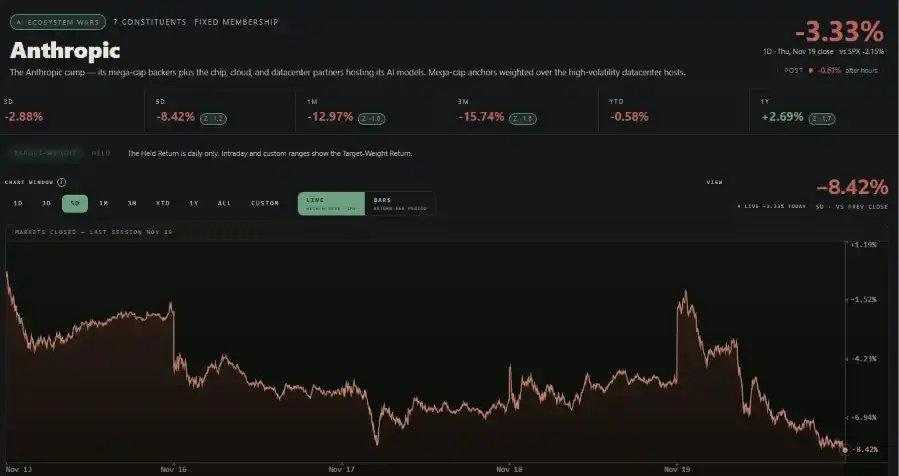
Stocks linked to Anthropic also weakened across the IPO session. Capital Flows described the move as evidence of system-wide de-risking around AI-sector fundamentals and said hedge fund managers may have been forced to unwind long positions.
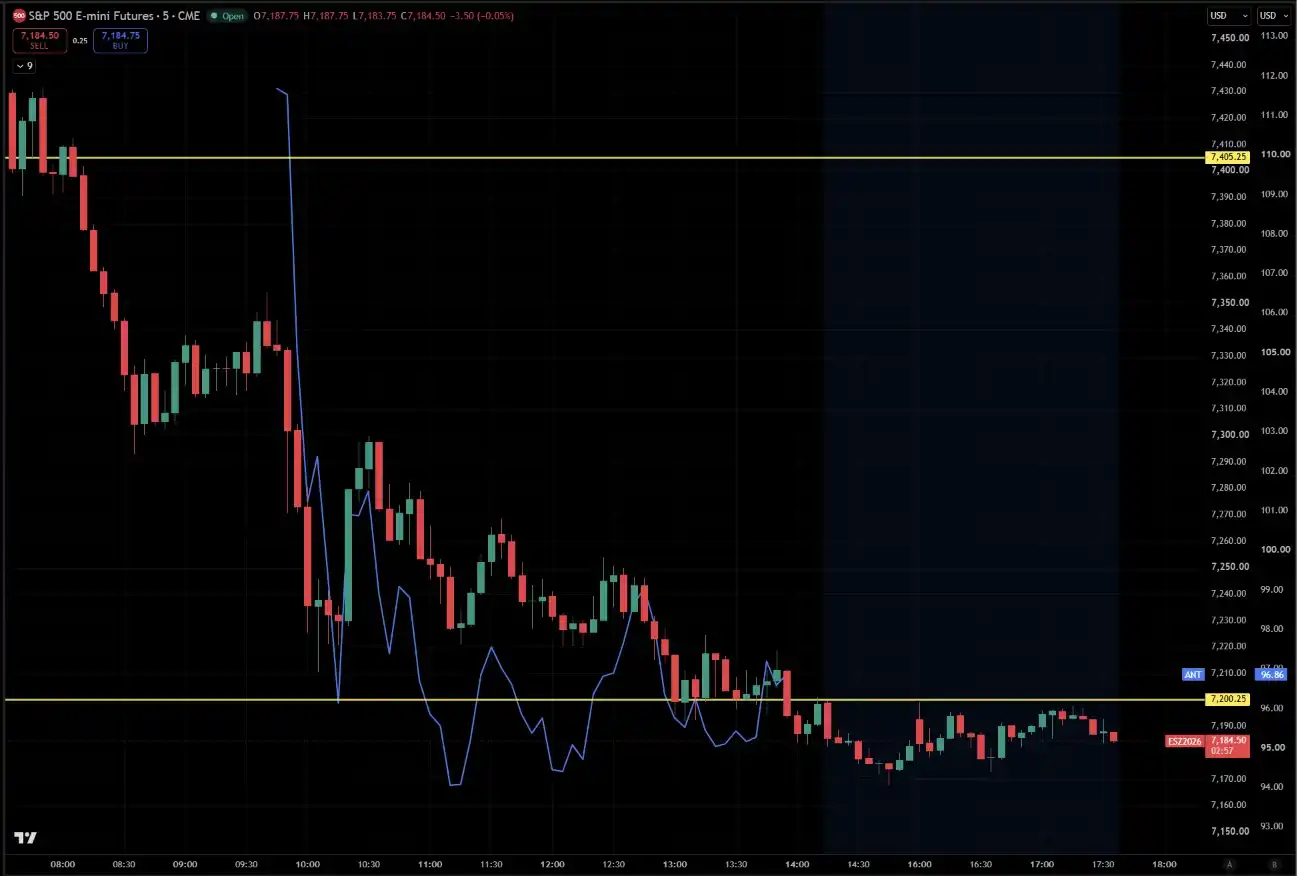
Defensive flows remain limited
Capital Flows said the latest move should be viewed through a broader macro lens. In an earlier report, the firm argued that a break below 7,400 would shift the short-term logic decisively toward the downside. ES is now trading well below that level.
At the same time that ES futures faced aggressive selling, two-year U.S. Treasury futures, known as ZT, posted only a modest rebound. Capital Flows said the limited move pointed to weak rotation into traditional defensive assets and thin demand for protection. The firm said the deeper macro risks across assets have not yet been fully reflected in market prices.
Capital Flows sees a possible return of rate hikes
Capital Flows has repeated a central macro view in several recent videos: markets may be entering a harsh new cycle of forced rate increases. The firm said the Federal Reserve may eventually have to raise its benchmark rate again. Otherwise, long-term Treasury yields could rise out of control, creating pressure on the credibility of the U.S. dollar and on the sovereign fiscal system.
The firm also said the latest equity decline has been driven almost entirely by pressure on large technology stocks. Broad risk transmission through the bond and foreign-exchange markets has not yet fully emerged. If global equities were to enter a hard landing and a new rate-hike cycle from their current valuation levels, Capital Flows said stocks could face substantial additional downside.
Volatility diverges across asset classes
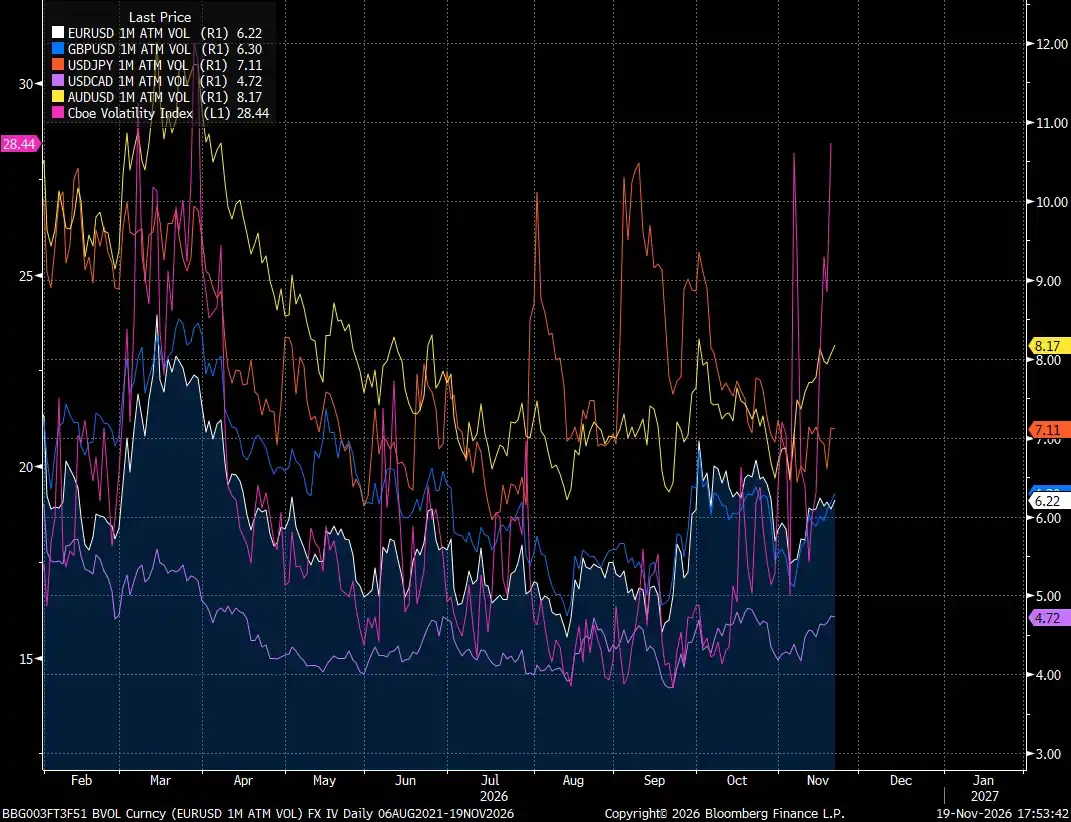
Capital Flows pointed to a clear divergence in cross-asset volatility. Foreign-exchange volatility has shown little change, while the stock-market fear gauge VIX has already moved higher.
Bond-market volatility has risen only moderately. Capital Flows said this may reflect rate traders’ recognition that the range of possible future interest-rate moves could be much wider than the short-term policy adjustments currently signaled by the Federal Reserve.
Under the firm’s scenario, inflation and fiscal deficits could eventually force the Federal Reserve to begin a substantive tightening cycle again. If that happens, bond volatility could surge and pull equities into another deeper breakdown.
A defensive stance and a large cash position
Against what it described as growing imbalances in the macro system, Capital Flows said it had maintained a stock-neutral defensive stance for an extended period. The firm moved fully into defense during the summer and stopped betting that the credit cycle would push asset bubbles higher in an increasingly irrational move.
Capital Flows said it currently holds a very large cash reserve. It is waiting for long-term yields to establish a durable ceiling or for market sentiment to become extremely pessimistic, creating conditions in which long-term industrial capital could buy cheaper assets. The firm said the market remains far from a genuinely safe valuation floor.
Unless the Federal Reserve suddenly makes a full shift toward an extremely dovish stance, or the macroeconomy enters what the firm calls a flawless Goldilocks scenario, Capital Flows said the market’s bias should remain bearish as long as the S&P 500 stays below 7,400. The firm described the current environment as one of sharp volatility in which a small catalyst could quickly alter the technical picture. If volatility in the interest-rate market begins to rise across the board, the downside skew in equities could become even more extreme. The remaining question, according to Capital Flows, is whether AI-sector fundamentals can improve before risks in the rate market spread more broadly.



