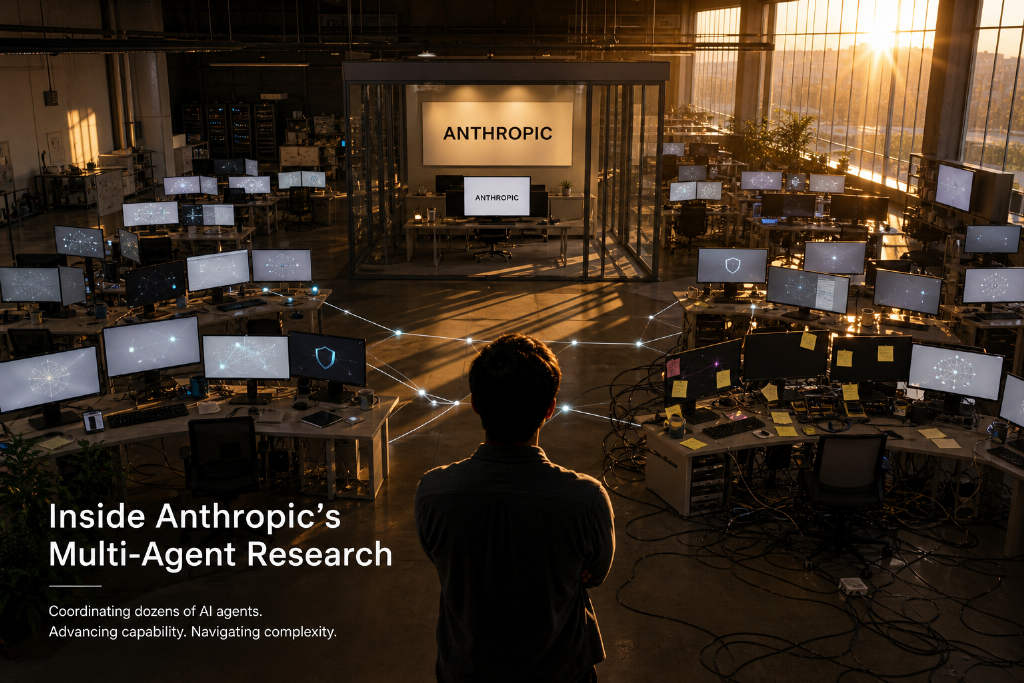
Anthropic said emerging multi-agent systems could become a major direction for AI as agent capabilities improve, with interactions between agents potentially exceeding both human-to-human and human-to-agent exchanges in the future. The company said current models still struggle with coordination in complex collaborative settings.
In a software vulnerability detection experiment, Anthropic deployed 45 agents at the same time. Claude Mythos Preview, running in an independent parallel setup, used 6.5 million tokens and found 21 vulnerabilities. A collaborative agent cluster used 27 million tokens and found 266 vulnerabilities.
Anthropic said agents can develop tools on their own during collaboration and gradually split into specialized roles. It expects this combination of specialization and collaboration to outperform pure parallel brute-force search over time. Even so, the company said multi-agent performance remained weak in software development tasks that require strong interdependence. Anthropic tested free-form collaboration, preset roles, and organizational structures including a "CEO agent," but said none of them clearly improved final results. For now, the company said complex multi-agent projects still need substantial human guidance.
Anthropic said in a research article on emerging multi-agent systems that as AI agent capabilities improve, interactions between agents may eventually exceed both human-to-human and human-to-agent exchanges. The company also said current models still face coordination problems in complex collaborative environments.
In a software vulnerability detection experiment, Anthropic deployed 45 agents simultaneously. Claude Mythos Preview, running in an independent parallel mode, used 6.5 million tokens and found 21 vulnerabilities. A collaborative agent cluster used 27 million tokens and found a total of 266 vulnerabilities.
Anthropic said agents can develop their own tools during collaboration and gradually form specialized divisions of labor. The company expects this "specialization + collaboration" model to outperform simple parallel brute-force search in the future.
Still, multi-agent performance remained weak in software development tasks that require a high degree of interdependence. Anthropic tested organizational setups including free-form collaboration, preset roles, and a structure with a "CEO agent," but said none of them produced a clear improvement in final results. At the current stage, the company said complex multi-agent projects still require substantial human guidance.
This article was originally published by Bit.Fan. For more cryptocurrency news and market insights, visit www.bit.fan. Disclaimer:
The market information, project data, and third-party content displayed on this platform are for industry information sharing only and do not constitute any form of investment advice or return commitment.
Cryptocurrency trading carries high risks. Users should fully assess their risk tolerance and make independent decisions. All profits, losses, and legal responsibilities are borne by the users themselves.