

Anthropic’s climb in valuation is creating a new class of paper winners across venture capital and big tech.
According to The Wall Street Journal on July 18, Spark Capital’s $75 million investment in Anthropic in 2023 is now worth about $7 billion based on the company’s latest valuation. Three years ago, Anthropic had little revenue and no mature product. Today, that stake is worth close to 100 times the original check on paper.
The comparison that comes up most naturally is not from AI, but from an earlier technology cycle: backing a company before the market fully accepts what it may become. In Anthropic’s case, the central question was whether a company that had not yet proven its business model could still grow into part of the next generation of core technology infrastructure.
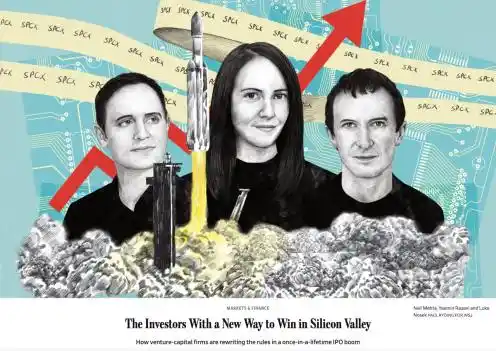
That was the wager Yasmin Razavi made for Spark Capital in 2023.
From $75 million to about $7 billion
At the start of 2023, attention in AI was overwhelmingly focused on OpenAI. ChatGPT had been live for only a few months and had already become a global phenomenon. Microsoft had stepped up its backing. Investors across Silicon Valley were rethinking the scale of the generative AI opportunity.
OpenAI had nearly every advantage associated with an early leader. It had introduced the public to the value of large language models, built the strongest brand in the category, and secured multibillion-dollar support from Microsoft. In practice, OpenAI was becoming shorthand for the AI era itself.
Anthropic, by contrast, did not yet carry anything like the same weight. Founded in 2021 by former OpenAI researchers, the company set out to build safer and more reliable large language models. That vision mattered, but from an investor’s standpoint, a clear mission was not the same thing as demonstrated commercial value.
In early 2023, Anthropic was still a company that had to prove itself. It had a strong research team and had built Claude, but it was still far from being a mature business.
The Wall Street Journal reported that before deciding to invest, Razavi conducted extensive research on the AI industry. She was not focused on short-term model rankings. Her attention was on industry structure over a longer horizon. The key question for her was whether foundation models would become more than software products and evolve into a core layer of future technology infrastructure.
If that view was right, then the contest among model companies would not simply be about who had more users at a given moment. It would also mean that even with an apparent leader already in place, the market could still support other major players.
After months of discussion, Spark Capital led Anthropic’s Series C and invested $75 million.
Over the following years, Anthropic’s trajectory moved in a direction that supported that thesis. In 2023, the company launched Claude 2 and expanded API access, beginning its push into enterprise use cases. In the same year, Amazon said it would invest $4 billion in Anthropic and positioned Claude as an important part of AWS AI services. Google also increased its backing and deepened its cloud relationship with the company.
Those commitments gave Anthropic more of the capital and compute needed to train frontier models. At the same time, the company was building a commercial path that looked different from OpenAI’s.
If ChatGPT first demonstrated that large models could become mass-market consumer products, Anthropic was trying to prove something else: that AI could also become infrastructure inside enterprise workflows. Claude moved into software development, knowledge management, research, and analytical work across businesses.
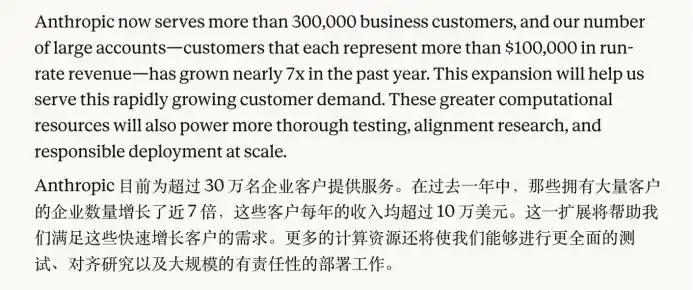
Anthropic said that by October 2025, more than 300,000 enterprise customers were using Claude. Among them, the number of large customers generating more than $100,000 in annual revenue had grown nearly sevenfold over the previous year.
That shift changed how the market viewed the company. Anthropic was no longer just the follower chasing OpenAI. It was becoming a foundation model company with a real position in enterprise AI.
As Claude gained traction in business use cases, investors repriced Anthropic’s commercial value. In May 2026, the company completed a $65 billion Series H round, bringing its post-money valuation to $965 billion. That was above OpenAI’s roughly $852 billion valuation at the time and made Anthropic one of the world’s most highly valued native AI companies.
Based on that valuation, Spark Capital’s stake is now worth about $7 billion, according to The Wall Street Journal. When Spark invested in 2023, Anthropic was valued at only about $4 billion.
This is not just a story about an extraordinary return multiple. It is also a story about being right on where a company would sit inside a new industry stack.
Anthropic is creating more than one winner
Spark Capital is not the only institution that made money on Anthropic’s rise.
As Claude became one of the most important foundation models outside OpenAI, more investors and strategic partners joined the company’s cap table. Their reasoning was not identical. Venture firms were asking whether Anthropic could grow from a technical startup into a major AI-era platform. Big tech companies were looking at compute demand, cloud share, and control over future AI ecosystems.
What they shared was timing. They backed Anthropic before the company had fully proven its commercial value.
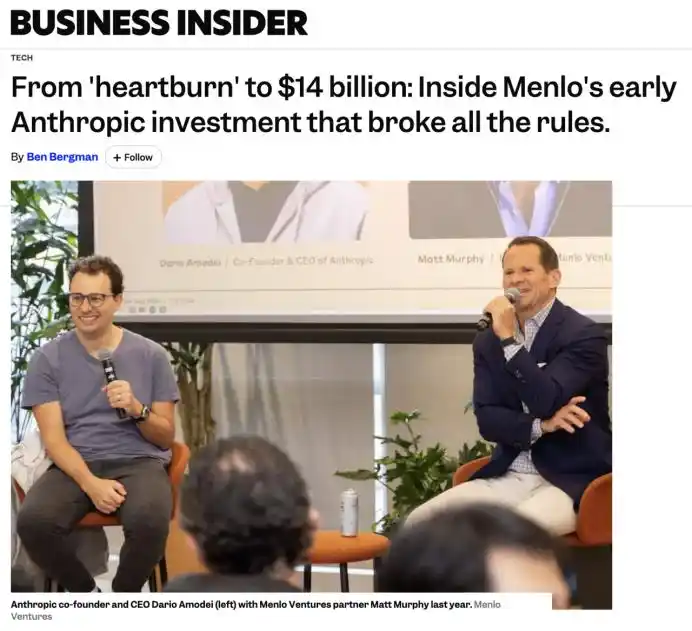
One of the clearest examples is Menlo Ventures. According to Business Insider, Menlo partner Matt Murphy came away impressed after a short conversation with Anthropic CEO Dario Amodei and was drawn to the team and its technical approach. Inside the firm, though, there was still hesitation.
Menlo joined Anthropic’s Series C but did not lead it. Spark Capital did. Looking back years later, Murphy said that was a missed opportunity: “I wish we had broken some rules in the C round.”
Menlo did not walk away. A year later, in Anthropic’s Series D, the firm increased its exposure, led the round, and wrote the largest single check in Menlo’s history. Because of limits around the size of one investment, Menlo also raised additional capital through a special purpose vehicle, or SPV, to expand the position.
Murphy’s view was that even in a market with a clear leader, a highly valuable challenger could still emerge. Today, Menlo’s Anthropic stake has a paper value of about $14 billion.
For venture investors, the return logic looks familiar. It is the same broad pattern seen in earlier tech cycles: acquire equity before a company becomes dominant, and if the bet is right, the payoff can be far above average market returns.
Amazon and Google are betting on more than equity upside
For Amazon and Google, Anthropic is not just a financial investment. It is also a position in the competition over AI infrastructure.
In September 2023, Amazon announced a $1.25 billion investment in Anthropic and received about 10% of the company. In March 2024, it added another $2.75 billion, bringing its total commitment to $4 billion.
At the same time, Anthropic chose AWS as one of its main cloud platforms and used Amazon’s compute infrastructure to train and deploy Claude. For Amazon, that created a two-layer return profile. It owned equity in Anthropic, and it also tied AWS more tightly to a major AI model company.
Google’s relationship with Anthropic is even more complicated because Google is itself one of the most important competitors in AI. From DeepMind to Gemini, the company has spent years building frontier model capabilities. Yet it also invested in Anthropic and became a major cloud and compute partner.
In early 2023, Google invested about $300 million in Anthropic and received roughly 10% of the company. In November of that year, the two sides expanded the partnership, with Google committing additional capital to bring total investment to $2 billion.
The cloud relationship deepened as well. Anthropic used Google Cloud infrastructure to train and deploy models and made Claude available to enterprise users through Google Cloud’s Vertex AI platform.
Also in November 2023, Anthropic began using Google’s latest TPU v5e accelerators for AI inference while continuing to rely on Google Cloud services. By 2025, Anthropic said it would further expand its use of Google Cloud TPUs, with plans to access as many as 1 million TPUs for future Claude training and deployment.
That leaves Google and Anthropic connected in three ways at once: investor and portfolio company, competitor and partner. In the foundation model era, the relationships among capital, compute, cloud distribution, and model development have become much more layered than the old pattern of building everything in-house or buying capability outright.
For Amazon and Google, backing Anthropic is both a financial move and a way to secure a stronger place for AWS and Google Cloud in an AI market where OpenAI and Microsoft already form a powerful alliance.
FTX’s former stake became one of the more valuable assets in bankruptcy
Anthropic’s investor roster also includes an unusual wealth story tied to crypto: the remains of FTX.
In 2021, capital tied to FTX invested about $500 million in Anthropic. At that point, crypto was still the dominant market narrative, FTX was expanding aggressively, and Sam Bankman-Fried, or SBF, was one of the industry’s most closely watched figures. Foundation model companies had not yet become the center of global capital flows.
A few years later, the picture had flipped. FTX collapsed into bankruptcy at the end of 2022, while Anthropic surged with the generative AI wave.
The Anthropic shares held in FTX’s bankruptcy estate changed from an early-stage venture bet into one of the estate’s most valuable assets. Court filings showed that FTX and Alameda Research had invested about $500 million and owned roughly 7.84% of Anthropic. In 2024, when the bankruptcy team sold that stake, the transaction was valued at about $1.3 billion.
It was one of the few FTX-related investments that delivered substantial appreciation. It also carried a clear sense of changing eras: a company that rose during the crypto bubble and later failed left behind an AI investment that gained sharply in value during the next major technology cycle.
Not every investor, of course, gets the same return. Earlier entries generally carry more uncertainty but also offer more upside. Spark invested when Anthropic’s valuation was about $4 billion. Later investors bought in after some of the commercial case had already been established, and they paid more for the same kind of exposure.
That remains one of the oldest rules in venture capital. The largest outcomes usually come from being willing to commit before the future is clear.
That is what makes Anthropic unusual. It has not only created a near-trillion-dollar AI company. It has also created a circle of investors whose balance sheets now reflect that rise.
Paper wealth is not realized wealth
For Anthropic’s backers, the story is not over. In venture capital, the most seductive number can also be the easiest to misread: paper value.
Spark Capital’s stake may now be worth about $7 billion based on Anthropic’s latest valuation, but that does not mean Spark has received $7 billion in cash. In private markets, valuation is an estimate derived from the price set in the latest financing round. Realizing gains usually requires an IPO, a secondary sale, or some other form of exit.
So the $7 billion figure represents what the market is currently willing to pay for Anthropic equity, not profit that has already been locked in.
That issue sits at the center of the current AI wealth narrative. Can the lofty valuations assigned by private capital ultimately be supported by durable commercial value?
Venture investing is supposed to price the future. But when a company approaches a trillion-dollar valuation, investors are no longer betting only on one business. They are also pricing in the speed and scale of an entire industry.
Over the past year and a half, AI has gone through an intense capital boom. Investors have been willing to believe that companies with advanced model capabilities will become the infrastructure layer of the next technology cycle. Anthropic is one of the clearest examples.
At the same time, the market has started to reexamine the growth logic behind AI. The article notes that in recent months, AI-linked assets globally have seen clear volatility. Some AI-related stocks that had previously been pushed higher by investor enthusiasm later pulled back after reaching peaks. The focus has begun shifting from how much upside AI might promise to how much real economic value it can create.
That does not mean the AI wave is over. If anything, it follows a pattern seen in every major technology cycle. The internet era produced many expectations and many companies, but only a limited number built durable platforms. The mobile era did the same: smartphones, app ecosystems, and mobile payments generated major winners, while many companies built mainly on traffic and financing eventually disappeared.
AI is unlikely to be different.
Anthropic’s valuation, however, is not based on pure imagination. The company previously shared internal financial forecasts with investors showing that it expected to reach operating profitability for the first time in the second quarter of 2026. Quarterly revenue was projected at about $10.9 billion, up sharply from $4.8 billion in the first quarter, while operating profit was projected at about $559 million.
External estimates have been even more optimistic. SemiAnalysis, based on Anthropic’s revenue growth, enterprise demand, and the progress of Claude commercialization, estimated that the company’s third-quarter operating profit could exceed $1 billion.
If those forecasts are realized, Anthropic would become one of the few AI companies able to keep investing heavily in frontier model development while also producing operating profit. That is why it stands out in debates over an AI bubble. It reflects both the market’s high expectations for the future and one of the clearest signs so far that some AI companies are beginning to show real commercial strength.
Still, the larger question remains open. Whether Anthropic’s capabilities can sustain the price the market is now placing on the company will take time to answer.
An IPO could become the first real test
That test may not be far away.
In June this year, Anthropic confidentially filed IPO paperwork with the U.S. Securities and Exchange Commission, or SEC. In July, CNBC reported that the banks working on the deal were arranging meetings between Anthropic management and investors in preparation for a potential listing.
According to those reports, the company could reach public markets as early as this fall. Market talk has pointed to a possible September IPO launch, while other reports have suggested October as a target window.
If the IPO moves forward, Spark Capital’s $7 billion paper stake, along with the holdings of Anthropic’s other early backers, will face a public-market test for the first time.
This article is based on a report from the WeChat public account Alphabet AI, written by Yuan Xinyue and edited by Wang Jing, as republished by MarsBit.