
Apple delivered what looked like an exceptionally strong quarter. The market still sold the stock hard.
On July 30, Apple reported fiscal 2026 third-quarter revenue of $109.42 billion, up 16% from a year earlier and marking its strongest June quarter on record. Diluted earnings per share came in at $2.02, up 29% year over year and well above the $1.89 Wall Street expectation. Gross margin reached 50.1%, an absolute historical high.
Revenue, profit and core product sales all came in ahead of Wall Street forecasts. With Tim Cook hosting his last earnings call before stepping down as CEO, the quarter looked on paper like a fitting finale.
That was not how investors read it. After the results, Apple shares fell about 5.5% in after-hours trading. In the next regular session, the stock was down nearly 10% at one point, erasing close to $500 billion in market value.
The issue was not the quarter that had just ended. It was management’s description of what comes next. Apple said September-quarter revenue is expected to grow 9% to 11% year over year, below Wall Street’s roughly 12% consensus. Gross margin guidance was set at 47% to 48%.
Cook also said Apple is dealing with very significant supply constraints and that the supply chain no longer has much room for flexible adjustments. That comment exposed a bigger theme running through the report: the scramble for semiconductor resources driven by AI is no longer confined to data centers. It is spilling into consumer electronics, and even Apple is not insulated from it.
AI is absorbing more of the memory industry’s best capacity
For the past two years, investors have tended to understand AI infrastructure through GPUs, optical modules, networking gear and power systems. The report argues that one major shift has been underappreciated: AI data centers are also swallowing an increasing share of the world’s highest-quality memory capacity.
Large AI accelerators require substantial high-bandwidth memory, or HBM. Training and inference servers also need server DRAM, enterprise solid-state drives and larger-scale data storage. Because HBM involves more stack layers and a more complex manufacturing process, each unit consumes much more wafer and manufacturing resource than conventional memory.
That does not mean HBM and the LPDDR used in smartphones literally run through the exact same final packaging lines. But upstream memory makers still reallocate wafer capacity, capital expenditure and engineering resources according to profitability and customer certainty.
As more resources flow into HBM, server DRAM and enterprise storage, the supply left for traditional DRAM and LPDDR used in phones, PCs and other consumer devices gets squeezed. Citing TrendForce industry estimates, the report says AI-related memory could absorb close to 20% of global DRAM capacity in 2026 on an equivalent wafer consumption basis.
In that sense, the idea that “AI took iPhone memory” is not about NVIDIA directly taking a batch of LPDDR that Apple had already ordered. It is about AI customers, with higher margins, longer purchasing cycles and stronger prepayment capacity, changing the way the entire memory industry allocates resources.
Memory makers benefit first, while Apple faces the cost pass-through question
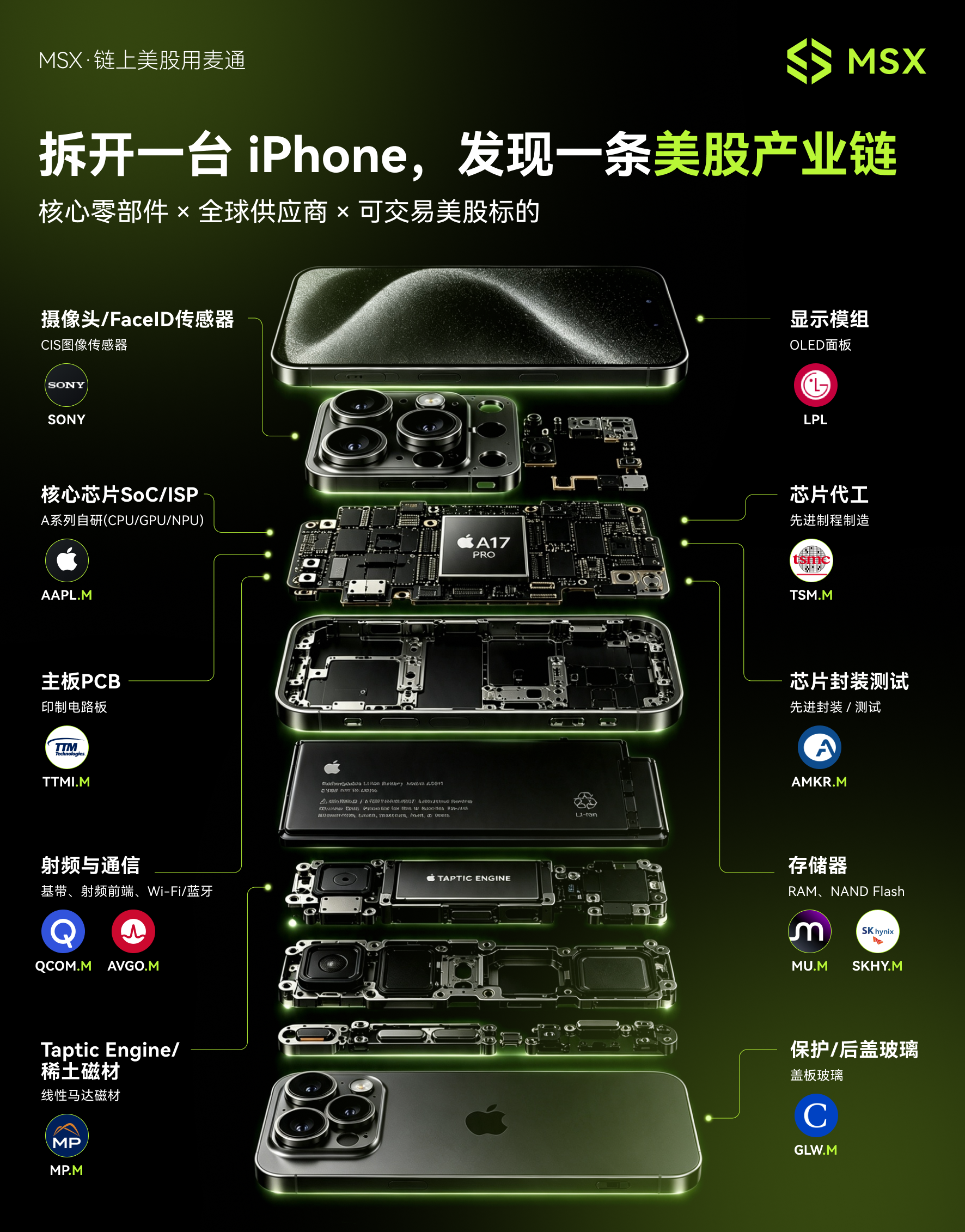
The clearest beneficiaries are DRAM producers such as SK Hynix, Samsung Electronics and Micron. AI customers give HBM a higher selling price, longer order visibility and stronger prepayment support. At the same time, the shift of more production capacity and investment toward AI products tightens supply for traditional DRAM and LPDDR.
The report says Micron generated about $41.46 billion in revenue in its latest quarter, up nearly 350% year over year and more than four times the level of the same period a year earlier. Growth came from multiple lines, including HBM, DRAM and NAND.
That leaves memory makers collecting gains from both ends. On one side, higher-value products such as HBM and server DRAM are scaling rapidly. On the other, tighter supply in consumer memory is lifting prices for legacy products. The piece argues that this is what makes the current storage cycle unusual. Earlier memory bull runs usually depended on a recovery in demand from phones and PCs. This time, demand expansion from AI and supply contraction in traditional capacity are happening together.
Data centers keep increasing memory per server, while consumer electronics manufacturers must pay more for the remaining capacity. Demand is rising. Supply available to legacy markets is shrinking. That combination gives memory makers much more earnings leverage than in a normal cyclical recovery.
The report also separates the logic across storage companies. Micron, SK Hynix and Samsung are direct participants in DRAM, LPDDR and HBM. NAND names such as SanDisk benefit more from enterprise SSD demand, data storage demand and NAND price increases. They belong to the same broad storage theme, but not to one identical business logic, and they should not all be treated as direct beneficiaries of Apple’s LPDDR tightness.
For Apple and its suppliers, the real issue is who absorbs the higher cost
For Apple, tight memory supply leaves three broad responses: raise prices, accept lower margins, or change the shipment mix across products and configurations.
In theory, if component costs keep climbing, Apple is more likely to protect high-margin, high-price products first and direct scarce supply toward Pro models and higher-capacity versions.
The report stresses, however, that there is not enough official information at this stage to prove Apple has already made broad production cuts of one-third for a certain base model because of memory shortages. Some supply-chain reports mentioned adjustments in standard iPhone 17 orders, but those changes could also reflect a normal product cycle, shifts in demand, or inventory clearing ahead of a new launch.
A steadier way to look at the situation is by where a supplier sits in the value chain.
- Assemblers, PCB makers, connector suppliers and makers of general-purpose components that depend on overall shipment volume and lower-value orders are more sensitive to any Apple production cuts.
- Suppliers with scarce technologies such as image sensors, premium displays, advanced packaging and core chips have relatively stronger pricing power.
Even then, stronger pricing power does not mean immunity. If Apple’s overall shipments decline, almost every part of the supply chain will feel it. The difference is the size of the order drop and whether higher value per device can offset lower unit volume.
Ming-Chi Kuo expects that because LPDDR supply is tight, Apple’s actual pull-in volume for A20 chips from the second half of 2026 to the first quarter of 2027 may come in 10% to 20% below the original target. The report adds that part of that gap could also stem from earlier overbooking by Apple to lock in capacity.
Apple is also evaluating more memory supply sources, which has put CXMT into the conversation. But that route is still constrained by product validation, available supply scale and U.S. regulatory policy, making it difficult in the short term to fully replace Samsung, SK Hynix and Micron.
TSMC sits at the point where both demand streams meet
The report describes Taiwan Semiconductor Manufacturing Co., or TSMC, as the company with the most distinctive position in this resource repricing. Apple needs TSMC for A-series and M-series chips. NVIDIA, AMD and cloud companies building their own AI chips also rely on TSMC’s advanced process nodes and packaging capacity.
Still, Apple and NVIDIA are not simply fighting over identical production lines. Apple’s main constraints are more concentrated in advanced wafer nodes such as N3 and N2. AI accelerators need advanced wafer processes too, but they also rely heavily on advanced packaging capacity such as CoWoS and on HBM support. The bottlenecks overlap, though they are not the same bottlenecks in every case.
What matters most is that strong demand from both AI and consumer electronics keeps TSMC’s advanced-node capacity, packaging capacity and scheduling value at elevated levels. TSMC posted $40.2 billion in revenue in the second quarter of 2026, up 33.7% year over year, with gross margin at 67.7%. Its 2-nanometer process already contributed about 3% of wafer revenue.
When Apple’s product cycle is strong, TSMC benefits. When AI chip demand expands, TSMC benefits again. When both happen at the same time, the company gains more than higher utilization. It gets another chance to reprice the scarcity value of advanced manufacturing.
The stronger the quarter looked, the more it highlighted what worries investors
Once the industry’s resource reshuffling is clear, the market’s reaction starts to make more sense. Apple’s fiscal third quarter looked unusually strong on profitability, but that very strength raised questions about how sustainable it is.
Gross margin reached 50.1%, up from the prior quarter. But roughly 2 percentage points of that came from tariff refunds returned by the U.S. government. Those refunds also added about $0.11 to EPS. Excluding that one-off item, Apple’s underlying gross margin was about 48.1%.
That is still a solid number. It is just far less striking than the headline 50.1%. In other words, the quarter’s elevated gross margin did not purely reflect structural improvement in product mix or pricing power. Part of the profit came from a temporary reversal of prior tariff costs, while pressure from higher prices for memory, chips and other key components continues to build.
Apple has already passed some of that burden to customers by raising prices on certain Mac and iPad products. The iPhone is different. It is Apple’s largest-volume and most competitive core product, which makes pricing moves much more delicate.
That helps explain why stronger iPhone sales in this quarter made investors more uneasy about the next one. With memory and advanced-chip supply still tight, some consumers may have bought existing products early before any price increase. Strong third-quarter demand may therefore reflect a mix of normal replacement demand, product-cycle strength and pull-forward buying linked to expected price hikes.
If Apple raises prices on future products, it will have to test whether consumers are still willing to upgrade at the same pace. If it does not raise prices, then it has to absorb more of the component inflation itself, or defend margins by adjusting product mix, configurations and shipment volumes.
Either way, Apple is running into a situation that has not been common for it in the past: supply-chain costs are rising fast enough to challenge the limits of its usual pricing, inventory and product-mix tools.
The constraints are coming from memory and from advanced-node manufacturing
The report says the “supply constraints” in the earnings discussion are not just about memory. Cook said one of the main bottlenecks in the just-ended third quarter was inadequate advanced-node capacity needed to produce Apple Silicon, particularly affecting supply for products such as the Mac. At the same time, Apple expects memory costs to continue rising next quarter.
That leaves Apple facing two shortages at once, each with a different character.
- One is rising prices for DRAM and LPDDR, which directly increase bill-of-materials cost per device.
- The other is tight advanced-node capacity, which limits how many A-series and M-series chips Apple can actually produce.
Cook described the current memory market as a “once-in-a-century flood” unlike anything he had seen in his career. Apple’s response has been to build inventory ahead of time.
As of the end of June 2026, Apple’s inventory stood at $11.09 billion, nearly double the $5.72 billion recorded at the end of fiscal 2025. Component inventory rose from about $2.12 billion to $7.65 billion, showing that Apple is trying to lock in key parts as early as possible.
Inventory can smooth cost timing. It cannot create fresh capacity. For a company already trading around historic valuation levels, that combination — products that can sell, but may not be produced in enough quantity, and products that can be produced, but may not preserve the old margin profile — is enough to trigger a repricing.
The AI narrative is shifting, and Apple’s role in it is shifting too
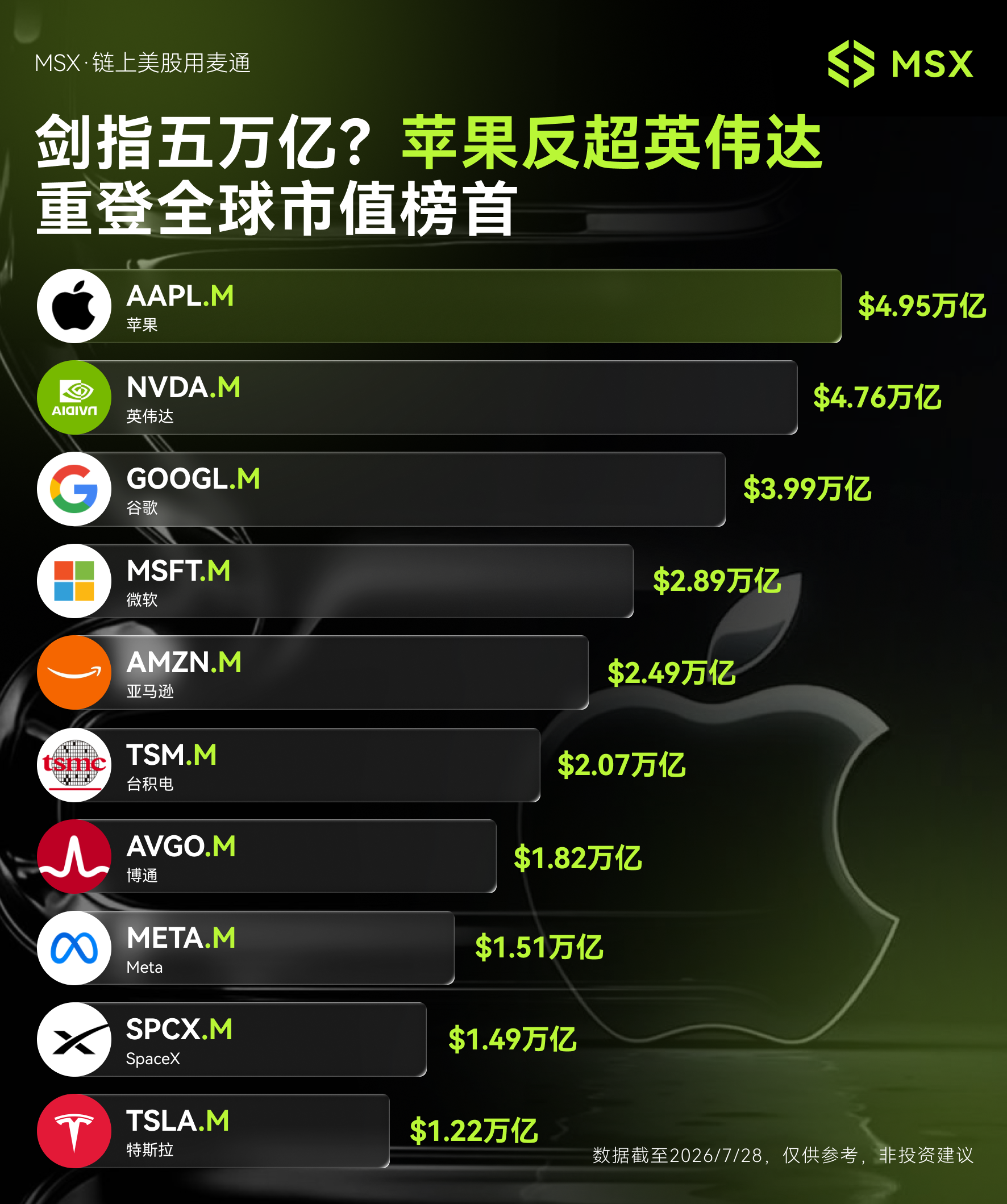
Just before the earnings-driven drop, Apple had completed a symbolic move in market value. On July 28, Apple briefly crossed a $5 trillion market capitalization for the first time, becoming the second company after NVIDIA to reach that milestone. As of that day, the stock was up about 25% for the year and had at one point regained the title of the world’s most valuable company.
The report says that rise did not mean the market suddenly believed Apple had the strongest large language model. Quite the opposite. Apple has generally been seen as lagging OpenAI, Google and Anthropic in foundation-model capability, cloud compute reserves and the speed of AI product rollouts.
What changed was the AI narrative itself. In the first stage of AI investing, the market rewarded model capability and technical breakthroughs. In the second, it rewarded infrastructure providers in GPUs, networking, memory and data centers. As capital spending keeps swelling, the third stage is asking a different question: how much revenue, profit and free cash flow can all that compute power actually produce?
At that stage, Apple’s edge is not the model with the largest parameter count. It is one of the world’s biggest high-value consumer device distribution networks. By early 2026, Apple’s active installed base had exceeded 2.5 billion devices. Its services business had more than 1.5 billion paid subscriptions. Apple can embed AI capabilities in phones, computers, headphones, watches and operating systems, then monetize through hardware upgrades, iCloud+ subscriptions and the broader services ecosystem.
It does not need to prove, in the same way cloud giants do, that hundreds of billions of dollars in data-center investment will earn a strong enough return on capital. It only needs to show that AI can lift upgrade intent, paid service conversion and user stickiness.
That “device distribution plus subscription services” path is a major reason Apple was re-rated upward as debate over AI capital spending intensified. In the first nine months of fiscal 2026, Apple generated $116.996 billion in operating cash flow while spending about $6.799 billion on property, plant and equipment. Apple maintained a vast device and services ecosystem with fixed-asset investment that was less than 6% of operating cash flow. Compared with technology companies building huge AI data centers, that is a visibly lighter model.
A lighter model does not mean a cost-free one
The report is careful on that point. Apple’s current AI strategy is hybrid: Apple’s own models run on devices and through Private Cloud Compute, while some more complex Siri functions rely on Google’s Gemini technology.
That approach lowers early infrastructure spending, but it also means Apple depends on outside partners in core model capability, inference cost and product timing. If Siri AI usage grows rapidly, Apple could still face higher cloud inference expenses and may have to expand its own compute investment.
So Apple may have skipped the most aggressive phase of the capital-spending race. It has not escaped AI infrastructure cost forever.
A more immediate issue is that Apple’s AI monetization still lacks firm proof in the financials. Services revenue rose 12.1% year over year to $30.74 billion this quarter, but that was below the $31.22 billion market expectation. App Store gaming revenue was also affected by regulatory changes and the opening of outside payment channels.
Regional execution is another constraint. Apple Intelligence in China is still waiting for regulatory approval. In the European Union, the new Siri AI also will not initially be rolled out across iPhone, iPad and Apple Watch in full. Apple has a vast device entry point, but for now it cannot activate its AI capability in every key market at the same time.
The debate now is about how quickly the valuation can be justified
That is also where analysts split after the earnings release. The bullish view is that Apple has a user gateway, hardware ecosystem and cash-flow base that other AI companies cannot easily copy, and that the next iPhone cycle could become the starting point for real AI monetization. The bearish view is that Apple’s current valuation has already priced in device replacement and subscription growth from AI before those revenues have actually arrived.
After the report, at least four institutions cut their Apple price targets, while three raised them. The median market target was adjusted to about $330.
That leaves Apple with questions that go beyond how many units the next iPhone can ship.
- Can Apple still protect volume, pricing and margins at the same time as memory and advanced-manufacturing costs keep rising?
- Can Apple Intelligence and Siri AI move from being product features to becoming real drivers of upgrades, subscription revenue and higher lifetime user value?
The other balance sheet behind the AI boom
For the past two years, the dominant story across the AI supply chain has been easy to summarize: NVIDIA sells more GPUs, cloud companies build more data centers, and memory makers get better pricing.
Apple’s earnings report showed the other side of that boom.
As AI infrastructure absorbs more memory, advanced-node capacity and engineering resources, consumer electronics companies have to pay more, suppliers must reshuffle orders and customers may end up facing higher prices. Apple is on both sides of that equation. Its hardware business is absorbing the pressure created by AI’s pull on global semiconductor resources. Its services and ecosystem business, however, could also become one of the most important distribution channels when AI moves from infrastructure investment toward commercial payoff.
The report closes on a broader question. In the years ahead, will the most valuable company be the one that owns the most compute, or the one best able to turn compute into paying users?
Apple is trying to be the latter. Near a valuation above $5 trillion, though, the market is no longer willing to pay simply for a story that has not yet shown up in revenue.